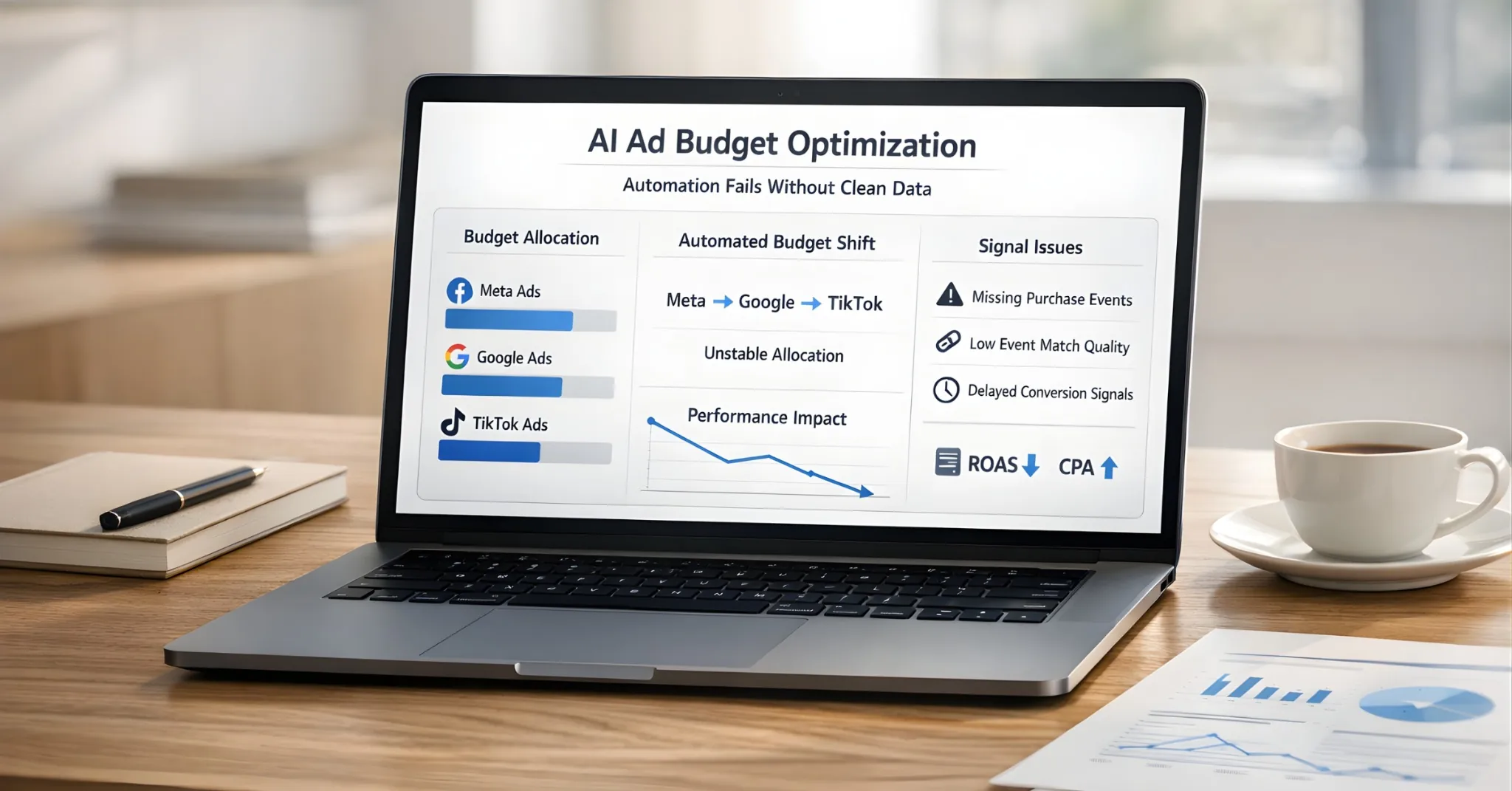
The promise is compelling: AI that watches your campaigns 24/7, automatically shifting budget from losers to winners, capturing opportunities while you sleep.
The reality is often different: an algorithm confidently optimizing toward the wrong goals, scaling campaigns that aren't actually working, and cutting spend on your best performers — all because the data feeding it was incomplete.
This is the AI optimization paradox. The same technology that can process thousands of signals per minute and react faster than any human becomes actively harmful when it's learning from bad data. And in the Post-Cookie Era, where 40-60% of conversions never reach your ad platforms, most AI budget optimization is learning from a partial picture.
Here's the uncomfortable truth: AI budget optimization is only as intelligent as the data feeding it. Get the data foundation right, and automation becomes a genuine competitive advantage. Get it wrong, and you're paying for an algorithm to make your mistakes faster and at scale.
This guide breaks down the AI optimization stack — from the data foundation that makes everything work to the decision frameworks that keep humans in control of what matters.
The AI Optimization Stack
Effective AI budget optimization isn't a single tool or feature. It's a stack of interdependent layers, each dependent on the one below it.
THE AI OPTIMIZATION STACK
════════════════════════════════════════════════════════════════════════════

    ┌─────────────────────────────────────────────────────────────────┐
    │                    LAYER 4: AI DECISIONS                        │
    │                                                                 │
    │    Budget shifts, bid adjustments, audience expansion,         │
    │    creative rotation, spend pacing                              │
    │                                                                 │
    │    (This is what everyone focuses on)                          │
    └─────────────────────────────────────────────────────────────────┘
                                │
                                │ Depends on ▼
                                │
    ┌─────────────────────────────────────────────────────────────────┐
    │                    LAYER 3: OPTIMIZATION RULES                  │
    │                                                                 │
    │    Targets, thresholds, constraints, guardrails,               │
    │    business logic, campaign objectives                          │
    │                                                                 │
    │    (This is what you configure)                                │
    └─────────────────────────────────────────────────────────────────┘
                                │
                                │ Depends on ▼
                                │
    ┌─────────────────────────────────────────────────────────────────┐
    │                    LAYER 2: ATTRIBUTION                         │
    │                                                                 │
    │    Which touchpoints drove which conversions?                  │
    │    Multi-touch models, attribution windows,                     │
    │    cross-device/cross-platform connection                       │
    │                                                                 │
    │    (This is what most people get wrong)                        │
    └─────────────────────────────────────────────────────────────────┘
                                │
                                │ Depends on ▼
                                │
    ┌─────────────────────────────────────────────────────────────────┐
    │                    LAYER 1: DATA CAPTURE                        │
    │                                                                 │
    │    Server-side tracking, conversion events,                     │
    │    first-party data, event enrichment                           │
    │                                                                 │
    │    (This is the foundation — most neglected, most critical)    │
    └─────────────────────────────────────────────────────────────────┘

════════════════════════════════════════════════════════════════════════════

    IF LAYER 1 IS BROKEN (40-60% of conversions missing):

    → Layer 2 attributes credit to wrong campaigns
    → Layer 3 sets thresholds based on incomplete picture
    → Layer 4 confidently optimizes toward wrong goals

    RESULT: AI scales your worst performers, cuts your best ones

════════════════════════════════════════════════════════════════════════════
THE AI OPTIMIZATION STACK
════════════════════════════════════════════════════════════════════════════
┌─────────────────────────────────────────────────────────────────┐
│ LAYER 4: AI DECISIONS │
│ │
│ Budget shifts, bid adjustments, audience expansion, │
│ creative rotation, spend pacing │
│ │
│ (This is what everyone focuses on) │
└─────────────────────────────────────────────────────────────────┘
│
│ Depends on ▼
│
┌─────────────────────────────────────────────────────────────────┐
│ LAYER 3: OPTIMIZATION RULES │
│ │
│ Targets, thresholds, constraints, guardrails, │
│ business logic, campaign objectives │
│ │
│ (This is what you configure) │
└─────────────────────────────────────────────────────────────────┘
│
│ Depends on ▼
│
┌─────────────────────────────────────────────────────────────────┐
│ LAYER 2: ATTRIBUTION │
│ │
│ Which touchpoints drove which conversions? │
│ Multi-touch models, attribution windows, │
│ cross-device/cross-platform connection │
│ │
│ (This is what most people get wrong) │
└─────────────────────────────────────────────────────────────────┘
│
│ Depends on ▼
│
┌─────────────────────────────────────────────────────────────────┐
│ LAYER 1: DATA CAPTURE │
│ │
│ Server-side tracking, conversion events, │
│ first-party data, event enrichment │
│ │
│ (This is the foundation — most neglected, most critical) │
└─────────────────────────────────────────────────────────────────┘
════════════════════════════════════════════════════════════════════════════
IF LAYER 1 IS BROKEN (40-60% of conversions missing):
→ Layer 2 attributes credit to wrong campaigns
→ Layer 3 sets thresholds based on incomplete picture
→ Layer 4 confidently optimizes toward wrong goals
RESULT: AI scales your worst performers, cuts your best ones
════════════════════════════════════════════════════════════════════════════THE AI OPTIMIZATION STACK
════════════════════════════════════════════════════════════════════════════
┌─────────────────────────────────────────────────────────────────┐
│ LAYER 4: AI DECISIONS │
│ │
│ Budget shifts, bid adjustments, audience expansion, │
│ creative rotation, spend pacing │
│ │
│ (This is what everyone focuses on) │
└─────────────────────────────────────────────────────────────────┘
│
│ Depends on ▼
│
┌─────────────────────────────────────────────────────────────────┐
│ LAYER 3: OPTIMIZATION RULES │
│ │
│ Targets, thresholds, constraints, guardrails, │
│ business logic, campaign objectives │
│ │
│ (This is what you configure) │
└─────────────────────────────────────────────────────────────────┘
│
│ Depends on ▼
│
┌─────────────────────────────────────────────────────────────────┐
│ LAYER 2: ATTRIBUTION │
│ │
│ Which touchpoints drove which conversions? │
│ Multi-touch models, attribution windows, │
│ cross-device/cross-platform connection │
│ │
│ (This is what most people get wrong) │
└─────────────────────────────────────────────────────────────────┘
│
│ Depends on ▼
│
┌─────────────────────────────────────────────────────────────────┐
│ LAYER 1: DATA CAPTURE │
│ │
│ Server-side tracking, conversion events, │
│ first-party data, event enrichment │
│ │
│ (This is the foundation — most neglected, most critical) │
└─────────────────────────────────────────────────────────────────┘
════════════════════════════════════════════════════════════════════════════
IF LAYER 1 IS BROKEN (40-60% of conversions missing):
→ Layer 2 attributes credit to wrong campaigns
→ Layer 3 sets thresholds based on incomplete picture
→ Layer 4 confidently optimizes toward wrong goals
RESULT: AI scales your worst performers, cuts your best ones
════════════════════════════════════════════════════════════════════════════Most marketers focus on Layer 4 — the AI decision-making. But if Layers 1-3 are broken, the smartest AI in the world will make terrible decisions. The algorithm doesn't know what it doesn't know.
THE DATA-DRIVEN STACK: Foundation First
════════════════════════════════════════════════════════════════════════════

    WHAT MOST MARKETERS DO:              WHAT ACTUALLY WORKS:
    ───────────────────────              ────────────────────

         ┌───────────┐                        ┌───────────┐
         │ Buy fancy │                        │ AI makes  │
         │ AI tool   │                        │ smart     │
         └─────┬─────┘                        │ decisions │
               │                              └─────▲─────┘
               ▼                                    │
         ┌───────────┐                        ┌─────┴─────┐
         │ Wonder why│                        │ Rules     │
         │ it's not  │                        │ configured│
         │ working   │                        │ correctly │
         └─────┬─────┘                        └─────▲─────┘
               │                                    │
               ▼                                    │
         ┌───────────┐                        ┌─────┴─────┐
         │ Blame the │                        │Attribution│
         │ algorithm │                        │ accurate  │
         └───────────┘                        └─────▲─────┘
                                                    │
                                              ┌─────┴─────┐
                                              │ DATA      │
                                              │ COMPLETE  │
                                              └───────────┘
                                                    ▲
                                                    │
                                              START HERE

════════════════════════════════════════════════════════════════════════════
THE DATA-DRIVEN STACK: Foundation First
════════════════════════════════════════════════════════════════════════════
WHAT MOST MARKETERS DO: WHAT ACTUALLY WORKS:
─────────────────────── ────────────────────
┌───────────┐ ┌───────────┐
│ Buy fancy │ │ AI makes │
│ AI tool │ │ smart │
└─────┬─────┘ │ decisions │
│ └─────▲─────┘
▼ │
┌───────────┐ ┌─────┴─────┐
│ Wonder why│ │ Rules │
│ it's not │ │ configured│
│ working │ │ correctly │
└─────┬─────┘ └─────▲─────┘
│ │
▼ │
┌───────────┐ ┌─────┴─────┐
│ Blame the │ │Attribution│
│ algorithm │ │ accurate │
└───────────┘ └─────▲─────┘
│
┌─────┴─────┐
│ DATA │
│ COMPLETE │
└───────────┘
▲
│
START HERE
════════════════════════════════════════════════════════════════════════════THE DATA-DRIVEN STACK: Foundation First
════════════════════════════════════════════════════════════════════════════
WHAT MOST MARKETERS DO: WHAT ACTUALLY WORKS:
─────────────────────── ────────────────────
┌───────────┐ ┌───────────┐
│ Buy fancy │ │ AI makes │
│ AI tool │ │ smart │
└─────┬─────┘ │ decisions │
│ └─────▲─────┘
▼ │
┌───────────┐ ┌─────┴─────┐
│ Wonder why│ │ Rules │
│ it's not │ │ configured│
│ working │ │ correctly │
└─────┬─────┘ └─────▲─────┘
│ │
▼ │
┌───────────┐ ┌─────┴─────┐
│ Blame the │ │Attribution│
│ algorithm │ │ accurate │
└───────────┘ └─────▲─────┘
│
┌─────┴─────┐
│ DATA │
│ COMPLETE │
└───────────┘
▲
│
START HERE
════════════════════════════════════════════════════════════════════════════The Data Foundation Problem
Here's what's actually happening in most ad accounts:
A customer clicks your Meta ad on their phone. They don't buy immediately — they're at work, browsing during lunch. That evening, on their laptop, they Google your brand name and purchase.
Meta's pixel sees the click but not the conversion (different device, cross-site tracking blocked). Google gets credit for a "branded search conversion" that Meta actually created. Your AI budget optimizer sees Meta underperforming and Google crushing it.
The AI's recommendation: Shift budget from Meta to Google.
The reality: You just cut the channel that's creating your customers to fund the channel that's capturing them.
This isn't a hypothetical. It's the default state of most ad accounts in 2026. If you want to see how this gets fixed in a real Shopify setup, get a personalized demo that walks through the data foundation before any AI optimization layer kicks in.
Where Conversions Disappear
CONVERSION VISIBILITY BY SCENARIO
════════════════════════════════════════════════════════════════════════════

    SCENARIO                              PIXEL SEES IT?    AI LEARNS FROM IT?
    ──────────────────────────────────    ──────────────    ──────────────────

    Same device, same session             ✅ Yes            ✅ Yes

    Same device, different session        🟡 Sometimes      🟡 Partial
    (depends on cookies)

    Cross-device journey                  ❌ No             ❌ No
    (phone → laptop)

    iOS user (opted out of tracking)      ❌ No             ❌ No
    (75-85% of iOS users)

    Ad blocker active                     ❌ No             ❌ No
    (900M+ users globally)

    Safari or Firefox browser             ❌ No             ❌ No
    (3rd party cookies blocked)

    Conversion outside attribution        ❌ No             ❌ No
    window (>7 days)

    ─────────────────────────────────────────────────────────────────────────

    CUMULATIVE EFFECT:

    100 actual conversions happen
     - Cross-device losses:        -15 to -25
     - iOS ATT opt-outs:           -20 to -30
     - Ad blockers:                -10 to -15
     - Browser restrictions:       -5 to -10
     - Attribution window misses:  -5 to -10

    = 40-60 conversions visible to platforms
    = AI optimizes based on 40-60% of reality

════════════════════════════════════════════════════════════════════════════
CONVERSION VISIBILITY BY SCENARIO
════════════════════════════════════════════════════════════════════════════
SCENARIO PIXEL SEES IT? AI LEARNS FROM IT?
────────────────────────────────── ────────────── ──────────────────
Same device, same session ✅ Yes ✅ Yes
Same device, different session 🟡 Sometimes 🟡 Partial
(depends on cookies)
Cross-device journey ❌ No ❌ No
(phone → laptop)
iOS user (opted out of tracking) ❌ No ❌ No
(75-85% of iOS users)
Ad blocker active ❌ No ❌ No
(900M+ users globally)
Safari or Firefox browser ❌ No ❌ No
(3rd party cookies blocked)
Conversion outside attribution ❌ No ❌ No
window (>7 days)
─────────────────────────────────────────────────────────────────────────
CUMULATIVE EFFECT:
100 actual conversions happen
- Cross-device losses: -15 to -25
- iOS ATT opt-outs: -20 to -30
- Ad blockers: -10 to -15
- Browser restrictions: -5 to -10
- Attribution window misses: -5 to -10
= 40-60 conversions visible to platforms
= AI optimizes based on 40-60% of reality
════════════════════════════════════════════════════════════════════════════CONVERSION VISIBILITY BY SCENARIO
════════════════════════════════════════════════════════════════════════════
SCENARIO PIXEL SEES IT? AI LEARNS FROM IT?
────────────────────────────────── ────────────── ──────────────────
Same device, same session ✅ Yes ✅ Yes
Same device, different session 🟡 Sometimes 🟡 Partial
(depends on cookies)
Cross-device journey ❌ No ❌ No
(phone → laptop)
iOS user (opted out of tracking) ❌ No ❌ No
(75-85% of iOS users)
Ad blocker active ❌ No ❌ No
(900M+ users globally)
Safari or Firefox browser ❌ No ❌ No
(3rd party cookies blocked)
Conversion outside attribution ❌ No ❌ No
window (>7 days)
─────────────────────────────────────────────────────────────────────────
CUMULATIVE EFFECT:
100 actual conversions happen
- Cross-device losses: -15 to -25
- iOS ATT opt-outs: -20 to -30
- Ad blockers: -10 to -15
- Browser restrictions: -5 to -10
- Attribution window misses: -5 to -10
= 40-60 conversions visible to platforms
= AI optimizes based on 40-60% of reality
════════════════════════════════════════════════════════════════════════════THE VISIBILITY GAP: What AI Actually Sees
════════════════════════════════════════════════════════════════════════════
REALITY: WHAT AI SEES:
──────── ─────────────
100 conversions 40-60 conversions
happened today reported to platforms
████████████████████ ████████████░░░░░░░░
████████████████████ ████████████░░░░░░░░
████████████████████ ░░░░░░░░░░░░░░░░░░░░
████████████████████ ░░░░░░░░░░░░░░░░░░░░
████████████████████ ░░░░░░░░░░░░░░░░░░░░
100% 40-60%
─────────────────────────────────────────────────────────────────────────
THE DISTORTION ISN'T RANDOM:
OVER-CREDITED (AI scales these): UNDER-CREDITED (AI cuts these):
──────────────────────────────── ────────────────────────────────
• Bottom-funnel campaigns • Top-of-funnel campaigns
• Desktop traffic • Mobile-first campaigns
• Click-based conversions • View-through conversions
• Same-session purchases • Considered purchases
• Google Branded Search • Meta Prospecting
• Retargeting • Awareness campaigns
→ AI systematically defunds the channels that CREATE customers
→ AI over-invests in channels that CAPTURE existing demand
════════════════════════════════════════════════════════════════════════════THE VISIBILITY GAP: What AI Actually Sees
════════════════════════════════════════════════════════════════════════════
REALITY: WHAT AI SEES:
──────── ─────────────
100 conversions 40-60 conversions
happened today reported to platforms
████████████████████ ████████████░░░░░░░░
████████████████████ ████████████░░░░░░░░
████████████████████ ░░░░░░░░░░░░░░░░░░░░
████████████████████ ░░░░░░░░░░░░░░░░░░░░
████████████████████ ░░░░░░░░░░░░░░░░░░░░
100% 40-60%
─────────────────────────────────────────────────────────────────────────
THE DISTORTION ISN'T RANDOM:
OVER-CREDITED (AI scales these): UNDER-CREDITED (AI cuts these):
──────────────────────────────── ────────────────────────────────
• Bottom-funnel campaigns • Top-of-funnel campaigns
• Desktop traffic • Mobile-first campaigns
• Click-based conversions • View-through conversions
• Same-session purchases • Considered purchases
• Google Branded Search • Meta Prospecting
• Retargeting • Awareness campaigns
→ AI systematically defunds the channels that CREATE customers
→ AI over-invests in channels that CAPTURE existing demand
════════════════════════════════════════════════════════════════════════════THE VISIBILITY GAP: What AI Actually Sees
════════════════════════════════════════════════════════════════════════════
REALITY: WHAT AI SEES:
──────── ─────────────
100 conversions 40-60 conversions
happened today reported to platforms
████████████████████ ████████████░░░░░░░░
████████████████████ ████████████░░░░░░░░
████████████████████ ░░░░░░░░░░░░░░░░░░░░
████████████████████ ░░░░░░░░░░░░░░░░░░░░
████████████████████ ░░░░░░░░░░░░░░░░░░░░
100% 40-60%
─────────────────────────────────────────────────────────────────────────
THE DISTORTION ISN'T RANDOM:
OVER-CREDITED (AI scales these): UNDER-CREDITED (AI cuts these):
──────────────────────────────── ────────────────────────────────
• Bottom-funnel campaigns • Top-of-funnel campaigns
• Desktop traffic • Mobile-first campaigns
• Click-based conversions • View-through conversions
• Same-session purchases • Considered purchases
• Google Branded Search • Meta Prospecting
• Retargeting • Awareness campaigns
→ AI systematically defunds the channels that CREATE customers
→ AI over-invests in channels that CAPTURE existing demand
════════════════════════════════════════════════════════════════════════════When your AI is learning from 40-60% of actual conversions, it's not just missing data — it's building a systematically distorted model of what works. And the distortion isn't random. It skews against specific channels (top-of-funnel, mobile-first, view-based) and toward others (bottom-funnel, desktop, click-based).
How AI Budget Optimization Actually Works
When the data foundation is solid, AI budget optimization becomes genuinely powerful. Here's what happens under the hood:
The Optimization Loop
Ingest: Pull real-time performance data from all campaigns
Analyze: Compare current performance to historical patterns
Predict: Forecast future performance based on current trajectory
Recommend: Calculate optimal budget allocation
Execute: Shift budget (automatically or with approval)
Learn: Feed outcomes back into the model
This loop runs continuously — every few minutes in sophisticated systems. While you're in meetings, the AI is monitoring thousands of signals, identifying patterns too subtle for humans to spot, and adjusting spend in real-time.
What AI Can See That You Can't
Micro-trends: A campaign that's converting 20% better than usual this morning, signaling an opportunity to scale before the trend becomes obvious in your daily reports.
Cross-campaign patterns: Your retargeting performs better when prospecting spend increases, revealing a dependency that manual optimization would miss.
Temporal patterns: Certain audiences convert better at specific times, days, or seasons — patterns that emerge across thousands of data points but are invisible in aggregate metrics.
Fatigue signals: Early indicators that an audience or creative is exhausting, allowing budget shifts before performance collapses.
Competitive dynamics: Sudden changes in auction dynamics suggesting a competitor has entered or exited the market.
The catch: all of these insights depend on complete, accurate data. An AI seeing 60% of conversions will find patterns — but they'll be patterns in partial data, potentially leading to exactly the wrong conclusions.
The Three Levels of Budget Automation
Not all automation is created equal. Understanding the levels helps you choose the right approach for your situation.
Level 1: Rules-Based Automation
How it works: Simple if-then logic that executes predefined actions when conditions are met.
Examples:
"If CPA exceeds $100 for 24 hours, reduce budget by 20%"
"If ROAS drops below 2x, pause the ad set"
"If frequency exceeds 3.0, rotate to new creative"
Pros: Predictable, transparent, easy to understand and adjust.
Cons: Can't adapt to context. Doesn't learn. Requires constant rule refinement.
Best for: Small accounts, simple campaign structures, teams new to automation.
Level 2: Machine Learning Optimization
How it works: Algorithms that learn patterns from historical data and make predictions about future performance.
Examples:
Meta's Advantage+ campaigns
Google's Performance Max
Third-party tools that predict optimal budget allocation
For brands running heavily on Meta, here’s a related guide on meta marketing optimization that goes deeper into how Advantage+ and Meta-specific signals should be configured before automation can perform at its best.
Pros: Adapts to patterns humans can't see. Improves over time. Handles complexity.
Cons: Black box decision-making. Requires significant data volume. Can overfit to noise.
Best for: Accounts with sufficient conversion volume (50+ per week), teams comfortable ceding some control.
Level 3: Agentic AI Optimization
How it works: AI that can take independent action across multiple systems, platforms, and decision types — not just budget, but creative testing, audience expansion, and strategic recommendations.
Examples:
AI agents that manage entire campaign portfolios
Systems that autonomously test and iterate creative
Integrated optimization across paid media, email, and site experience
Pros: Approaches human-level strategic thinking. Can handle complex, multi-step optimization. Maximizes efficiency at scale.
Cons: Requires significant trust and oversight. Newest technology, still maturing. Highest risk if misconfigured.
Best for: Large accounts, sophisticated teams, businesses willing to be early adopters.Because each level represents a different operational investment and infrastructure depth, see pricing built for scaling brands for how the data and automation stack scales with growth stage.
CHOOSING YOUR AUTOMATION LEVEL
════════════════════════════════════════════════════════════════════════════

    │ Factor               │ Level 1      │ Level 2      │ Level 3      │
    │                      │ Rules-Based  │ ML Optimize  │ Agentic AI   │
    │──────────────────────│──────────────│──────────────│──────────────│
    │ Monthly ad spend     │ <$50K        │ $50K-$500K   │ $500K+       │
    │ Weekly conversions   │ <50          │ 50-500       │ 500+         │
    │ Campaign complexity  │ Low          │ Medium       │ High         │
    │ Team bandwidth       │ Limited      │ Moderate     │ Available    │
    │ Risk tolerance       │ Low          │ Medium       │ High         │
    │ Data foundation      │ Basic        │ Solid        │ Excellent    │

════════════════════════════════════════════════════════════════════════════
CHOOSING YOUR AUTOMATION LEVEL
════════════════════════════════════════════════════════════════════════════
│ Factor │ Level 1 │ Level 2 │ Level 3 │
│ │ Rules-Based │ ML Optimize │ Agentic AI │
│──────────────────────│──────────────│──────────────│──────────────│
│ Monthly ad spend │ <$50K │ $50K-$500K │ $500K+ │
│ Weekly conversions │ <50 │ 50-500 │ 500+ │
│ Campaign complexity │ Low │ Medium │ High │
│ Team bandwidth │ Limited │ Moderate │ Available │
│ Risk tolerance │ Low │ Medium │ High │
│ Data foundation │ Basic │ Solid │ Excellent │
════════════════════════════════════════════════════════════════════════════CHOOSING YOUR AUTOMATION LEVEL
════════════════════════════════════════════════════════════════════════════
│ Factor │ Level 1 │ Level 2 │ Level 3 │
│ │ Rules-Based │ ML Optimize │ Agentic AI │
│──────────────────────│──────────────│──────────────│──────────────│
│ Monthly ad spend │ <$50K │ $50K-$500K │ $500K+ │
│ Weekly conversions │ <50 │ 50-500 │ 500+ │
│ Campaign complexity │ Low │ Medium │ High │
│ Team bandwidth │ Limited │ Moderate │ Available │
│ Risk tolerance │ Low │ Medium │ High │
│ Data foundation │ Basic │ Solid │ Excellent │
════════════════════════════════════════════════════════════════════════════The Budget Allocation Framework
When data is clean and attribution is accurate, here's how to think about AI-driven budget allocation:
The Efficient Frontier
Every campaign has a relationship between spend and return. At low spend, returns are often strong (you're reaching the best prospects). As spend increases, returns diminish (you're reaching less qualified audiences).
AI optimization finds the "efficient frontier" — the allocation across campaigns that maximizes total return for a given total spend.
BUDGET ALLOCATION: The Efficient Frontier
════════════════════════════════════════════════════════════════════════════

    CAMPAIGN PERFORMANCE CURVES:

    ROAS │
       │        Campaign A (Prospecting)
     5x│    ●
       │      ●
     4x│        ●
       │          ●  Campaign C (Retargeting)
     3x│            ●     ●
       │              ●       ●
     2x│                ●         ●    Campaign B (Broad)
       │                  ●           ●     ●
     1x│                    ●               ●     ●
       │                      ●                   ●
       └────────────────────────────────────────────────────
                          Daily Spend →

    ─────────────────────────────────────────────────────────────────────────

    AI ALLOCATION LOGIC:

    1. Each campaign has diminishing returns as spend increases
    2. Optimal allocation = spend where marginal ROAS is equal across campaigns
    3. If Campaign A's marginal ROAS at $1K > Campaign B's at $500:
       → Shift budget from B to A until marginal ROAS equalizes

    FORMULA:
    ─────────
    Optimal allocation achieved when:
    Marginal ROAS (Campaign A) = Marginal ROAS (Campaign B) = Marginal ROAS (Campaign C)

════════════════════════════════════════════════════════════════════════════
BUDGET ALLOCATION: The Efficient Frontier
════════════════════════════════════════════════════════════════════════════
CAMPAIGN PERFORMANCE CURVES:
ROAS │
│ Campaign A (Prospecting)
5x│ ●
│ ●
4x│ ●
│ ● Campaign C (Retargeting)
3x│ ● ●
│ ● ●
2x│ ● ● Campaign B (Broad)
│ ● ● ●
1x│ ● ● ●
│ ● ●
└────────────────────────────────────────────────────
Daily Spend →
─────────────────────────────────────────────────────────────────────────
AI ALLOCATION LOGIC:
1. Each campaign has diminishing returns as spend increases
2. Optimal allocation = spend where marginal ROAS is equal across campaigns
3. If Campaign A's marginal ROAS at $1K > Campaign B's at $500:
→ Shift budget from B to A until marginal ROAS equalizes
FORMULA:
─────────
Optimal allocation achieved when:
Marginal ROAS (Campaign A) = Marginal ROAS (Campaign B) = Marginal ROAS (Campaign C)
════════════════════════════════════════════════════════════════════════════BUDGET ALLOCATION: The Efficient Frontier
════════════════════════════════════════════════════════════════════════════
CAMPAIGN PERFORMANCE CURVES:
ROAS │
│ Campaign A (Prospecting)
5x│ ●
│ ●
4x│ ●
│ ● Campaign C (Retargeting)
3x│ ● ●
│ ● ●
2x│ ● ● Campaign B (Broad)
│ ● ● ●
1x│ ● ● ●
│ ● ●
└────────────────────────────────────────────────────
Daily Spend →
─────────────────────────────────────────────────────────────────────────
AI ALLOCATION LOGIC:
1. Each campaign has diminishing returns as spend increases
2. Optimal allocation = spend where marginal ROAS is equal across campaigns
3. If Campaign A's marginal ROAS at $1K > Campaign B's at $500:
→ Shift budget from B to A until marginal ROAS equalizes
FORMULA:
─────────
Optimal allocation achieved when:
Marginal ROAS (Campaign A) = Marginal ROAS (Campaign B) = Marginal ROAS (Campaign C)
════════════════════════════════════════════════════════════════════════════Understanding Marginal ROAS (The Key Concept)
Most founders look at average ROAS. Smart AI looks at marginal ROAS — the return on the next dollar spent, not the average of all dollars spent.
MARGINAL ROAS: Where Diminishing Returns Hit
════════════════════════════════════════════════════════════════════════════

    SINGLE CAMPAIGN: Average ROAS vs. Marginal ROAS

    Average │                                   ┌─────────────────────────┐
    ROAS    │                                   │ Average ROAS = 3.5x     │
            │                                   │ (looks great!)          │
      4.0x  │ ●─────────────────────────────────│                         │
            │   ●                               │ BUT: Marginal ROAS at   │
      3.5x  │     ●                             │ current spend = 1.8x    │
            │       ●──────── Average ─────────▶│ (next dollar returns    │
      3.0x  │         ●                         │  less than average)     │
            │           ●                       └─────────────────────────┘
      2.5x  │             ●
            │               ●
      2.0x  │                 ●
            │                   ●  ← MARGINAL ROAS (slope of curve)
      1.5x  │                     ●
            │                       ●──── DIMINISHING RETURNS ZONE
      1.0x  │                         ●        (stop scaling here)
            │                           ●
            └──────────────────────────────────────────────────────────────
            $500   $1K    $2K    $3K    $4K    $5K    $6K    $7K
                              Daily Spend →

    ─────────────────────────────────────────────────────────────────────────

    THE INSIGHT:

    Campaign A: Average ROAS = 3.5x, Marginal ROAS at $5K = 1.8x
    Campaign B: Average ROAS = 2.5x, Marginal ROAS at $2K = 3.2x

    WRONG DECISION: "Campaign A has better ROAS, scale Campaign A"
    RIGHT DECISION: "Campaign B has better MARGINAL ROAS, scale Campaign B"

    → AI shifts $1K from A to B
    → That $1K returns $3.20 in B instead of $1.80 in A
    → Total return increases by $1.40 per $1K shifted

════════════════════════════════════════════════════════════════════════════
MARGINAL ROAS: Where Diminishing Returns Hit
════════════════════════════════════════════════════════════════════════════
SINGLE CAMPAIGN: Average ROAS vs. Marginal ROAS
Average │ ┌─────────────────────────┐
ROAS │ │ Average ROAS = 3.5x │
│ │ (looks great!) │
4.0x │ ●─────────────────────────────────│ │
│ ● │ BUT: Marginal ROAS at │
3.5x │ ● │ current spend = 1.8x │
│ ●──────── Average ─────────▶│ (next dollar returns │
3.0x │ ● │ less than average) │
│ ● └─────────────────────────┘
2.5x │ ●
│ ●
2.0x │ ●
│ ● ← MARGINAL ROAS (slope of curve)
1.5x │ ●
│ ●──── DIMINISHING RETURNS ZONE
1.0x │ ● (stop scaling here)
│ ●
└──────────────────────────────────────────────────────────────
$500 $1K $2K $3K $4K $5K $6K $7K
Daily Spend →
─────────────────────────────────────────────────────────────────────────
THE INSIGHT:
Campaign A: Average ROAS = 3.5x, Marginal ROAS at $5K = 1.8x
Campaign B: Average ROAS = 2.5x, Marginal ROAS at $2K = 3.2x
WRONG DECISION: "Campaign A has better ROAS, scale Campaign A"
RIGHT DECISION: "Campaign B has better MARGINAL ROAS, scale Campaign B"
→ AI shifts $1K from A to B
→ That $1K returns $3.20 in B instead of $1.80 in A
→ Total return increases by $1.40 per $1K shifted
════════════════════════════════════════════════════════════════════════════MARGINAL ROAS: Where Diminishing Returns Hit
════════════════════════════════════════════════════════════════════════════
SINGLE CAMPAIGN: Average ROAS vs. Marginal ROAS
Average │ ┌─────────────────────────┐
ROAS │ │ Average ROAS = 3.5x │
│ │ (looks great!) │
4.0x │ ●─────────────────────────────────│ │
│ ● │ BUT: Marginal ROAS at │
3.5x │ ● │ current spend = 1.8x │
│ ●──────── Average ─────────▶│ (next dollar returns │
3.0x │ ● │ less than average) │
│ ● └─────────────────────────┘
2.5x │ ●
│ ●
2.0x │ ●
│ ● ← MARGINAL ROAS (slope of curve)
1.5x │ ●
│ ●──── DIMINISHING RETURNS ZONE
1.0x │ ● (stop scaling here)
│ ●
└──────────────────────────────────────────────────────────────
$500 $1K $2K $3K $4K $5K $6K $7K
Daily Spend →
─────────────────────────────────────────────────────────────────────────
THE INSIGHT:
Campaign A: Average ROAS = 3.5x, Marginal ROAS at $5K = 1.8x
Campaign B: Average ROAS = 2.5x, Marginal ROAS at $2K = 3.2x
WRONG DECISION: "Campaign A has better ROAS, scale Campaign A"
RIGHT DECISION: "Campaign B has better MARGINAL ROAS, scale Campaign B"
→ AI shifts $1K from A to B
→ That $1K returns $3.20 in B instead of $1.80 in A
→ Total return increases by $1.40 per $1K shifted
════════════════════════════════════════════════════════════════════════════The Learning Phase Trap
Here's a critical detail that separates amateurs from pros: AI budget tools (including Meta's Advantage+ and Google's Performance Max) enter a "Learning Phase" when you make significant changes. During this phase, performance is volatile and the algorithm is recalibrating.
The trap: If you change budget by more than ~20%, you reset the Learning Phase. The AI throws out what it learned and starts over.
THE LEARNING PHASE TRAP
════════════════════════════════════════════════════════════════════════════

    BUDGET CHANGE IMPACT ON LEARNING:

    Change Size          Learning Phase           Recommendation
    ───────────────      ────────────────         ──────────────────────
    < 10%                Minimal disruption       ✅ Safe anytime
    10-20%               Minor recalibration      ✅ OK every 3-4 days
    20-30%               Partial reset            ⚠️ Caution — wait 7 days
    > 30%                Full reset               ❌ Avoid if possible

    ─────────────────────────────────────────────────────────────────────────

    WHAT HAPPENS DURING LEARNING RESET:

    Week 1:  Algorithm explores randomly, burns budget testing
    Week 2:  Starts identifying patterns, performance stabilizes
    Week 3:  Optimization kicks in, performance improves

    IF YOU RESET AT WEEK 2:
    → Back to Week 1
    → Burned 2 weeks of learning
    → More wasted spend

    ─────────────────────────────────────────────────────────────────────────

    THE 20% RULE:

    Never change budget by more than 20% at once.
    If you need to 3x budget: do it in 6-7 increments over 3+ weeks.

    $1,000 → $1,200 → $1,440 → $1,728 → $2,074 → $2,488 → $2,986 → $3,000

    This is WHY we set "Change Velocity" guardrails.

════════════════════════════════════════════════════════════════════════════
THE LEARNING PHASE TRAP
════════════════════════════════════════════════════════════════════════════
BUDGET CHANGE IMPACT ON LEARNING:
Change Size Learning Phase Recommendation
─────────────── ──────────────── ──────────────────────
< 10% Minimal disruption ✅ Safe anytime
10-20% Minor recalibration ✅ OK every 3-4 days
20-30% Partial reset ⚠️ Caution — wait 7 days
> 30% Full reset ❌ Avoid if possible
─────────────────────────────────────────────────────────────────────────
WHAT HAPPENS DURING LEARNING RESET:
Week 1: Algorithm explores randomly, burns budget testing
Week 2: Starts identifying patterns, performance stabilizes
Week 3: Optimization kicks in, performance improves
IF YOU RESET AT WEEK 2:
→ Back to Week 1
→ Burned 2 weeks of learning
→ More wasted spend
─────────────────────────────────────────────────────────────────────────
THE 20% RULE:
Never change budget by more than 20% at once.
If you need to 3x budget: do it in 6-7 increments over 3+ weeks.
$1,000 → $1,200 → $1,440 → $1,728 → $2,074 → $2,488 → $2,986 → $3,000
This is WHY we set "Change Velocity" guardrails.
════════════════════════════════════════════════════════════════════════════THE LEARNING PHASE TRAP
════════════════════════════════════════════════════════════════════════════
BUDGET CHANGE IMPACT ON LEARNING:
Change Size Learning Phase Recommendation
─────────────── ──────────────── ──────────────────────
< 10% Minimal disruption ✅ Safe anytime
10-20% Minor recalibration ✅ OK every 3-4 days
20-30% Partial reset ⚠️ Caution — wait 7 days
> 30% Full reset ❌ Avoid if possible
─────────────────────────────────────────────────────────────────────────
WHAT HAPPENS DURING LEARNING RESET:
Week 1: Algorithm explores randomly, burns budget testing
Week 2: Starts identifying patterns, performance stabilizes
Week 3: Optimization kicks in, performance improves
IF YOU RESET AT WEEK 2:
→ Back to Week 1
→ Burned 2 weeks of learning
→ More wasted spend
─────────────────────────────────────────────────────────────────────────
THE 20% RULE:
Never change budget by more than 20% at once.
If you need to 3x budget: do it in 6-7 increments over 3+ weeks.
$1,000 → $1,200 → $1,440 → $1,728 → $2,074 → $2,488 → $2,986 → $3,000
This is WHY we set "Change Velocity" guardrails.
════════════════════════════════════════════════════════════════════════════The Reallocation Decision
When should AI shift budget between campaigns? Here's the decision logic:
BUDGET REALLOCATION DECISION TREE
════════════════════════════════════════════════════════════════════════════

    ┌─────────────────────────────────────────────────────────────────┐
    │     Is Campaign A outperforming its historical baseline?        │
    └────────────────────────────┬────────────────────────────────────┘
                                 │
                    ┌────────────┴────────────┐
                    │                         │
                   YES                        NO
                    │                         │
                    ▼                         ▼
    ┌───────────────────────────┐  ┌───────────────────────────────┐
    │ Is it statistically       │  │ Is it below break-even?       │
    │ significant? (Not noise)  │  │                               │
    └─────────────┬─────────────┘  └───────────────┬───────────────┘
                  │                                 │
        ┌─────────┴─────────┐             ┌────────┴────────┐
        │                   │             │                 │
       YES                  NO           YES                NO
        │                   │             │                 │
        ▼                   ▼             ▼                 ▼
    ┌───────────┐      ┌───────────┐  ┌───────────┐    ┌───────────┐
    │ SCALE:    │      │ MONITOR:  │  │ REDUCE:   │    │ MONITOR:  │
    │ Increase  │      │ Wait for  │  │ Cut spend │    │ May be    │
    │ budget    │      │ more data │  │ or pause  │    │ seasonal  │
    │ 15-20%    │      │           │  │           │    │ or testing│
    └───────────┘      └───────────┘  └───────────┘    └───────────┘

════════════════════════════════════════════════════════════════════════════
BUDGET REALLOCATION DECISION TREE
════════════════════════════════════════════════════════════════════════════
┌─────────────────────────────────────────────────────────────────┐
│ Is Campaign A outperforming its historical baseline? │
└────────────────────────────┬────────────────────────────────────┘
│
┌────────────┴────────────┐
│ │
YES NO
│ │
▼ ▼
┌───────────────────────────┐ ┌───────────────────────────────┐
│ Is it statistically │ │ Is it below break-even? │
│ significant? (Not noise) │ │ │
└─────────────┬─────────────┘ └───────────────┬───────────────┘
│ │
┌─────────┴─────────┐ ┌────────┴────────┐
│ │ │ │
YES NO YES NO
│ │ │ │
▼ ▼ ▼ ▼
┌───────────┐ ┌───────────┐ ┌───────────┐ ┌───────────┐
│ SCALE: │ │ MONITOR: │ │ REDUCE: │ │ MONITOR: │
│ Increase │ │ Wait for │ │ Cut spend │ │ May be │
│ budget │ │ more data │ │ or pause │ │ seasonal │
│ 15-20% │ │ │ │ │ │ or testing│
└───────────┘ └───────────┘ └───────────┘ └───────────┘
════════════════════════════════════════════════════════════════════════════BUDGET REALLOCATION DECISION TREE
════════════════════════════════════════════════════════════════════════════
┌─────────────────────────────────────────────────────────────────┐
│ Is Campaign A outperforming its historical baseline? │
└────────────────────────────┬────────────────────────────────────┘
│
┌────────────┴────────────┐
│ │
YES NO
│ │
▼ ▼
┌───────────────────────────┐ ┌───────────────────────────────┐
│ Is it statistically │ │ Is it below break-even? │
│ significant? (Not noise) │ │ │
└─────────────┬─────────────┘ └───────────────┬───────────────┘
│ │
┌─────────┴─────────┐ ┌────────┴────────┐
│ │ │ │
YES NO YES NO
│ │ │ │
▼ ▼ ▼ ▼
┌───────────┐ ┌───────────┐ ┌───────────┐ ┌───────────┐
│ SCALE: │ │ MONITOR: │ │ REDUCE: │ │ MONITOR: │
│ Increase │ │ Wait for │ │ Cut spend │ │ May be │
│ budget │ │ more data │ │ or pause │ │ seasonal │
│ 15-20% │ │ │ │ │ │ or testing│
└───────────┘ └───────────┘ └───────────┘ └───────────┘
════════════════════════════════════════════════════════════════════════════The key insight: AI should make decisions based on marginal returns, not average returns. A campaign with 3x average ROAS might have 5x marginal ROAS at its current spend level (meaning the next dollar will return $5). Another campaign with 4x average ROAS might have 2x marginal ROAS (diminishing returns already setting in). The smart move is to shift budget to the first campaign, even though its average performance looks worse.
Guardrails: Keeping Humans in Control
AI optimization works best with clear boundaries. Here's how to stay in control without micromanaging:
Hard Limits
Set absolute boundaries that automation cannot cross:
Spend caps: "No campaign can exceed $5,000/day regardless of performance"
Spend floors: "Prospecting must maintain at least $2,000/day for learning"
Portfolio limits: "No single campaign can exceed 40% of total budget"
Change velocity: "Budget can't change more than 25% in 24 hours"
Soft Thresholds
Set targets that trigger alerts or approval workflows:
"Alert me if any campaign's CPA exceeds 150% of target"
"Require approval for budget increases over $1,000/day"
"Notify if overall ROAS drops below 3x for 48 hours"
Exclusion Rules
Define what automation shouldn't touch:
"Never pause campaigns in first 7 days (learning phase)"
"Don't reduce brand campaign budgets without approval"
"Exclude new creative tests from automated budget cuts"
The 80/20 Automation Rule
A practical framework: automate 80% of budget decisions, keep 20% manual.
Automate:
Budget allocation within campaigns (ad set level)
Bid adjustments based on performance
Routine scaling of proven performers
Pausing clear underperformers
Keep Manual:
Total budget allocation by platform
New campaign launches
Strategic tests and experiments
Budget during major promotions/events
Warning Signs: When AI Optimization Is Failing
AI optimization can fail silently — the system keeps making decisions, but the decisions are wrong. Watch for these signals:
Data Foundation Failures
Platform vs. backend mismatch: If your ad platforms show significantly fewer conversions than your Shopify/CRM, your AI is learning from incomplete data
Channel credit shifts: If bottom-funnel channels keep gaining share while top-funnel gets cut, your attribution may be biased
Unexplained performance swings: If campaigns show volatile performance without clear cause, data quality may be inconsistent
Optimization Logic Failures
Regression to mean: If your best campaigns keep getting budget cut while underperformers get increases, something's inverted
Overfit to noise: If the AI responds to every small fluctuation rather than meaningful trends, thresholds are too sensitive
Stagnation: If budget allocation hasn't changed in weeks despite varying performance, the system may not be working
Business Logic Failures
Revenue declining despite "efficiency" gains: If ROAS improves but total revenue drops, you're over-optimizing
Customer quality declining: If LTV or retention drops, AI may be finding cheap conversions that don't become good customers
Brand metrics declining: If awareness or consideration drops, AI may be starving top-of-funnel
The Sanity Check
Run this monthly:
AI OPTIMIZATION SANITY CHECK
════════════════════════════════════════════════════════════════════════════

    CHECK                                           PASSING?
    ─────────────────────────────────────────────   ────────

    1. Platform conversions within 20% of backend   □ Yes  □ No

    2. AI-recommended changes align with manual     □ Yes  □ No
       observations

    3. Total revenue trending up or stable          □ Yes  □ No

    4. Customer quality metrics stable or improving □ Yes  □ No

    5. Top-of-funnel getting adequate investment    □ Yes  □ No

    6. No unexplained performance volatility        □ Yes  □ No

    ─────────────────────────────────────────────────────────────────────────

    SCORING:
    6 Yes = Automation working well
    4-5 Yes = Minor issues, investigate failures
    <4 Yes = Significant problems, consider manual override

════════════════════════════════════════════════════════════════════════════
AI OPTIMIZATION SANITY CHECK
════════════════════════════════════════════════════════════════════════════
CHECK PASSING?
───────────────────────────────────────────── ────────
1. Platform conversions within 20% of backend □ Yes □ No
2. AI-recommended changes align with manual □ Yes □ No
observations
3. Total revenue trending up or stable □ Yes □ No
4. Customer quality metrics stable or improving □ Yes □ No
5. Top-of-funnel getting adequate investment □ Yes □ No
6. No unexplained performance volatility □ Yes □ No
─────────────────────────────────────────────────────────────────────────
SCORING:
6 Yes = Automation working well
4-5 Yes = Minor issues, investigate failures
<4 Yes = Significant problems, consider manual override
════════════════════════════════════════════════════════════════════════════AI OPTIMIZATION SANITY CHECK
════════════════════════════════════════════════════════════════════════════
CHECK PASSING?
───────────────────────────────────────────── ────────
1. Platform conversions within 20% of backend □ Yes □ No
2. AI-recommended changes align with manual □ Yes □ No
observations
3. Total revenue trending up or stable □ Yes □ No
4. Customer quality metrics stable or improving □ Yes □ No
5. Top-of-funnel getting adequate investment □ Yes □ No
6. No unexplained performance volatility □ Yes □ No
─────────────────────────────────────────────────────────────────────────
SCORING:
6 Yes = Automation working well
4-5 Yes = Minor issues, investigate failures
<4 Yes = Significant problems, consider manual override
════════════════════════════════════════════════════════════════════════════The Human-AI Partnership
The best-performing marketing teams don't choose between human judgment and AI optimization. They build a partnership where each handles what it does best.
THE HUMAN-AI PARTNERSHIP MODEL
════════════════════════════════════════════════════════════════════════════

    ┌─────────────────────────────────────────────────────────────────────┐
    │                         HUMAN DOMAIN                                │
    │                    (Strategy & Creativity)                          │
    │                                                                     │
    │  • Why are we advertising?        • What should we say?            │
    │  • Who are we trying to reach?    • What makes us different?       │
    │  • What does success look like?   • How do we want to be seen?     │
    │  • What are we willing to risk?   • What experiments should we run?│
    └─────────────────────────────────────────────────────────────────────┘
                                     │
                                     │ Humans set the rules
                                     │ AI plays within them
                                     ▼
    ┌─────────────────────────────────────────────────────────────────────┐
    │                      COLLABORATION ZONE                             │
    │                                                                     │
    │  • Review AI recommendations before major changes                  │
    │  • Investigate performance anomalies together                       │
    │  • Validate AI insights against market knowledge                    │
    │  • Adjust strategy based on AI learnings                           │
    └─────────────────────────────────────────────────────────────────────┘
                                     │
                                     │ AI executes, humans verify
                                     │ Humans guide, AI optimizes
                                     ▼
    ┌─────────────────────────────────────────────────────────────────────┐
    │                           AI DOMAIN                                 │
    │                    (Speed & Scale)                                  │
    │                                                                     │
    │  • Process 10,000 signals/minute  • Never sleeps, never fatigues   │
    │  • React in real-time             • Find patterns humans miss      │
    │  • Execute consistently           • Optimize toward targets        │
    │  • Test all variations            • Scale without added headcount  │
    └─────────────────────────────────────────────────────────────────────┘

════════════════════════════════════════════════════════════════════════════
THE HUMAN-AI PARTNERSHIP MODEL
════════════════════════════════════════════════════════════════════════════
┌─────────────────────────────────────────────────────────────────────┐
│ HUMAN DOMAIN │
│ (Strategy & Creativity) │
│ │
│ • Why are we advertising? • What should we say? │
│ • Who are we trying to reach? • What makes us different? │
│ • What does success look like? • How do we want to be seen? │
│ • What are we willing to risk? • What experiments should we run?│
└─────────────────────────────────────────────────────────────────────┘
│
│ Humans set the rules
│ AI plays within them
▼
┌─────────────────────────────────────────────────────────────────────┐
│ COLLABORATION ZONE │
│ │
│ • Review AI recommendations before major changes │
│ • Investigate performance anomalies together │
│ • Validate AI insights against market knowledge │
│ • Adjust strategy based on AI learnings │
└─────────────────────────────────────────────────────────────────────┘
│
│ AI executes, humans verify
│ Humans guide, AI optimizes
▼
┌─────────────────────────────────────────────────────────────────────┐
│ AI DOMAIN │
│ (Speed & Scale) │
│ │
│ • Process 10,000 signals/minute • Never sleeps, never fatigues │
│ • React in real-time • Find patterns humans miss │
│ • Execute consistently • Optimize toward targets │
│ • Test all variations • Scale without added headcount │
└─────────────────────────────────────────────────────────────────────┘
════════════════════════════════════════════════════════════════════════════THE HUMAN-AI PARTNERSHIP MODEL
════════════════════════════════════════════════════════════════════════════
┌─────────────────────────────────────────────────────────────────────┐
│ HUMAN DOMAIN │
│ (Strategy & Creativity) │
│ │
│ • Why are we advertising? • What should we say? │
│ • Who are we trying to reach? • What makes us different? │
│ • What does success look like? • How do we want to be seen? │
│ • What are we willing to risk? • What experiments should we run?│
└─────────────────────────────────────────────────────────────────────┘
│
│ Humans set the rules
│ AI plays within them
▼
┌─────────────────────────────────────────────────────────────────────┐
│ COLLABORATION ZONE │
│ │
│ • Review AI recommendations before major changes │
│ • Investigate performance anomalies together │
│ • Validate AI insights against market knowledge │
│ • Adjust strategy based on AI learnings │
└─────────────────────────────────────────────────────────────────────┘
│
│ AI executes, humans verify
│ Humans guide, AI optimizes
▼
┌─────────────────────────────────────────────────────────────────────┐
│ AI DOMAIN │
│ (Speed & Scale) │
│ │
│ • Process 10,000 signals/minute • Never sleeps, never fatigues │
│ • React in real-time • Find patterns humans miss │
│ • Execute consistently • Optimize toward targets │
│ • Test all variations • Scale without added headcount │
└─────────────────────────────────────────────────────────────────────┘
════════════════════════════════════════════════════════════════════════════What AI Does Better
Process thousands of signals simultaneously
React to performance changes in real-time
Find patterns in large datasets
Execute consistently without fatigue
Optimize toward defined targets
What Humans Do Better
Define strategy and objectives
Understand brand and market context
Create compelling creative
Navigate ambiguous situations
Make judgment calls with incomplete information
Adapt to unprecedented events
The Partnership Model
Humans set:
Business goals and constraints
Brand guidelines and guardrails
Target audiences and messaging strategy
Test hypotheses and experiments
Budget allocation by channel (strategic level)
AI handles:
Budget allocation within channels (tactical level)
Bid optimization and pacing
Creative rotation based on performance
Real-time opportunity capture
Routine performance monitoring
Both collaborate on:
Reviewing AI recommendations before major changes
Investigating performance anomalies
Planning tests and experiments
Adjusting strategy based on learnings
The Creative-First Shift: AI Doesn't Just Move Money
Here's what's changed in 2026: AI optimization is no longer just about budget allocation. It's increasingly about creative optimization — which hook resonates, which visual stops the scroll, which CTA converts.
Modern AI systems don't just ask "which campaign should get more budget?" They ask "which creative within that campaign is driving the performance, and can we find more like it?"
CREATIVE-FIRST OPTIMIZATION
════════════════════════════════════════════════════════════════════════════

    OLD MODEL (Budget-Only):
    ────────────────────────

    Campaign A: ROAS 3.5x  →  Increase budget
    Campaign B: ROAS 2.0x  →  Decrease budget

    (Treats campaign as black box)


    NEW MODEL (Creative-First):
    ───────────────────────────

    Campaign A: ROAS 3.5x
      ├── Ad 1 (UGC hook): ROAS 5.2x      →  Scale this creative
      ├── Ad 2 (Product shot): ROAS 2.8x  →  Maintain
      ├── Ad 3 (Lifestyle): ROAS 1.9x     →  Test new variation
      └── Ad 4 (Comparison): ROAS 4.1x    →  Scale this creative

    (AI identifies WHAT is working, not just WHERE)

    ─────────────────────────────────────────────────────────────────────────

    THE INSIGHT:

    Campaign A's 3.5x ROAS is an AVERAGE of:
    • 2 winning creatives (5.2x and 4.1x)
    • 2 mediocre creatives (2.8x and 1.9x)

    Budget-only AI: "Scale Campaign A"
    Creative-first AI: "Scale the UGC and Comparison ads, test new
                        variations of the Lifestyle ad, hold Product shot"

    → Same budget, dramatically different outcome

════════════════════════════════════════════════════════════════════════════CREATIVE-FIRST OPTIMIZATION
════════════════════════════════════════════════════════════════════════════
OLD MODEL (Budget-Only):
────────────────────────
Campaign A: ROAS 3.5x → Increase budget
Campaign B: ROAS 2.0x → Decrease budget
(Treats campaign as black box)
NEW MODEL (Creative-First):
───────────────────────────
Campaign A: ROAS 3.5x
├── Ad 1 (UGC hook): ROAS 5.2x → Scale this creative
├── Ad 2 (Product shot): ROAS 2.8x → Maintain
├── Ad 3 (Lifestyle): ROAS 1.9x → Test new variation
└── Ad 4 (Comparison): ROAS 4.1x → Scale this creative
(AI identifies WHAT is working, not just WHERE)
─────────────────────────────────────────────────────────────────────────
THE INSIGHT:
Campaign A's 3.5x ROAS is an AVERAGE of:
• 2 winning creatives (5.2x and 4.1x)
• 2 mediocre creatives (2.8x and 1.9x)
Budget-only AI: "Scale Campaign A"
Creative-first AI: "Scale the UGC and Comparison ads, test new
variations of the Lifestyle ad, hold Product shot"
→ Same budget, dramatically different outcome
════════════════════════════════════════════════════════════════════════════CREATIVE-FIRST OPTIMIZATION
════════════════════════════════════════════════════════════════════════════
OLD MODEL (Budget-Only):
────────────────────────
Campaign A: ROAS 3.5x → Increase budget
Campaign B: ROAS 2.0x → Decrease budget
(Treats campaign as black box)
NEW MODEL (Creative-First):
───────────────────────────
Campaign A: ROAS 3.5x
├── Ad 1 (UGC hook): ROAS 5.2x → Scale this creative
├── Ad 2 (Product shot): ROAS 2.8x → Maintain
├── Ad 3 (Lifestyle): ROAS 1.9x → Test new variation
└── Ad 4 (Comparison): ROAS 4.1x → Scale this creative
(AI identifies WHAT is working, not just WHERE)
─────────────────────────────────────────────────────────────────────────
THE INSIGHT:
Campaign A's 3.5x ROAS is an AVERAGE of:
• 2 winning creatives (5.2x and 4.1x)
• 2 mediocre creatives (2.8x and 1.9x)
Budget-only AI: "Scale Campaign A"
Creative-first AI: "Scale the UGC and Comparison ads, test new
variations of the Lifestyle ad, hold Product shot"
→ Same budget, dramatically different outcome
════════════════════════════════════════════════════════════════════════════Why this matters for your strategy:
Budget optimization without creative intelligence is optimizing yesterday's winners. The creative that crushed last month is fatiguing now. The AI that only moves money will keep scaling tired ads until performance collapses.
Creative-first AI spots fatigue signals earlier (declining CTR, increasing frequency, flattening conversion curves) and can rotate in fresh creative before you've wasted budget on worn-out ads.
The implication: Your creative pipeline is now as important as your media buying. AI can optimize creative distribution, but it can't create new concepts. The brands winning in 2026 are the ones producing enough creative variations for AI to find winners — not just enough budget for AI to allocate.
The Bottom Line
AI budget optimization can be transformative — or it can accelerate your mistakes. The difference comes down to data.
When 40-60% of conversions are invisible to your ad platforms, AI optimization is learning from a distorted picture. It will confidently shift budget away from channels that are actually working (but can't prove it) toward channels that look efficient (but are just capturing demand created elsewhere).
Fixing this requires investing in the foundation: server-side tracking that captures conversions pixels miss, attribution that connects touchpoints across devices and sessions, and data enrichment that gives ad platforms the signals they need to optimize effectively.
With that foundation in place, AI optimization becomes genuinely powerful:
Budget shifts to what's working in real-time
Opportunities get captured while you sleep
Diminishing returns get detected before budget is wasted
Human time gets freed for strategy, creative, and growth
The competitive gap is widening. Brands with clean data and smart automation are scaling efficiently. Brands relying on broken attribution and manual management are falling behind. For ecommerce specifically, here’s how this connects to AI-driven Shopify ad scaling, where budget optimization, signal quality, and creative throughput compound together.
The question isn't whether to automate. It's whether your data foundation is ready for automation to actually work.