Average Deal Value in B2B mirrors the AOV concept in ecommerce, for the DTC version of this lever, see a related guide on average order value.
Your sales team just closed a $50,000 deal. Everyone wants credit.
LinkedIn Ads says it influenced the buyer. Google claims they came from a branded search. Your webinar platform shows they attended a demo three months ago. Salesforce says the lead originated from a trade show. And your CMO is asking a simple question nobody can answer: which marketing channel actually drove this deal?
Welcome to the B2B attribution nightmare.
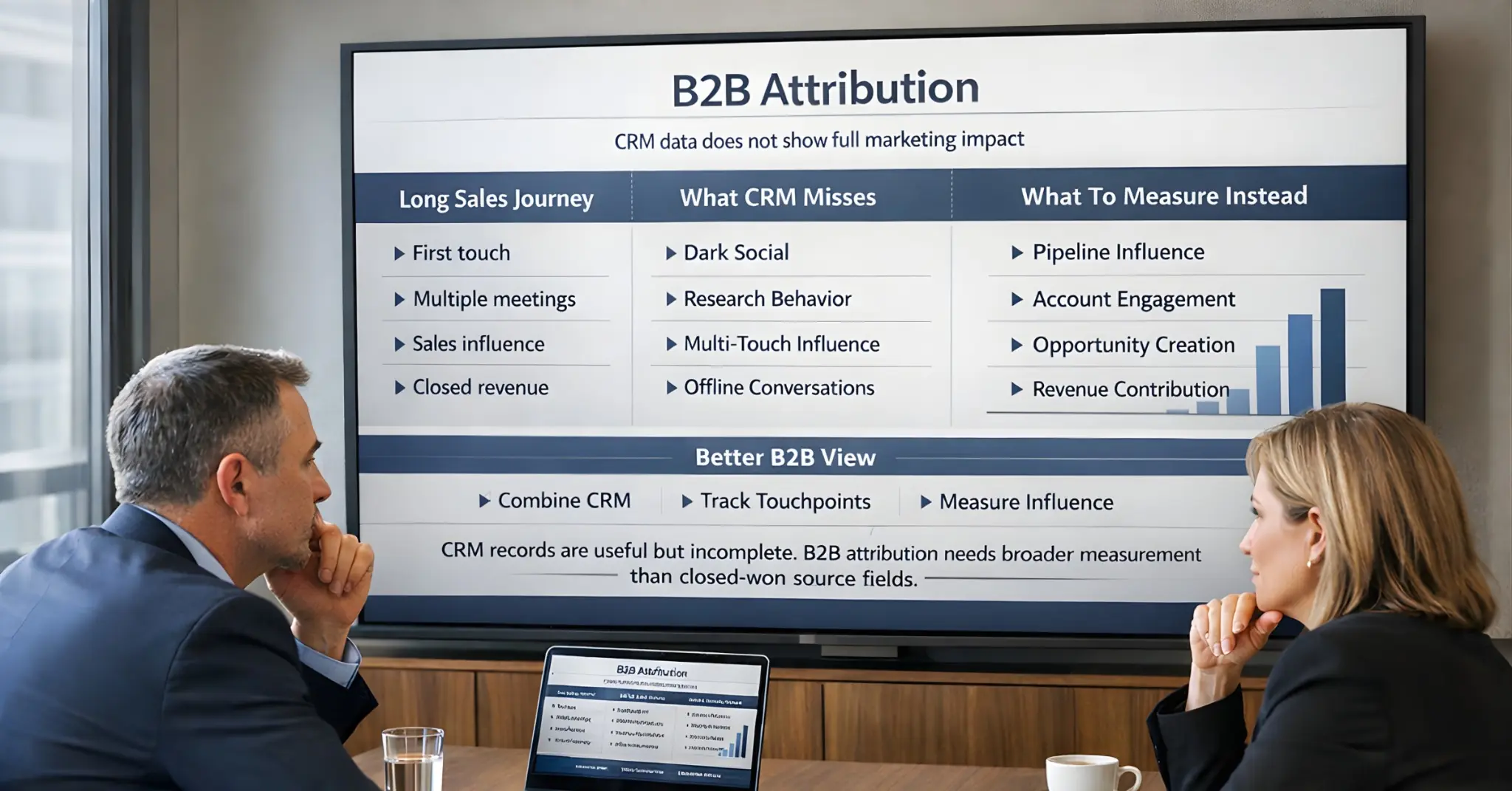
Unlike B2C purchases where someone clicks an ad and buys within minutes, B2B buying journeys span 3-18 months and involve 8-11 stakeholders researching across dozens of touchpoints. Your CRM shows closed deals. Your ad platforms claim conversions. But nothing connects the two in a way that tells you where to invest your next dollar.
The result? Most B2B marketers are flying blind, making budget decisions based on lead volume instead of revenue outcomes, gut feel instead of data, or whoever makes the most compelling slide deck in the next budget meeting.
This guide breaks down what's actually broken in B2B attribution, which models work for complex sales cycles, and how to connect ad spend to closed revenue in 2026.
The B2B Attribution Gap: What Your Data Is Missing
B2B attribution has always been harder than B2C. But in 2026, the gap between what you can track and what actually happens has become a chasm.
The 40-60% Signal Loss Problem
Privacy changes have decimated tracking accuracy. iOS App Tracking Transparency, Safari Intelligent Tracking Prevention, ad blockers, and the death of third-party cookies mean 40-60% of conversions never show up in your ad platforms.
For B2C companies with 24-hour purchase cycles, this is painful but manageable. For B2B companies with 6-month sales cycles, it's devastating.
Here's why: every touchpoint that drops out of your tracking creates a gap in the buyer journey. If a prospect clicks your LinkedIn ad on their iPhone (untracked), reads your content on their work laptop (different device), attends your webinar from home (third device), and finally requests a demo from their office (finally tracked), your attribution sees only the demo request. The three touchpoints that built interest and trust? Invisible.
THE B2B ATTRIBUTION GAP
════════════════════════════════════════════════════════════════════════════

    WHAT YOUR ATTRIBUTION SEES:

    Demo Request  →  Sales Call  →  Closed Deal
         ↑
    "This is where the deal started"

    ─────────────────────────────────────────────────────────────────────────

    WHAT ACTUALLY HAPPENED:

    LinkedIn Ad  →  Blog Post  →  Podcast Mention  →  Colleague Referral
         │              │               │                    │
         │              │               │                    │
    (iPhone,         (Work          (Commute,            (Slack,
     blocked)        laptop)         no click)          untraceable)
                                                              │
                                                              ▼
                                                        Demo Request

    ─────────────────────────────────────────────────────────────────────────

    THE GAP:

    4 touchpoints happened
    1 touchpoint tracked
    75% of the journey is invisible

════════════════════════════════════════════════════════════════════════════
THE B2B ATTRIBUTION GAP
════════════════════════════════════════════════════════════════════════════
WHAT YOUR ATTRIBUTION SEES:
Demo Request → Sales Call → Closed Deal
↑
"This is where the deal started"
─────────────────────────────────────────────────────────────────────────
WHAT ACTUALLY HAPPENED:
LinkedIn Ad → Blog Post → Podcast Mention → Colleague Referral
│ │ │ │
│ │ │ │
(iPhone, (Work (Commute, (Slack,
blocked) laptop) no click) untraceable)
│
▼
Demo Request
─────────────────────────────────────────────────────────────────────────
THE GAP:
4 touchpoints happened
1 touchpoint tracked
75% of the journey is invisible
════════════════════════════════════════════════════════════════════════════THE B2B ATTRIBUTION GAP
════════════════════════════════════════════════════════════════════════════
WHAT YOUR ATTRIBUTION SEES:
Demo Request → Sales Call → Closed Deal
↑
"This is where the deal started"
─────────────────────────────────────────────────────────────────────────
WHAT ACTUALLY HAPPENED:
LinkedIn Ad → Blog Post → Podcast Mention → Colleague Referral
│ │ │ │
│ │ │ │
(iPhone, (Work (Commute, (Slack,
blocked) laptop) no click) untraceable)
│
▼
Demo Request
─────────────────────────────────────────────────────────────────────────
THE GAP:
4 touchpoints happened
1 touchpoint tracked
75% of the journey is invisible
════════════════════════════════════════════════════════════════════════════The Dark Funnel Problem
The "dark funnel" describes the buying activity that happens before any measurement begins, and in B2B, it's where most of the journey takes place.
Your prospect researches solutions in private Slack channels. They ask peers for recommendations on LinkedIn (but don't click any links). They listen to your CEO's podcast interview. They read industry analyst reports that mention your brand.
The newest dark funnel inhabitant: AI research. In 2026, prospects are asking ChatGPT, Claude, and Perplexity questions like "Which B2B CRM is best for mid-market SaaS?" or "Compare marketing attribution platforms for enterprise." These AI-assisted research sessions are 100% invisible to tracking — no clicks, no cookies, no pixels. When the prospect finally arrives at your website, they show up as "Direct" traffic with zero attribution history.
THE AI RESEARCH BLINDSPOT
════════════════════════════════════════════════════════════════════════════

    WHAT THE PROSPECT DOES:

    1. Asks AI: "Best B2B attribution tools for SaaS companies"
    2. AI mentions your brand among recommendations
    3. Prospect types your URL directly into browser
    4. Fills out demo request form

    ─────────────────────────────────────────────────────────────────────────

    WHAT YOUR ATTRIBUTION SEES:

    Source: Direct
    Medium: (none)
    Campaign: (none)

    "This lead came from nowhere"

    ─────────────────────────────────────────────────────────────────────────

    THE REALITY:

    Your brand awareness campaigns, content marketing, and thought
    leadership influenced the AI's recommendation. But the attribution
    trail is completely dark.

════════════════════════════════════════════════════════════════════════════
THE AI RESEARCH BLINDSPOT
════════════════════════════════════════════════════════════════════════════
WHAT THE PROSPECT DOES:
1. Asks AI: "Best B2B attribution tools for SaaS companies"
2. AI mentions your brand among recommendations
3. Prospect types your URL directly into browser
4. Fills out demo request form
─────────────────────────────────────────────────────────────────────────
WHAT YOUR ATTRIBUTION SEES:
Source: Direct
Medium: (none)
Campaign: (none)
"This lead came from nowhere"
─────────────────────────────────────────────────────────────────────────
THE REALITY:
Your brand awareness campaigns, content marketing, and thought
leadership influenced the AI's recommendation. But the attribution
trail is completely dark.
════════════════════════════════════════════════════════════════════════════THE AI RESEARCH BLINDSPOT
════════════════════════════════════════════════════════════════════════════
WHAT THE PROSPECT DOES:
1. Asks AI: "Best B2B attribution tools for SaaS companies"
2. AI mentions your brand among recommendations
3. Prospect types your URL directly into browser
4. Fills out demo request form
─────────────────────────────────────────────────────────────────────────
WHAT YOUR ATTRIBUTION SEES:
Source: Direct
Medium: (none)
Campaign: (none)
"This lead came from nowhere"
─────────────────────────────────────────────────────────────────────────
THE REALITY:
Your brand awareness campaigns, content marketing, and thought
leadership influenced the AI's recommendation. But the attribution
trail is completely dark.
════════════════════════════════════════════════════════════════════════════The Vanish Effect — And What You Can Still Capture: While AI research is invisible, the intent signals become visible when prospects finally land on your site. Even if they arrive as "Direct" traffic with no attribution history, identity resolution can still identify the company domain from IP data, reveal firmographic signals (company size, industry, tech stack), and connect the anonymous visit to an Account ID. You can't see where they came from, but you can see who they are and what they're researching. That's often enough to prioritize and route the lead correctly.
By the time prospects visit your website and fill out a form, the decision is 60-80% made. Your attribution starts tracking at the finish line while missing the entire race.
The Multi-Stakeholder Blindspot
B2B purchases involve buying committees, not individual buyers. The marketing director who found you isn't the VP who attended your webinar, who isn't the CFO who reviewed pricing, who isn't the CEO who signed the contract.
Traditional attribution tracks individuals. But in B2B, you need to track accounts. When three people from the same company engage with your marketing, that's one deal in progress, not three separate leads.
INDIVIDUAL VS. ACCOUNT ATTRIBUTION
════════════════════════════════════════════════════════════════════════════

    INDIVIDUAL ATTRIBUTION (BROKEN):

    Marketing Director     →  Downloaded ebook (Lead #1)
    VP of Sales           →  Attended webinar (Lead #2)
    CFO                   →  Visited pricing page (Lead #3)
    CEO                   →  Requested demo (Lead #4)

    Your system sees: 4 separate leads from 4 different sources
    Reality: 1 buying committee, 1 deal

    ─────────────────────────────────────────────────────────────────────────

    ACCOUNT ATTRIBUTION (ACCURATE):

    Acme Corp Account:

    ├── Marketing Director: Ebook (awareness)
    ├── VP of Sales: Webinar (evaluation)
    ├── CFO: Pricing (consideration)
    └── CEO: Demo (decision)

    Your system sees: 1 account with 4 engaged stakeholders
    Attribution: All 4 touchpoints credited to 1 deal

════════════════════════════════════════════════════════════════════════════
INDIVIDUAL VS. ACCOUNT ATTRIBUTION
════════════════════════════════════════════════════════════════════════════
INDIVIDUAL ATTRIBUTION (BROKEN):
Marketing Director → Downloaded ebook (Lead #1)
VP of Sales → Attended webinar (Lead #2)
CFO → Visited pricing page (Lead #3)
CEO → Requested demo (Lead #4)
Your system sees: 4 separate leads from 4 different sources
Reality: 1 buying committee, 1 deal
─────────────────────────────────────────────────────────────────────────
ACCOUNT ATTRIBUTION (ACCURATE):
Acme Corp Account:
├── Marketing Director: Ebook (awareness)
├── VP of Sales: Webinar (evaluation)
├── CFO: Pricing (consideration)
└── CEO: Demo (decision)
Your system sees: 1 account with 4 engaged stakeholders
Attribution: All 4 touchpoints credited to 1 deal
════════════════════════════════════════════════════════════════════════════INDIVIDUAL VS. ACCOUNT ATTRIBUTION
════════════════════════════════════════════════════════════════════════════
INDIVIDUAL ATTRIBUTION (BROKEN):
Marketing Director → Downloaded ebook (Lead #1)
VP of Sales → Attended webinar (Lead #2)
CFO → Visited pricing page (Lead #3)
CEO → Requested demo (Lead #4)
Your system sees: 4 separate leads from 4 different sources
Reality: 1 buying committee, 1 deal
─────────────────────────────────────────────────────────────────────────
ACCOUNT ATTRIBUTION (ACCURATE):
Acme Corp Account:
├── Marketing Director: Ebook (awareness)
├── VP of Sales: Webinar (evaluation)
├── CFO: Pricing (consideration)
└── CEO: Demo (decision)
Your system sees: 1 account with 4 engaged stakeholders
Attribution: All 4 touchpoints credited to 1 deal
════════════════════════════════════════════════════════════════════════════The Identity Resolution Challenge: The problem gets harder when stakeholders use different devices. User A from Acme Corp visits on their iPhone during lunch. User B visits on their work laptop that afternoon. User C browses on a tablet at home. Without identity resolution, these appear as three anonymous visitors from three different sessions.
Account-based attribution requires "stitching" these fragmented sessions into a unified Account ID before the data hits your CRM. This identity resolution layer connects:
IP addresses that identify company networks
Email domains when forms are filled
Device fingerprints across sessions
Cross-device graphs linking mobile and desktop
When identity resolution works, you see "Acme Corp engaged 4 times across 3 stakeholders" instead of "4 anonymous visits from unknown sources."
The CRM-Marketing Disconnect
Your marketing platforms track leads. Your CRM tracks deals. The two rarely talk to each other.
When a deal closes in Salesforce, can you trace it back to the original ad campaign that generated the first touchpoint? For most B2B companies, the answer is no. Marketing optimization stops at the MQL stage, creating a massive blindspot between "lead generated" and "revenue closed."
Attribution Models That Actually Work for B2B
There's no perfect attribution model. But some models fail spectacularly for B2B while others provide useful signal. For a deeper breakdown of attribution in B2B marketing — covering campaign-level credit, MQL-to-revenue mapping, and channel-specific behavior — that guide goes one layer deeper.
Why Single-Touch Models Fail in B2B
First-touch attribution gives 100% credit to whatever brought the prospect in initially. Useful for measuring awareness channels, but it ignores the 5+ months of nurturing that actually closed the deal.
Last-touch attribution gives 100% credit to the final touchpoint before conversion. In B2B, this almost always credits branded search or direct traffic, since prospects search your company name before requesting a demo. It tells you nothing about what created the demand in the first place.
Both models assume a short, simple buyer journey. B2B has neither.
Multi-Touch Models for Long Sales Cycles
Linear attribution distributes credit equally across all touchpoints. If there were 10 interactions before the deal closed, each gets 10%. Fair, but it treats the first blog post visit the same as the demo that sealed the deal.
Time-decay attribution gives more credit to recent touchpoints, assuming interactions closer to conversion had more influence. This works reasonably well for B2B, since the sales call last week probably mattered more than the blog post from six months ago. But it can undervalue the awareness campaigns that started the journey.
Position-based (U-shaped) attribution gives 40% credit to the first touch, 40% to the last touch, and distributes 20% across the middle. This recognizes that both discovery and conversion moments are critical while acknowledging that nurturing matters too.
ATTRIBUTION MODEL COMPARISON FOR B2B
════════════════════════════════════════════════════════════════════════════

    EXAMPLE JOURNEY:

    LinkedIn Ad → Blog → Webinar → Sales Call → Demo → Close

    ─────────────────────────────────────────────────────────────────────────

    FIRST-TOUCH:

    LinkedIn Ad: 100%     Blog: 0%     Webinar: 0%     Demo: 0%

    Problem: Ignores everything that closed the deal

    ─────────────────────────────────────────────────────────────────────────

    LAST-TOUCH:

    LinkedIn Ad: 0%       Blog: 0%     Webinar: 0%     Demo: 100%

    Problem: Ignores everything that created the opportunity

    ─────────────────────────────────────────────────────────────────────────

    POSITION-BASED (U-SHAPED):

    LinkedIn Ad: 40%      Blog: 6.7%   Webinar: 6.7%   Demo: 40%
                          Sales Call: 6.7%

    Better: Credits discovery AND conversion

    ─────────────────────────────────────────────────────────────────────────

    TIME-DECAY:

    LinkedIn Ad: 5%       Blog: 10%    Webinar: 15%    Demo: 40%
                          Sales Call: 30%

    Better: Weights recent influence higher

════════════════════════════════════════════════════════════════════════════
ATTRIBUTION MODEL COMPARISON FOR B2B
════════════════════════════════════════════════════════════════════════════
EXAMPLE JOURNEY:
LinkedIn Ad → Blog → Webinar → Sales Call → Demo → Close
─────────────────────────────────────────────────────────────────────────
FIRST-TOUCH:
LinkedIn Ad: 100% Blog: 0% Webinar: 0% Demo: 0%
Problem: Ignores everything that closed the deal
─────────────────────────────────────────────────────────────────────────
LAST-TOUCH:
LinkedIn Ad: 0% Blog: 0% Webinar: 0% Demo: 100%
Problem: Ignores everything that created the opportunity
─────────────────────────────────────────────────────────────────────────
POSITION-BASED (U-SHAPED):
LinkedIn Ad: 40% Blog: 6.7% Webinar: 6.7% Demo: 40%
Sales Call: 6.7%
Better: Credits discovery AND conversion
─────────────────────────────────────────────────────────────────────────
TIME-DECAY:
LinkedIn Ad: 5% Blog: 10% Webinar: 15% Demo: 40%
Sales Call: 30%
Better: Weights recent influence higher
════════════════════════════════════════════════════════════════════════════ATTRIBUTION MODEL COMPARISON FOR B2B
════════════════════════════════════════════════════════════════════════════
EXAMPLE JOURNEY:
LinkedIn Ad → Blog → Webinar → Sales Call → Demo → Close
─────────────────────────────────────────────────────────────────────────
FIRST-TOUCH:
LinkedIn Ad: 100% Blog: 0% Webinar: 0% Demo: 0%
Problem: Ignores everything that closed the deal
─────────────────────────────────────────────────────────────────────────
LAST-TOUCH:
LinkedIn Ad: 0% Blog: 0% Webinar: 0% Demo: 100%
Problem: Ignores everything that created the opportunity
─────────────────────────────────────────────────────────────────────────
POSITION-BASED (U-SHAPED):
LinkedIn Ad: 40% Blog: 6.7% Webinar: 6.7% Demo: 40%
Sales Call: 6.7%
Better: Credits discovery AND conversion
─────────────────────────────────────────────────────────────────────────
TIME-DECAY:
LinkedIn Ad: 5% Blog: 10% Webinar: 15% Demo: 40%
Sales Call: 30%
Better: Weights recent influence higher
════════════════════════════════════════════════════════════════════════════Data-Driven Attribution: The 2026 Standard
The most sophisticated approach uses machine learning to analyze your actual conversion patterns and assign credit based on what the data shows matters most.
Instead of applying predetermined rules, data-driven attribution learns from your specific buying journeys. If webinar attendance strongly correlates with closed deals in your data, webinars get more credit. If certain content downloads predict high-value customers, those touchpoints get weighted higher.
The catch: you need substantial conversion volume to make this work. Most B2B attribution platforms require at least 300 conversions over 30 days to generate statistically meaningful models. For companies with lower deal volume, position-based or time-decay models remain more practical.
Connecting Ad Spend to Closed Revenue
The fundamental attribution challenge in B2B isn't choosing the right model. It's connecting marketing touchpoints to actual closed deals, not just leads.
The Revenue Connection Stack
Building reliable B2B attribution requires three layers working together:
Layer 1: Signal Recovery Server-side tracking that captures conversions despite iOS privacy and browser blocking. This recovers 25-40% of the conversions that pixel-based tracking misses.
Layer 2: Identity Resolution Connecting multiple devices, sessions, and stakeholders to unified account profiles. This turns fragmented touchpoints into coherent buying journeys.
Layer 3: CRM Integration Flowing closed-deal data back to your attribution platform so you can see which marketing drove revenue, not just leads.
THE REVENUE CONNECTION FLOW
════════════════════════════════════════════════════════════════════════════

    AD PLATFORMS          YOUR SERVER           CRM

    LinkedIn Ad      →    Server-Side     →    Lead Created
         │                Tracking               │
         │                    │                  │
         │                    ▼                  │
         │              Identity              MQL  →  SQL  →  Opportunity
         │              Resolution               │          │
         │                    │                  │          │
         └─────────────────────────────────────────────────────────────┐
                                                                      │
    ATTRIBUTION PLATFORM                                              │
                                                                      │
    ┌─────────────────────────────────────────────────────────────────┘
    │
    ▼
    Deal Closed: $50,000

    Revenue attributed back to:
    - LinkedIn Ad (first touch): 40% = $20,000
    - Webinar (middle touch): 20% = $10,000
    - Demo request (last touch): 40% = $20,000

════════════════════════════════════════════════════════════════════════════
THE REVENUE CONNECTION FLOW
════════════════════════════════════════════════════════════════════════════
AD PLATFORMS YOUR SERVER CRM
LinkedIn Ad → Server-Side → Lead Created
│ Tracking │
│ │ │
│ ▼ │
│ Identity MQL → SQL → Opportunity
│ Resolution │ │
│ │ │ │
└─────────────────────────────────────────────────────────────┐
│
ATTRIBUTION PLATFORM │
│
┌─────────────────────────────────────────────────────────────────┘
│
▼
Deal Closed: $50,000
Revenue attributed back to:
- LinkedIn Ad (first touch): 40% = $20,000
- Webinar (middle touch): 20% = $10,000
- Demo request (last touch): 40% = $20,000
════════════════════════════════════════════════════════════════════════════THE REVENUE CONNECTION FLOW
════════════════════════════════════════════════════════════════════════════
AD PLATFORMS YOUR SERVER CRM
LinkedIn Ad → Server-Side → Lead Created
│ Tracking │
│ │ │
│ ▼ │
│ Identity MQL → SQL → Opportunity
│ Resolution │ │
│ │ │ │
└─────────────────────────────────────────────────────────────┐
│
ATTRIBUTION PLATFORM │
│
┌─────────────────────────────────────────────────────────────────┘
│
▼
Deal Closed: $50,000
Revenue attributed back to:
- LinkedIn Ad (first touch): 40% = $20,000
- Webinar (middle touch): 20% = $10,000
- Demo request (last touch): 40% = $20,000
════════════════════════════════════════════════════════════════════════════Why Server-Side Tracking Is Non-Negotiable
In 2026, pixel-based tracking captures roughly 40-60% of actual conversions. The rest disappear into iOS privacy restrictions, browser blocking, and cross-device gaps.
Server-side tracking fires on your server instead of the visitor's browser. When someone fills out a demo request form, your server captures the event and sends it to your attribution platform, bypassing browser restrictions entirely.
For B2B, server-side tracking also enables something pixel tracking can't: sending closed-deal events back to ad platforms. When a deal closes in your CRM 4 months after the initial click, server-side tracking is the bridge to this API — it captures the LinkedIn click ID at form submission and stores it in your CRM, enabling the revenue sync when deals close months later. To review pricing for this use case, see how server-side tracking and CRM-syncing infrastructure scale with B2B deal volume.
2026 Update: LinkedIn Revenue Attribution API. In early 2026, LinkedIn launched enhanced "Offline Conversion" capabilities that allow direct CRM-to-platform syncing. This means you can now feed closed-deal revenue data from Salesforce or HubSpot directly back to LinkedIn Ads. Server-side tracking is the bridge to this API — it captures the LinkedIn click ID at form submission and stores it in your CRM, enabling the revenue sync when deals close months later.
Enriching Attribution With CRM Data
Raw attribution data tells you which touchpoints happened. CRM-enriched attribution tells you which touchpoints led to revenue.
When you connect your CRM to your attribution platform, you can:
Calculate revenue-weighted ROAS: Which campaigns drive deals, not just leads
Identify high-LTV patterns: Which touchpoints correlate with your best customers
Optimize for pipeline velocity: Which channels close fastest, not just cheapest
Feed better signals to ad platforms: Train algorithms on closed revenue, not MQLs
LEAD-BASED VS. REVENUE-WEIGHTED ATTRIBUTION
════════════════════════════════════════════════════════════════════════════

    LEAD-BASED (MISLEADING):

    Channel         Leads    Cost/Lead    Verdict
    ────────        ─────    ─────────    ───────
    LinkedIn        500      $40          "Scale this!"
    Webinars        50       $200         "Cut this!"

    ─────────────────────────────────────────────────────────────────────────

    REVENUE-WEIGHTED (ACCURATE):

    Channel         Leads    Closed    Revenue      Cost/Revenue
    ────────        ─────    ──────    ───────      ────────────
    LinkedIn        500      10 (2%)   $100,000     $0.20
    Webinars        50       10 (20%)  $500,000     $0.02

    ─────────────────────────────────────────────────────────────────────────

    THE INSIGHT:

    LinkedIn looks 5x better on cost-per-lead
    Webinars are 10x better on cost-per-revenue

    Lead-based optimization destroys your pipeline

════════════════════════════════════════════════════════════════════════════LEAD-BASED VS. REVENUE-WEIGHTED ATTRIBUTION
════════════════════════════════════════════════════════════════════════════
LEAD-BASED (MISLEADING):
Channel Leads Cost/Lead Verdict
──────── ───── ───────── ───────
LinkedIn 500 $40 "Scale this!"
Webinars 50 $200 "Cut this!"
─────────────────────────────────────────────────────────────────────────
REVENUE-WEIGHTED (ACCURATE):
Channel Leads Closed Revenue Cost/Revenue
──────── ───── ────── ─────── ────────────
LinkedIn 500 10 (2%) $100,000 $0.20
Webinars 50 10 (20%) $500,000 $0.02
─────────────────────────────────────────────────────────────────────────
THE INSIGHT:
LinkedIn looks 5x better on cost-per-lead
Webinars are 10x better on cost-per-revenue
Lead-based optimization destroys your pipeline
════════════════════════════════════════════════════════════════════════════LEAD-BASED VS. REVENUE-WEIGHTED ATTRIBUTION
════════════════════════════════════════════════════════════════════════════
LEAD-BASED (MISLEADING):
Channel Leads Cost/Lead Verdict
──────── ───── ───────── ───────
LinkedIn 500 $40 "Scale this!"
Webinars 50 $200 "Cut this!"
─────────────────────────────────────────────────────────────────────────
REVENUE-WEIGHTED (ACCURATE):
Channel Leads Closed Revenue Cost/Revenue
──────── ───── ────── ─────── ────────────
LinkedIn 500 10 (2%) $100,000 $0.20
Webinars 50 10 (20%) $500,000 $0.02
─────────────────────────────────────────────────────────────────────────
THE INSIGHT:
LinkedIn looks 5x better on cost-per-lead
Webinars are 10x better on cost-per-revenue
Lead-based optimization destroys your pipeline
════════════════════════════════════════════════════════════════════════════The 2026 B2B Attribution Playbook
Perfect attribution doesn't exist. But dramatically better attribution is achievable with the right approach.
Step 1: Measure Your Attribution Gap
Before optimizing, understand how broken your current tracking is.
Compare your ad platform reported conversions to your CRM leads for the same period. The gap between them is your attribution blindspot.
B2B ATTRIBUTION GAP FORMULA
════════════════════════════════════════════════════════════════════════════

                         Ad Platform Conversions - CRM Leads
    Attribution Gap (%) = ─────────────────────────────────────── × 100
                                    CRM Leads

    ─────────────────────────────────────────────────────────────────────────

    EXAMPLE:

    LinkedIn reported:       200 conversions
    Salesforce leads:        120 leads

                             200 - 120
    Attribution Gap (%)  =   ─────────  × 100   =   67%
                               120

    Interpretation: LinkedIn is over-reporting by 67%
    (or you have a 40% tracking gap on the CRM side)

════════════════════════════════════════════════════════════════════════════
B2B ATTRIBUTION GAP FORMULA
════════════════════════════════════════════════════════════════════════════
Ad Platform Conversions - CRM Leads
Attribution Gap (%) = ─────────────────────────────────────── × 100
CRM Leads
─────────────────────────────────────────────────────────────────────────
EXAMPLE:
LinkedIn reported: 200 conversions
Salesforce leads: 120 leads
200 - 120
Attribution Gap (%) = ───────── × 100 = 67%
120
Interpretation: LinkedIn is over-reporting by 67%
(or you have a 40% tracking gap on the CRM side)
════════════════════════════════════════════════════════════════════════════B2B ATTRIBUTION GAP FORMULA
════════════════════════════════════════════════════════════════════════════
Ad Platform Conversions - CRM Leads
Attribution Gap (%) = ─────────────────────────────────────── × 100
CRM Leads
─────────────────────────────────────────────────────────────────────────
EXAMPLE:
LinkedIn reported: 200 conversions
Salesforce leads: 120 leads
200 - 120
Attribution Gap (%) = ───────── × 100 = 67%
120
Interpretation: LinkedIn is over-reporting by 67%
(or you have a 40% tracking gap on the CRM side)
════════════════════════════════════════════════════════════════════════════Step 2: Implement Server-Side Tracking
Move critical conversion events to server-side firing. Prioritize demo requests, contact form submissions, and any event that indicates buying intent.
Step 3: Connect CRM to Attribution
Build the pipeline that flows closed-deal data back to your attribution platform. This typically requires integration between Salesforce/HubSpot and your attribution tool.
Step 4: Choose Account-Level Attribution
Switch from individual lead attribution to account-level attribution. Aggregate all stakeholder touchpoints under unified company profiles.
Step 5: Implement Revenue-Weighted Reporting
Stop reporting on lead volume. Start reporting on revenue influenced, pipeline generated, and cost per closed customer. For the parallel revenue-weighted approach in DTC contexts, see ways to grow an ecommerce brand — the framework translates across both motions.
Pipeline Velocity is the metric Growth Architects love — it measures how fast revenue moves through your funnel:
PIPELINE VELOCITY FORMULA
════════════════════════════════════════════════════════════════════════════

                    Opportunities × Deal Value × Win Rate
    Pipeline Velocity = ──────────────────────────────────────────
                              Sales Cycle Length (days)

    ─────────────────────────────────────────────────────────────────────────

    EXAMPLE:

    Opportunities:       50
    Avg Deal Value:      $25,000
    Win Rate:            20%
    Sales Cycle:         90 days

                         50 × $25,000 × 0.20
    Pipeline Velocity = ────────────────────── = $2,778/day
                               90

    ─────────────────────────────────────────────────────────────────────────

    WHY IT MATTERS:

    Channel A: High lead volume, 180-day cycle → $1,200/day velocity
    Channel B: Low lead volume, 45-day cycle  → $3,500/day velocity

    Channel B generates revenue 3x faster despite fewer leads

════════════════════════════════════════════════════════════════════════════
PIPELINE VELOCITY FORMULA
════════════════════════════════════════════════════════════════════════════
Opportunities × Deal Value × Win Rate
Pipeline Velocity = ──────────────────────────────────────────
Sales Cycle Length (days)
─────────────────────────────────────────────────────────────────────────
EXAMPLE:
Opportunities: 50
Avg Deal Value: $25,000
Win Rate: 20%
Sales Cycle: 90 days
50 × $25,000 × 0.20
Pipeline Velocity = ────────────────────── = $2,778/day
90
─────────────────────────────────────────────────────────────────────────
WHY IT MATTERS:
Channel A: High lead volume, 180-day cycle → $1,200/day velocity
Channel B: Low lead volume, 45-day cycle → $3,500/day velocity
Channel B generates revenue 3x faster despite fewer leads
════════════════════════════════════════════════════════════════════════════PIPELINE VELOCITY FORMULA
════════════════════════════════════════════════════════════════════════════
Opportunities × Deal Value × Win Rate
Pipeline Velocity = ──────────────────────────────────────────
Sales Cycle Length (days)
─────────────────────────────────────────────────────────────────────────
EXAMPLE:
Opportunities: 50
Avg Deal Value: $25,000
Win Rate: 20%
Sales Cycle: 90 days
50 × $25,000 × 0.20
Pipeline Velocity = ────────────────────── = $2,778/day
90
─────────────────────────────────────────────────────────────────────────
WHY IT MATTERS:
Channel A: High lead volume, 180-day cycle → $1,200/day velocity
Channel B: Low lead volume, 45-day cycle → $3,500/day velocity
Channel B generates revenue 3x faster despite fewer leads
════════════════════════════════════════════════════════════════════════════When you track pipeline velocity by channel, you discover which sources generate revenue fastest — not just cheapest or highest volume.
Step 6: Add Self-Reported Attribution
Since technical tracking in B2B is fundamentally broken, "How did you hear about us?" fields are back in style. Add a self-reported attribution question to your demo request forms.
The hybrid approach: Compare your digital Multi-Touch Attribution (MTA) against Self-Reported Attribution (SRA) from the demo form. When they align, you have confidence. When they diverge, you've found a dark funnel gap to investigate.
HYBRID ATTRIBUTION: MTA VS. SRA
════════════════════════════════════════════════════════════════════════════

    DEMO REQUEST FORM DATA:

    Lead: Sarah Chen, VP Marketing at Acme Corp

    ─────────────────────────────────────────────────────────────────────────

    MULTI-TOUCH ATTRIBUTION (MTA):

    First Touch:     LinkedIn Ad (30 days ago)
    Last Touch:      Google Branded Search (today)
    Verdict:         "LinkedIn drove this lead"

    ─────────────────────────────────────────────────────────────────────────

    SELF-REPORTED ATTRIBUTION (SRA):

    "How did you hear about us?"
    Answer:          "A colleague recommended you after seeing
                      your CEO on the Revenue Rebels podcast"

    ─────────────────────────────────────────────────────────────────────────

    THE INSIGHT:

    MTA credits: LinkedIn + Google
    SRA credits: Podcast + Word-of-mouth

    Both are true. Neither is complete.
    Hybrid attribution captures the full picture.

════════════════════════════════════════════════════════════════════════════
HYBRID ATTRIBUTION: MTA VS. SRA
════════════════════════════════════════════════════════════════════════════
DEMO REQUEST FORM DATA:
Lead: Sarah Chen, VP Marketing at Acme Corp
─────────────────────────────────────────────────────────────────────────
MULTI-TOUCH ATTRIBUTION (MTA):
First Touch: LinkedIn Ad (30 days ago)
Last Touch: Google Branded Search (today)
Verdict: "LinkedIn drove this lead"
─────────────────────────────────────────────────────────────────────────
SELF-REPORTED ATTRIBUTION (SRA):
"How did you hear about us?"
Answer: "A colleague recommended you after seeing
your CEO on the Revenue Rebels podcast"
─────────────────────────────────────────────────────────────────────────
THE INSIGHT:
MTA credits: LinkedIn + Google
SRA credits: Podcast + Word-of-mouth
Both are true. Neither is complete.
Hybrid attribution captures the full picture.
════════════════════════════════════════════════════════════════════════════HYBRID ATTRIBUTION: MTA VS. SRA
════════════════════════════════════════════════════════════════════════════
DEMO REQUEST FORM DATA:
Lead: Sarah Chen, VP Marketing at Acme Corp
─────────────────────────────────────────────────────────────────────────
MULTI-TOUCH ATTRIBUTION (MTA):
First Touch: LinkedIn Ad (30 days ago)
Last Touch: Google Branded Search (today)
Verdict: "LinkedIn drove this lead"
─────────────────────────────────────────────────────────────────────────
SELF-REPORTED ATTRIBUTION (SRA):
"How did you hear about us?"
Answer: "A colleague recommended you after seeing
your CEO on the Revenue Rebels podcast"
─────────────────────────────────────────────────────────────────────────
THE INSIGHT:
MTA credits: LinkedIn + Google
SRA credits: Podcast + Word-of-mouth
Both are true. Neither is complete.
Hybrid attribution captures the full picture.
════════════════════════════════════════════════════════════════════════════The Bottom Line
B2B attribution in 2026 is fundamentally different from B2C. Multi-month sales cycles, buying committees with 8-11 stakeholders, 40-60% signal loss from privacy changes, and invisible AI research touchpoints mean traditional tracking approaches fail completely.
The companies winning at B2B attribution aren't chasing perfect data. They're building systems that:
Recover lost signals through server-side tracking
Stitch fragmented sessions into unified Account IDs through identity resolution
Aggregate stakeholder activity at the account level
Flow closed-deal revenue back to marketing touchpoints (including LinkedIn's new Revenue Attribution API)
Validate digital MTA with self-reported attribution from demo forms
Optimize for pipeline and revenue, not lead volume
Your CRM shows deals closing. Your ad platforms claim credit. The gap between them is where budget gets wasted. Close that gap — with both technical tracking and human-reported data — and you stop guessing which marketing works.