Ecommerce
Conversion Funnel Analytics: How to Find and Fix the Leaks Killing Your Revenue

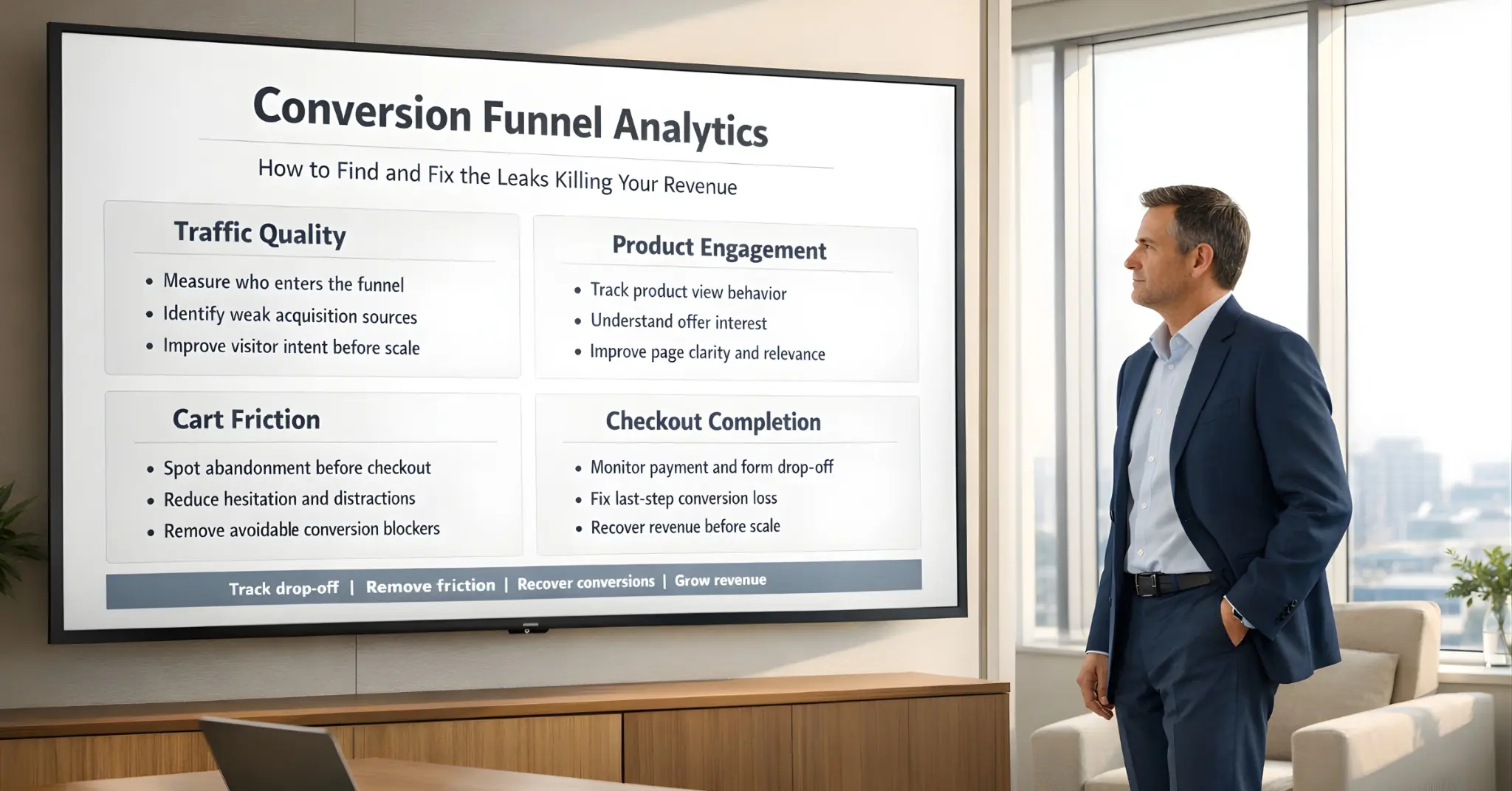
You're driving traffic. Running ads. Building landing pages. But somewhere between the first click and the final purchase, customers are disappearing.
The funnel has leaks. The question is: where?
Conversion funnel analytics is the practice of measuring, analyzing, and optimizing each stage of the customer journey. It reveals where customers drop off, why they leave, and what you can do about it. Without it, you're guessing. With it, you know exactly where to focus.
But here's the problem most guides won't mention: funnel analytics only works if you can actually see what's happening. When your tracking misses 40-60% of customer interactions, your funnel analysis is built on incomplete data. You're finding some leaks while others remain invisible.
Let's fix that.
What Conversion Funnel Analytics Actually Measures
A conversion funnel represents the stages customers move through on their way to purchase. Funnel analytics measures how many people enter each stage, how many move forward, and how many drop off.
THE ECOMMERCE FUNNEL
════════════════════════════════════════════════════════════════════════════

    AWARENESS
    ─────────
    Ad impression, social post, search result
    │
    ▼
    VISIT
    ─────
    Lands on site
    │                    ◄── Where are they dropping?
    ▼
    ENGAGEMENT
    ──────────
    Views products, browses categories
    │                    ◄── What's causing friction?
    ▼
    INTENT
    ──────
    Adds to cart, starts checkout
    │                    ◄── Why aren't they completing?
    ▼
    PURCHASE
    ────────
    Completes transaction


    FUNNEL ANALYTICS ANSWERS:
    ─────────────────────────
    • How many people reach each stage?
    • What percentage move to the next stage?
    • Where are the biggest drop-offs?
    • Which traffic sources have the best funnel performance?
    • What's different about customers who convert vs. those who don't?

════════════════════════════════════════════════════════════════════════════
THE ECOMMERCE FUNNEL
════════════════════════════════════════════════════════════════════════════

    AWARENESS
    ─────────
    Ad impression, social post, search result
    │
    ▼
    VISIT
    ─────
    Lands on site
    │                    ◄── Where are they dropping?
    ▼
    ENGAGEMENT
    ──────────
    Views products, browses categories
    │                    ◄── What's causing friction?
    ▼
    INTENT
    ──────
    Adds to cart, starts checkout
    │                    ◄── Why aren't they completing?
    ▼
    PURCHASE
    ────────
    Completes transaction


    FUNNEL ANALYTICS ANSWERS:
    ─────────────────────────
    • How many people reach each stage?
    • What percentage move to the next stage?
    • Where are the biggest drop-offs?
    • Which traffic sources have the best funnel performance?
    • What's different about customers who convert vs. those who don't?

════════════════════════════════════════════════════════════════════════════
THE ECOMMERCE FUNNEL
════════════════════════════════════════════════════════════════════════════

    AWARENESS
    ─────────
    Ad impression, social post, search result
    │
    ▼
    VISIT
    ─────
    Lands on site
    │                    ◄── Where are they dropping?
    ▼
    ENGAGEMENT
    ──────────
    Views products, browses categories
    │                    ◄── What's causing friction?
    ▼
    INTENT
    ──────
    Adds to cart, starts checkout
    │                    ◄── Why aren't they completing?
    ▼
    PURCHASE
    ────────
    Completes transaction


    FUNNEL ANALYTICS ANSWERS:
    ─────────────────────────
    • How many people reach each stage?
    • What percentage move to the next stage?
    • Where are the biggest drop-offs?
    • Which traffic sources have the best funnel performance?
    • What's different about customers who convert vs. those who don't?

════════════════════════════════════════════════════════════════════════════
The power of funnel analytics is specificity. Instead of asking "why isn't my site converting?" you can ask "why do 68% of add-to-cart visitors abandon before checkout?" That's an answerable question with actionable solutions.
The Multi-Session Reality
Here's what most funnel guides get wrong: they assume customers move through the funnel in a single session. For most brands, that's not how it works.
THE CONVERSION LAG REALITY
════════════════════════════════════════════════════════════════════════════

    THE MYTH:
    ─────────
    Visit → Engage → Add to Cart → Purchase (one session, 15 minutes)


    THE REALITY:
    ────────────
    Session 1 (Monday):      Visit → Browse → Leave
    Session 2 (Wednesday):   Return → Product View → Add to Cart → Leave
    Session 3 (Friday):      Return → Checkout → Abandon
    Session 4 (Sunday):      Return → Purchase

    Most customers take multiple sessions across multiple days.


    WHAT THIS MEANS FOR ANALYTICS:
    ──────────────────────────────
    That "drop-off" at the Engagement stage might not be a lost customer.
    They could be:

    • Switching devices (phone → laptop)
    • Waiting for payday
    • Comparison shopping
    • Waiting for a sale
    • Returning via different channel (direct, email)


    THE IDENTITY PROBLEM:
    ─────────────────────
    Standard analytics sees:

    • 4 different "visitors"
    • 1 purchase
    • High "drop-off rate" at each stage

    Reality:

    • 1 customer
    • 1 purchase
    • Normal multi-session journey


    Without cross-device identity resolution, your funnel looks
    far leakier than it actually is.

════════════════════════════════════════════════════════════════════════════
THE CONVERSION LAG REALITY
════════════════════════════════════════════════════════════════════════════

    THE MYTH:
    ─────────
    Visit → Engage → Add to Cart → Purchase (one session, 15 minutes)


    THE REALITY:
    ────────────
    Session 1 (Monday):      Visit → Browse → Leave
    Session 2 (Wednesday):   Return → Product View → Add to Cart → Leave
    Session 3 (Friday):      Return → Checkout → Abandon
    Session 4 (Sunday):      Return → Purchase

    Most customers take multiple sessions across multiple days.


    WHAT THIS MEANS FOR ANALYTICS:
    ──────────────────────────────
    That "drop-off" at the Engagement stage might not be a lost customer.
    They could be:

    • Switching devices (phone → laptop)
    • Waiting for payday
    • Comparison shopping
    • Waiting for a sale
    • Returning via different channel (direct, email)


    THE IDENTITY PROBLEM:
    ─────────────────────
    Standard analytics sees:

    • 4 different "visitors"
    • 1 purchase
    • High "drop-off rate" at each stage

    Reality:

    • 1 customer
    • 1 purchase
    • Normal multi-session journey


    Without cross-device identity resolution, your funnel looks
    far leakier than it actually is.

════════════════════════════════════════════════════════════════════════════
THE CONVERSION LAG REALITY
════════════════════════════════════════════════════════════════════════════

    THE MYTH:
    ─────────
    Visit → Engage → Add to Cart → Purchase (one session, 15 minutes)


    THE REALITY:
    ────────────
    Session 1 (Monday):      Visit → Browse → Leave
    Session 2 (Wednesday):   Return → Product View → Add to Cart → Leave
    Session 3 (Friday):      Return → Checkout → Abandon
    Session 4 (Sunday):      Return → Purchase

    Most customers take multiple sessions across multiple days.


    WHAT THIS MEANS FOR ANALYTICS:
    ──────────────────────────────
    That "drop-off" at the Engagement stage might not be a lost customer.
    They could be:

    • Switching devices (phone → laptop)
    • Waiting for payday
    • Comparison shopping
    • Waiting for a sale
    • Returning via different channel (direct, email)


    THE IDENTITY PROBLEM:
    ─────────────────────
    Standard analytics sees:

    • 4 different "visitors"
    • 1 purchase
    • High "drop-off rate" at each stage

    Reality:

    • 1 customer
    • 1 purchase
    • Normal multi-session journey


    Without cross-device identity resolution, your funnel looks
    far leakier than it actually is.

════════════════════════════════════════════════════════════════════════════
This is why session-based funnel analysis can be misleading. A customer who adds to cart on Sunday and purchases on Friday after a few more visits isn't a "cart abandoner" — they're a normal buyer with a considered purchase journey.
The Invisible Funnel Problem
Before diving into metrics and optimization, there's a foundational issue to address: you can't analyze what you can't see.
THE VISIBILITY GAP
════════════════════════════════════════════════════════════════════════════

    WHAT YOU THINK YOUR FUNNEL LOOKS LIKE:
    ──────────────────────────────────────

    1,000 visitors → 200 product views → 50 add to cart → 20 purchases

    Conversion rate: 2.0%
    Cart abandonment: 60%


    WHAT'S ACTUALLY HAPPENING:
    ──────────────────────────

    ~1,800 actual visitors → ~380 product views → ~95 add to cart → 35 purchases

    Your tracking only captures 40-60% of these interactions.


    THE PROBLEM:
    ────────────
    • Your "cart abandonment rate" is calculated from incomplete data
    • You're missing entire customer journeys
    • Some traffic sources appear worse than they are
    • Your funnel optimization is based on a partial picture

════════════════════════════════════════════════════════════════════════════
THE VISIBILITY GAP
════════════════════════════════════════════════════════════════════════════

    WHAT YOU THINK YOUR FUNNEL LOOKS LIKE:
    ──────────────────────────────────────

    1,000 visitors → 200 product views → 50 add to cart → 20 purchases

    Conversion rate: 2.0%
    Cart abandonment: 60%


    WHAT'S ACTUALLY HAPPENING:
    ──────────────────────────

    ~1,800 actual visitors → ~380 product views → ~95 add to cart → 35 purchases

    Your tracking only captures 40-60% of these interactions.


    THE PROBLEM:
    ────────────
    • Your "cart abandonment rate" is calculated from incomplete data
    • You're missing entire customer journeys
    • Some traffic sources appear worse than they are
    • Your funnel optimization is based on a partial picture

════════════════════════════════════════════════════════════════════════════
THE VISIBILITY GAP
════════════════════════════════════════════════════════════════════════════

    WHAT YOU THINK YOUR FUNNEL LOOKS LIKE:
    ──────────────────────────────────────

    1,000 visitors → 200 product views → 50 add to cart → 20 purchases

    Conversion rate: 2.0%
    Cart abandonment: 60%


    WHAT'S ACTUALLY HAPPENING:
    ──────────────────────────

    ~1,800 actual visitors → ~380 product views → ~95 add to cart → 35 purchases

    Your tracking only captures 40-60% of these interactions.


    THE PROBLEM:
    ────────────
    • Your "cart abandonment rate" is calculated from incomplete data
    • You're missing entire customer journeys
    • Some traffic sources appear worse than they are
    • Your funnel optimization is based on a partial picture

════════════════════════════════════════════════════════════════════════════
This happens because browser-based tracking (pixels, cookies) gets blocked by iOS privacy settings, ad blockers, browser restrictions, and cross-device journeys. The customers are there — you just can't see them.
Before optimizing your funnel, verify your tracking accuracy. Compare your analytics data against your actual backend transactions. If there's a significant gap, fix your tracking foundation first — see PantoSource in action to watch how server-side tracking closes that visibility gap on a live funnel.
Stage-by-Stage Funnel Analysis
Each funnel stage has specific metrics, benchmarks, and optimization levers. Here's how to analyze each one.
Stage 1: Visit (Traffic Quality)
Not all traffic is equal. Funnel analytics starts by understanding who's arriving and whether they're likely to convert.
VISIT STAGE ANALYSIS
════════════════════════════════════════════════════════════════════════════

    KEY QUESTIONS:
    ──────────────
    • Which traffic sources have the highest bounce rates?
    • Are certain landing pages underperforming?
    • Is mobile traffic bouncing more than desktop?
    • Do paid visitors behave differently than organic?


    METRICS TO TRACK:
    ─────────────────
    • Sessions by source/medium
    • Bounce rate (left without any action)
    • New vs. returning visitors
    • Device/browser breakdown
    • Landing page performance


    COMMON ISSUES:
    ──────────────
    • Misleading ad creative (promise doesn't match landing page)
    • Slow page load (each second delay costs conversions)
    • Poor mobile experience
    • Targeting the wrong audience

════════════════════════════════════════════════════════════════════════════
VISIT STAGE ANALYSIS
════════════════════════════════════════════════════════════════════════════

    KEY QUESTIONS:
    ──────────────
    • Which traffic sources have the highest bounce rates?
    • Are certain landing pages underperforming?
    • Is mobile traffic bouncing more than desktop?
    • Do paid visitors behave differently than organic?


    METRICS TO TRACK:
    ─────────────────
    • Sessions by source/medium
    • Bounce rate (left without any action)
    • New vs. returning visitors
    • Device/browser breakdown
    • Landing page performance


    COMMON ISSUES:
    ──────────────
    • Misleading ad creative (promise doesn't match landing page)
    • Slow page load (each second delay costs conversions)
    • Poor mobile experience
    • Targeting the wrong audience

════════════════════════════════════════════════════════════════════════════
VISIT STAGE ANALYSIS
════════════════════════════════════════════════════════════════════════════

    KEY QUESTIONS:
    ──────────────
    • Which traffic sources have the highest bounce rates?
    • Are certain landing pages underperforming?
    • Is mobile traffic bouncing more than desktop?
    • Do paid visitors behave differently than organic?


    METRICS TO TRACK:
    ─────────────────
    • Sessions by source/medium
    • Bounce rate (left without any action)
    • New vs. returning visitors
    • Device/browser breakdown
    • Landing page performance


    COMMON ISSUES:
    ──────────────
    • Misleading ad creative (promise doesn't match landing page)
    • Slow page load (each second delay costs conversions)
    • Poor mobile experience
    • Targeting the wrong audience

════════════════════════════════════════════════════════════════════════════
Stage 2: Engagement (Product Interest)
After landing, visitors need to engage with your products. This stage measures browsing behavior and interest signals.
ENGAGEMENT STAGE ANALYSIS
════════════════════════════════════════════════════════════════════════════

    KEY QUESTIONS:
    ──────────────
    • Are visitors finding products easily?
    • Which categories get viewed but not added to cart?
    • Is site search being used (and finding results)?
    • Where do your most engaged visitors come from?


    METRICS TO TRACK:
    ─────────────────
    • Product page views per session
    • Category page engagement
    • Average session duration
    • Pages per session
    • Product view rate


    COMMON ISSUES:
    ──────────────
    • Poor navigation or site structure
    • Weak product imagery or descriptions
    • Missing filters or sorting options
    • Products hard to find via search

════════════════════════════════════════════════════════════════════════════
ENGAGEMENT STAGE ANALYSIS
════════════════════════════════════════════════════════════════════════════

    KEY QUESTIONS:
    ──────────────
    • Are visitors finding products easily?
    • Which categories get viewed but not added to cart?
    • Is site search being used (and finding results)?
    • Where do your most engaged visitors come from?


    METRICS TO TRACK:
    ─────────────────
    • Product page views per session
    • Category page engagement
    • Average session duration
    • Pages per session
    • Product view rate


    COMMON ISSUES:
    ──────────────
    • Poor navigation or site structure
    • Weak product imagery or descriptions
    • Missing filters or sorting options
    • Products hard to find via search

════════════════════════════════════════════════════════════════════════════
ENGAGEMENT STAGE ANALYSIS
════════════════════════════════════════════════════════════════════════════

    KEY QUESTIONS:
    ──────────────
    • Are visitors finding products easily?
    • Which categories get viewed but not added to cart?
    • Is site search being used (and finding results)?
    • Where do your most engaged visitors come from?


    METRICS TO TRACK:
    ─────────────────
    • Product page views per session
    • Category page engagement
    • Average session duration
    • Pages per session
    • Product view rate


    COMMON ISSUES:
    ──────────────
    • Poor navigation or site structure
    • Weak product imagery or descriptions
    • Missing filters or sorting options
    • Products hard to find via search

════════════════════════════════════════════════════════════════════════════
The Quiz Funnel Advantage
In 2026, high-growth brands are inserting a new step between Visit and Engagement: the product quiz or personalization flow.
ZERO-PARTY DATA CAPTURE
════════════════════════════════════════════════════════════════════════════

    TRADITIONAL FUNNEL:
    ───────────────────
    Visit → Browse Products → (hope they find what they need)


    QUIZ-ENHANCED FUNNEL:
    ─────────────────────
    Visit → Take Quiz → Personalized Recommendations → Higher Conversion


    WHAT A QUIZ CAPTURES:
    ─────────────────────
    • Customer preferences (skin type, style, goals)
    • Email/phone for follow-up
    • Purchase intent signals
    • Product matching data


    WHY IT WORKS:
    ─────────────
    • Captures data BEFORE they leave
    • Creates personalized experience
    • Enables email follow-up if they don't buy
    • Reduces "browse and bounce" behavior
    • Quiz-takers typically convert at much higher rates

════════════════════════════════════════════════════════════════════════════
ZERO-PARTY DATA CAPTURE
════════════════════════════════════════════════════════════════════════════

    TRADITIONAL FUNNEL:
    ───────────────────
    Visit → Browse Products → (hope they find what they need)


    QUIZ-ENHANCED FUNNEL:
    ─────────────────────
    Visit → Take Quiz → Personalized Recommendations → Higher Conversion


    WHAT A QUIZ CAPTURES:
    ─────────────────────
    • Customer preferences (skin type, style, goals)
    • Email/phone for follow-up
    • Purchase intent signals
    • Product matching data


    WHY IT WORKS:
    ─────────────
    • Captures data BEFORE they leave
    • Creates personalized experience
    • Enables email follow-up if they don't buy
    • Reduces "browse and bounce" behavior
    • Quiz-takers typically convert at much higher rates

════════════════════════════════════════════════════════════════════════════
ZERO-PARTY DATA CAPTURE
════════════════════════════════════════════════════════════════════════════

    TRADITIONAL FUNNEL:
    ───────────────────
    Visit → Browse Products → (hope they find what they need)


    QUIZ-ENHANCED FUNNEL:
    ─────────────────────
    Visit → Take Quiz → Personalized Recommendations → Higher Conversion


    WHAT A QUIZ CAPTURES:
    ─────────────────────
    • Customer preferences (skin type, style, goals)
    • Email/phone for follow-up
    • Purchase intent signals
    • Product matching data


    WHY IT WORKS:
    ─────────────
    • Captures data BEFORE they leave
    • Creates personalized experience
    • Enables email follow-up if they don't buy
    • Reduces "browse and bounce" behavior
    • Quiz-takers typically convert at much higher rates

════════════════════════════════════════════════════════════════════════════
If you're struggling with Visit → Engagement drop-offs, a quiz funnel might be the answer. It captures data early, creates engagement, and enables remarketing to visitors who don't buy immediately.
Stage 3: Intent (Add to Cart)
Adding to cart signals purchase intent. This is where window shoppers separate from serious buyers.
INTENT STAGE ANALYSIS
════════════════════════════════════════════════════════════════════════════

    KEY QUESTIONS:
    ──────────────
    • Which products get viewed but not added to cart?
    • Is pricing a barrier (compare to competitors)?
    • Are trust signals visible (reviews, guarantees)?
    • Is the add-to-cart button prominent and clear?


    METRICS TO TRACK:
    ─────────────────
    • Add-to-cart rate (add-to-cart ÷ sessions)
    • Product-to-cart rate (add-to-cart ÷ product views)
    • Cart size (items and value)
    • Time from visit to add-to-cart


    COMMON ISSUES:
    ──────────────
    • Price concerns (no context or justification)
    • Missing product information
    • No social proof (reviews, ratings)
    • Out-of-stock items showing in browse
    • Hidden shipping costs revealed too late

════════════════════════════════════════════════════════════════════════════
INTENT STAGE ANALYSIS
════════════════════════════════════════════════════════════════════════════

    KEY QUESTIONS:
    ──────────────
    • Which products get viewed but not added to cart?
    • Is pricing a barrier (compare to competitors)?
    • Are trust signals visible (reviews, guarantees)?
    • Is the add-to-cart button prominent and clear?


    METRICS TO TRACK:
    ─────────────────
    • Add-to-cart rate (add-to-cart ÷ sessions)
    • Product-to-cart rate (add-to-cart ÷ product views)
    • Cart size (items and value)
    • Time from visit to add-to-cart


    COMMON ISSUES:
    ──────────────
    • Price concerns (no context or justification)
    • Missing product information
    • No social proof (reviews, ratings)
    • Out-of-stock items showing in browse
    • Hidden shipping costs revealed too late

════════════════════════════════════════════════════════════════════════════
INTENT STAGE ANALYSIS
════════════════════════════════════════════════════════════════════════════

    KEY QUESTIONS:
    ──────────────
    • Which products get viewed but not added to cart?
    • Is pricing a barrier (compare to competitors)?
    • Are trust signals visible (reviews, guarantees)?
    • Is the add-to-cart button prominent and clear?


    METRICS TO TRACK:
    ─────────────────
    • Add-to-cart rate (add-to-cart ÷ sessions)
    • Product-to-cart rate (add-to-cart ÷ product views)
    • Cart size (items and value)
    • Time from visit to add-to-cart


    COMMON ISSUES:
    ──────────────
    • Price concerns (no context or justification)
    • Missing product information
    • No social proof (reviews, ratings)
    • Out-of-stock items showing in browse
    • Hidden shipping costs revealed too late

════════════════════════════════════════════════════════════════════════════
Stage 4: Checkout (Cart to Purchase)
The checkout stage is where you either close the sale or lose the customer. Cart abandonment is the most expensive leak in most funnels.
CHECKOUT STAGE ANALYSIS
════════════════════════════════════════════════════════════════════════════

    KEY QUESTIONS:
    ──────────────
    • At which checkout step do most customers abandon?
    • Is shipping cost revealed too late?
    • Are enough payment options available?
    • Is guest checkout offered?
    • How does mobile checkout compare to desktop?


    METRICS TO TRACK:
    ─────────────────
    • Cart abandonment rate
    • Checkout abandonment rate (started but didn't finish)
    • Checkout completion rate
    • Payment failure rate
    • Time to complete checkout


    TOP CART ABANDONMENT DRIVERS:
    ─────────────────────────────
    • Extra costs too high (shipping, tax, fees)
    • Required to create an account
    • Delivery too slow
    • Didn't trust site with payment info
    • Checkout process too complicated
    • Couldn't see total cost upfront
    • Returns policy unsatisfactory


    MOBILE vs. DESKTOP:
    ───────────────────
    Mobile checkout abandonment is typically higher than desktop.

    Why mobile is harder:
    • Form fields are painful on small screens
    • Trust badges often get cropped
    • Card entry is cumbersome without Apple/Google Pay
    • Slower load times on mobile networks

    Analyze and optimize mobile separately.

════════════════════════════════════════════════════════════════════════════
CHECKOUT STAGE ANALYSIS
════════════════════════════════════════════════════════════════════════════

    KEY QUESTIONS:
    ──────────────
    • At which checkout step do most customers abandon?
    • Is shipping cost revealed too late?
    • Are enough payment options available?
    • Is guest checkout offered?
    • How does mobile checkout compare to desktop?


    METRICS TO TRACK:
    ─────────────────
    • Cart abandonment rate
    • Checkout abandonment rate (started but didn't finish)
    • Checkout completion rate
    • Payment failure rate
    • Time to complete checkout


    TOP CART ABANDONMENT DRIVERS:
    ─────────────────────────────
    • Extra costs too high (shipping, tax, fees)
    • Required to create an account
    • Delivery too slow
    • Didn't trust site with payment info
    • Checkout process too complicated
    • Couldn't see total cost upfront
    • Returns policy unsatisfactory


    MOBILE vs. DESKTOP:
    ───────────────────
    Mobile checkout abandonment is typically higher than desktop.

    Why mobile is harder:
    • Form fields are painful on small screens
    • Trust badges often get cropped
    • Card entry is cumbersome without Apple/Google Pay
    • Slower load times on mobile networks

    Analyze and optimize mobile separately.

════════════════════════════════════════════════════════════════════════════
CHECKOUT STAGE ANALYSIS
════════════════════════════════════════════════════════════════════════════

    KEY QUESTIONS:
    ──────────────
    • At which checkout step do most customers abandon?
    • Is shipping cost revealed too late?
    • Are enough payment options available?
    • Is guest checkout offered?
    • How does mobile checkout compare to desktop?


    METRICS TO TRACK:
    ─────────────────
    • Cart abandonment rate
    • Checkout abandonment rate (started but didn't finish)
    • Checkout completion rate
    • Payment failure rate
    • Time to complete checkout


    TOP CART ABANDONMENT DRIVERS:
    ─────────────────────────────
    • Extra costs too high (shipping, tax, fees)
    • Required to create an account
    • Delivery too slow
    • Didn't trust site with payment info
    • Checkout process too complicated
    • Couldn't see total cost upfront
    • Returns policy unsatisfactory


    MOBILE vs. DESKTOP:
    ───────────────────
    Mobile checkout abandonment is typically higher than desktop.

    Why mobile is harder:
    • Form fields are painful on small screens
    • Trust badges often get cropped
    • Card entry is cumbersome without Apple/Google Pay
    • Slower load times on mobile networks

    Analyze and optimize mobile separately.

════════════════════════════════════════════════════════════════════════════
Stage 5: Retention (The Funnel Doesn't End at Purchase)
The traditional funnel stops at purchase. That's a mistake. Modern ecommerce is built on repeat customers, not one-time transactions.
RETENTION STAGE ANALYSIS
════════════════════════════════════════════════════════════════════════════

    KEY QUESTIONS:
    ──────────────
    • What percentage of customers buy again?
    • Which products drive repeat purchases?
    • Which acquisition channels produce the best repeat buyers?
    • How effective is your post-purchase email sequence?


    METRICS TO TRACK:
    ─────────────────
    • Repeat purchase rate (customers with 2+ orders)
    • Time to second purchase
    • Customer retention rate (by cohort)
    • Purchase frequency
    • Customer lifetime value (LTV)


    WHY IT MATTERS:
    ───────────────
    Acquiring a new customer costs significantly more than retaining one.
    Small improvements in retention compound into major profit gains.

    The best acquisition channels aren't always the ones with the
    most volume — they're the ones that produce repeat buyers.

════════════════════════════════════════════════════════════════════════════
RETENTION STAGE ANALYSIS
════════════════════════════════════════════════════════════════════════════

    KEY QUESTIONS:
    ──────────────
    • What percentage of customers buy again?
    • Which products drive repeat purchases?
    • Which acquisition channels produce the best repeat buyers?
    • How effective is your post-purchase email sequence?


    METRICS TO TRACK:
    ─────────────────
    • Repeat purchase rate (customers with 2+ orders)
    • Time to second purchase
    • Customer retention rate (by cohort)
    • Purchase frequency
    • Customer lifetime value (LTV)


    WHY IT MATTERS:
    ───────────────
    Acquiring a new customer costs significantly more than retaining one.
    Small improvements in retention compound into major profit gains.

    The best acquisition channels aren't always the ones with the
    most volume — they're the ones that produce repeat buyers.

════════════════════════════════════════════════════════════════════════════
RETENTION STAGE ANALYSIS
════════════════════════════════════════════════════════════════════════════

    KEY QUESTIONS:
    ──────────────
    • What percentage of customers buy again?
    • Which products drive repeat purchases?
    • Which acquisition channels produce the best repeat buyers?
    • How effective is your post-purchase email sequence?


    METRICS TO TRACK:
    ─────────────────
    • Repeat purchase rate (customers with 2+ orders)
    • Time to second purchase
    • Customer retention rate (by cohort)
    • Purchase frequency
    • Customer lifetime value (LTV)


    WHY IT MATTERS:
    ───────────────
    Acquiring a new customer costs significantly more than retaining one.
    Small improvements in retention compound into major profit gains.

    The best acquisition channels aren't always the ones with the
    most volume — they're the ones that produce repeat buyers.

════════════════════════════════════════════════════════════════════════════
Stage 6: Advocacy (Referrals and Reviews)
Your best customers don't just buy — they bring others. This final funnel stage measures customer-driven growth.
ADVOCACY STAGE ANALYSIS
════════════════════════════════════════════════════════════════════════════

    METRICS TO TRACK:
    ─────────────────
    • Review rate (customers who leave reviews)
    • Referral rate (customers who refer others)
    • Net Promoter Score (NPS)
    • User-generated content volume
    • Social mentions and tags


    THE HOURGLASS FUNNEL:
    ─────────────────────

    AWARENESS       ════════════════════════
    VISIT              ══════════════════
    ENGAGEMENT            ════════════
    INTENT                   ══════
    PURCHASE                   ══
    RETENTION                ══════
    ADVOCACY              ════════════

    The funnel narrows to purchase, then expands again
    as happy customers bring in new ones.


    WHY IT MATTERS:
    ───────────────
    Referral customers typically have higher LTV and lower
    acquisition costs. Reviews drive conversion for new visitors.
    The post-purchase experience feeds the top of your funnel.

════════════════════════════════════════════════════════════════════════════
ADVOCACY STAGE ANALYSIS
════════════════════════════════════════════════════════════════════════════

    METRICS TO TRACK:
    ─────────────────
    • Review rate (customers who leave reviews)
    • Referral rate (customers who refer others)
    • Net Promoter Score (NPS)
    • User-generated content volume
    • Social mentions and tags


    THE HOURGLASS FUNNEL:
    ─────────────────────

    AWARENESS       ════════════════════════
    VISIT              ══════════════════
    ENGAGEMENT            ════════════
    INTENT                   ══════
    PURCHASE                   ══
    RETENTION                ══════
    ADVOCACY              ════════════

    The funnel narrows to purchase, then expands again
    as happy customers bring in new ones.


    WHY IT MATTERS:
    ───────────────
    Referral customers typically have higher LTV and lower
    acquisition costs. Reviews drive conversion for new visitors.
    The post-purchase experience feeds the top of your funnel.

════════════════════════════════════════════════════════════════════════════
ADVOCACY STAGE ANALYSIS
════════════════════════════════════════════════════════════════════════════

    METRICS TO TRACK:
    ─────────────────
    • Review rate (customers who leave reviews)
    • Referral rate (customers who refer others)
    • Net Promoter Score (NPS)
    • User-generated content volume
    • Social mentions and tags


    THE HOURGLASS FUNNEL:
    ─────────────────────

    AWARENESS       ════════════════════════
    VISIT              ══════════════════
    ENGAGEMENT            ════════════
    INTENT                   ══════
    PURCHASE                   ══
    RETENTION                ══════
    ADVOCACY              ════════════

    The funnel narrows to purchase, then expands again
    as happy customers bring in new ones.


    WHY IT MATTERS:
    ───────────────
    Referral customers typically have higher LTV and lower
    acquisition costs. Reviews drive conversion for new visitors.
    The post-purchase experience feeds the top of your funnel.

════════════════════════════════════════════════════════════════════════════
The Attribution Connection
Funnel analytics becomes powerful when combined with attribution. Different traffic sources don't just bring different volumes — they bring different funnel behavior.
FUNNEL PERFORMANCE VARIES BY SOURCE
════════════════════════════════════════════════════════════════════════════

    THE KEY INSIGHT:
    ────────────────
    Not all traffic behaves the same way in your funnel.

    • Brand search visitors arrive with high intent — they already
      know you. Their funnel metrics look very different from cold traffic.

    • Cold social traffic (TikTok, Meta prospecting) often has lower
      add-to-cart rates and higher abandonment — they're still learning
      about you.

    • Email subscribers are warm — they've opted in. They typically
      have the highest conversion rates of any source.

    • Organic search visitors vary based on query intent —
      product searches convert better than informational queries.


    WHY THIS MATTERS:
    ─────────────────
    If you look at your funnel in aggregate, you're averaging
    across very different customer behaviors.

    A "low" add-to-cart rate might actually be excellent for cold
    traffic but terrible for email subscribers.


    WHAT TO DO:
    ───────────
    Segment your funnel analysis by traffic source:

    • Which sources have the best stage-to-stage conversion?
    • Which sources produce customers who complete checkout?
    • Are certain sources dropping off at specific stages?

    This reveals where to focus optimization efforts and which
    sources deserve more (or less) investment.

════════════════════════════════════════════════════════════════════════════
FUNNEL PERFORMANCE VARIES BY SOURCE
════════════════════════════════════════════════════════════════════════════

    THE KEY INSIGHT:
    ────────────────
    Not all traffic behaves the same way in your funnel.

    • Brand search visitors arrive with high intent — they already
      know you. Their funnel metrics look very different from cold traffic.

    • Cold social traffic (TikTok, Meta prospecting) often has lower
      add-to-cart rates and higher abandonment — they're still learning
      about you.

    • Email subscribers are warm — they've opted in. They typically
      have the highest conversion rates of any source.

    • Organic search visitors vary based on query intent —
      product searches convert better than informational queries.


    WHY THIS MATTERS:
    ─────────────────
    If you look at your funnel in aggregate, you're averaging
    across very different customer behaviors.

    A "low" add-to-cart rate might actually be excellent for cold
    traffic but terrible for email subscribers.


    WHAT TO DO:
    ───────────
    Segment your funnel analysis by traffic source:

    • Which sources have the best stage-to-stage conversion?
    • Which sources produce customers who complete checkout?
    • Are certain sources dropping off at specific stages?

    This reveals where to focus optimization efforts and which
    sources deserve more (or less) investment.

════════════════════════════════════════════════════════════════════════════
FUNNEL PERFORMANCE VARIES BY SOURCE
════════════════════════════════════════════════════════════════════════════

    THE KEY INSIGHT:
    ────────────────
    Not all traffic behaves the same way in your funnel.

    • Brand search visitors arrive with high intent — they already
      know you. Their funnel metrics look very different from cold traffic.

    • Cold social traffic (TikTok, Meta prospecting) often has lower
      add-to-cart rates and higher abandonment — they're still learning
      about you.

    • Email subscribers are warm — they've opted in. They typically
      have the highest conversion rates of any source.

    • Organic search visitors vary based on query intent —
      product searches convert better than informational queries.


    WHY THIS MATTERS:
    ─────────────────
    If you look at your funnel in aggregate, you're averaging
    across very different customer behaviors.

    A "low" add-to-cart rate might actually be excellent for cold
    traffic but terrible for email subscribers.


    WHAT TO DO:
    ───────────
    Segment your funnel analysis by traffic source:

    • Which sources have the best stage-to-stage conversion?
    • Which sources produce customers who complete checkout?
    • Are certain sources dropping off at specific stages?

    This reveals where to focus optimization efforts and which
    sources deserve more (or less) investment.

════════════════════════════════════════════════════════════════════════════
When you analyze funnel performance by acquisition source, you stop treating all traffic the same. Understanding these differences helps you set realistic expectations and create source-specific optimization strategies.
Finding Funnel Leaks: A Practical Framework
Use this framework to systematically identify where your funnel is losing customers. Once you've found the leaks, see a related guide on ecom conversion optimization for the tactical playbook on fixing them — covering page-level, checkout-level, and trust-signal experiments.
THE FUNNEL LEAK AUDIT
════════════════════════════════════════════════════════════════════════════

    STEP 1: MAP YOUR BASELINE
    ─────────────────────────
    Calculate your current stage-to-stage conversion rates:

    Visit → Engagement:    ____%
    Engagement → ATC:      ____%
    ATC → Checkout Start:  ____%
    Checkout → Purchase:   ____%


    STEP 2: IDENTIFY THE BIGGEST GAPS
    ──────────────────────────────────
    Which stage has the steepest drop-off?
    That's your primary leak — fix it first.


    STEP 3: SEGMENT THE DATA
    ────────────────────────
    Break down underperforming stages by:
    • Device (mobile vs. desktop)
    • Traffic source
    • New vs. returning
    • Product category

    Look for patterns. Is mobile checkout worse? Is one source's
    traffic dropping at a specific stage?


    STEP 4: HYPOTHESIZE AND TEST
    ────────────────────────────
    Based on patterns, form hypotheses:

    "Mobile checkout abandonment is much higher than desktop.
    Hypothesis: Mobile form fields are too difficult to complete.
    Test: Implement mobile-optimized checkout with autofill."


    STEP 5: MEASURE IMPACT
    ──────────────────────
    Track stage-to-stage rates before and after changes.
    Calculate revenue impact of improvements.

════════════════════════════════════════════════════════════════════════════
THE FUNNEL LEAK AUDIT
════════════════════════════════════════════════════════════════════════════

    STEP 1: MAP YOUR BASELINE
    ─────────────────────────
    Calculate your current stage-to-stage conversion rates:

    Visit → Engagement:    ____%
    Engagement → ATC:      ____%
    ATC → Checkout Start:  ____%
    Checkout → Purchase:   ____%


    STEP 2: IDENTIFY THE BIGGEST GAPS
    ──────────────────────────────────
    Which stage has the steepest drop-off?
    That's your primary leak — fix it first.


    STEP 3: SEGMENT THE DATA
    ────────────────────────
    Break down underperforming stages by:
    • Device (mobile vs. desktop)
    • Traffic source
    • New vs. returning
    • Product category

    Look for patterns. Is mobile checkout worse? Is one source's
    traffic dropping at a specific stage?


    STEP 4: HYPOTHESIZE AND TEST
    ────────────────────────────
    Based on patterns, form hypotheses:

    "Mobile checkout abandonment is much higher than desktop.
    Hypothesis: Mobile form fields are too difficult to complete.
    Test: Implement mobile-optimized checkout with autofill."


    STEP 5: MEASURE IMPACT
    ──────────────────────
    Track stage-to-stage rates before and after changes.
    Calculate revenue impact of improvements.

════════════════════════════════════════════════════════════════════════════
THE FUNNEL LEAK AUDIT
════════════════════════════════════════════════════════════════════════════

    STEP 1: MAP YOUR BASELINE
    ─────────────────────────
    Calculate your current stage-to-stage conversion rates:

    Visit → Engagement:    ____%
    Engagement → ATC:      ____%
    ATC → Checkout Start:  ____%
    Checkout → Purchase:   ____%


    STEP 2: IDENTIFY THE BIGGEST GAPS
    ──────────────────────────────────
    Which stage has the steepest drop-off?
    That's your primary leak — fix it first.


    STEP 3: SEGMENT THE DATA
    ────────────────────────
    Break down underperforming stages by:
    • Device (mobile vs. desktop)
    • Traffic source
    • New vs. returning
    • Product category

    Look for patterns. Is mobile checkout worse? Is one source's
    traffic dropping at a specific stage?


    STEP 4: HYPOTHESIZE AND TEST
    ────────────────────────────
    Based on patterns, form hypotheses:

    "Mobile checkout abandonment is much higher than desktop.
    Hypothesis: Mobile form fields are too difficult to complete.
    Test: Implement mobile-optimized checkout with autofill."


    STEP 5: MEASURE IMPACT
    ──────────────────────
    Track stage-to-stage rates before and after changes.
    Calculate revenue impact of improvements.

════════════════════════════════════════════════════════════════════════════
The Revenue Impact of Fixing Leaks
Small improvements at each funnel stage compound into significant revenue gains.
THE COMPOUNDING EFFECT
════════════════════════════════════════════════════════════════════════════

    THE KEY INSIGHT:
    ────────────────
    Funnel improvements multiply, they don't just add.

    If you improve each of 4 stages by 10%, you don't get 40% more.
    You get closer to 46% more (because 1.1 × 1.1 × 1.1 × 1.1 = 1.46).


    WHY THIS MATTERS:
    ─────────────────
    Small, consistent improvements across the entire funnel
    create larger gains than big improvements at one stage.

    A 5% lift at each of 4 stages = ~22% total improvement
    A 10% lift at each of 4 stages = ~46% total improvement


    THE SYSTEMATIC APPROACH:
    ────────────────────────
    Instead of hunting for one "big win," look for small
    improvements across every stage:

    • Slightly better landing pages
    • Slightly better product pages
    • Slightly better cart experience
    • Slightly better checkout

    Each "slight" improvement multiplies with the others.

════════════════════════════════════════════════════════════════════════════
THE COMPOUNDING EFFECT
════════════════════════════════════════════════════════════════════════════

    THE KEY INSIGHT:
    ────────────────
    Funnel improvements multiply, they don't just add.

    If you improve each of 4 stages by 10%, you don't get 40% more.
    You get closer to 46% more (because 1.1 × 1.1 × 1.1 × 1.1 = 1.46).


    WHY THIS MATTERS:
    ─────────────────
    Small, consistent improvements across the entire funnel
    create larger gains than big improvements at one stage.

    A 5% lift at each of 4 stages = ~22% total improvement
    A 10% lift at each of 4 stages = ~46% total improvement


    THE SYSTEMATIC APPROACH:
    ────────────────────────
    Instead of hunting for one "big win," look for small
    improvements across every stage:

    • Slightly better landing pages
    • Slightly better product pages
    • Slightly better cart experience
    • Slightly better checkout

    Each "slight" improvement multiplies with the others.

════════════════════════════════════════════════════════════════════════════
THE COMPOUNDING EFFECT
════════════════════════════════════════════════════════════════════════════

    THE KEY INSIGHT:
    ────────────────
    Funnel improvements multiply, they don't just add.

    If you improve each of 4 stages by 10%, you don't get 40% more.
    You get closer to 46% more (because 1.1 × 1.1 × 1.1 × 1.1 = 1.46).


    WHY THIS MATTERS:
    ─────────────────
    Small, consistent improvements across the entire funnel
    create larger gains than big improvements at one stage.

    A 5% lift at each of 4 stages = ~22% total improvement
    A 10% lift at each of 4 stages = ~46% total improvement


    THE SYSTEMATIC APPROACH:
    ────────────────────────
    Instead of hunting for one "big win," look for small
    improvements across every stage:

    • Slightly better landing pages
    • Slightly better product pages
    • Slightly better cart experience
    • Slightly better checkout

    Each "slight" improvement multiplies with the others.

════════════════════════════════════════════════════════════════════════════
This is why systematic funnel optimization beats random CRO experiments. Small, consistent improvements across the entire funnel multiply into substantial revenue gains. For how funnel diagnostics fit into the broader ecommerce growth playbook — alongside CAC, LTV, and retention levers — that guide ties it all together.
Common Funnel Analytics Mistakes
Avoid these patterns that lead to misguided optimization:
Optimizing with incomplete data — If your tracking misses 40-60% of customer interactions, your funnel metrics are unreliable. Fix tracking accuracy first.
Treating all traffic the same — Different sources have different funnel behavior. Analyze by source before making global changes.
Focusing only on the bottom — Checkout optimization matters, but if top-of-funnel engagement is broken, fewer people reach checkout at all.
Ignoring mobile separately — Mobile funnels often have different friction points than desktop. Analyze and optimize them independently.
Making multiple changes at once — If you change landing pages, checkout flow, and pricing simultaneously, you won't know what worked.
Using vanity metrics — Session duration and pages per visit don't matter if they don't correlate with purchases. Focus on conversion-linked metrics.
The Bottom Line
Conversion funnel analytics transforms guessing into knowing. Instead of wondering why customers aren't buying, you can see exactly where they're dropping off and why.
The framework is straightforward:
Verify your data — Ensure tracking captures the full picture before analyzing
Map your baseline — Calculate stage-to-stage conversion rates
Compare to benchmarks — Identify which stages underperform
Segment the data — Find patterns by device, source, and customer type
Fix the biggest leaks first — Focus on stages with largest gap to benchmark
Measure the impact — Track improvements in revenue terms
The brands that grow efficiently aren't the ones with the most traffic. They're the ones who convert that traffic most effectively. Funnel analytics shows you how. For brands evaluating the infrastructure investment behind accurate funnel measurement, see pricing options.
Find the leaks. Fix them. Watch revenue compound.
Get Started
Start Tracking Every Sale Today
Join 1,389+ e-commerce stores. Set up in 5 minutes, see results in days.