You've tested dozens of creatives. Refined your audiences. Adjusted budgets and bid strategies. Installed every recommended pixel event.
Your ROAS is still stuck.
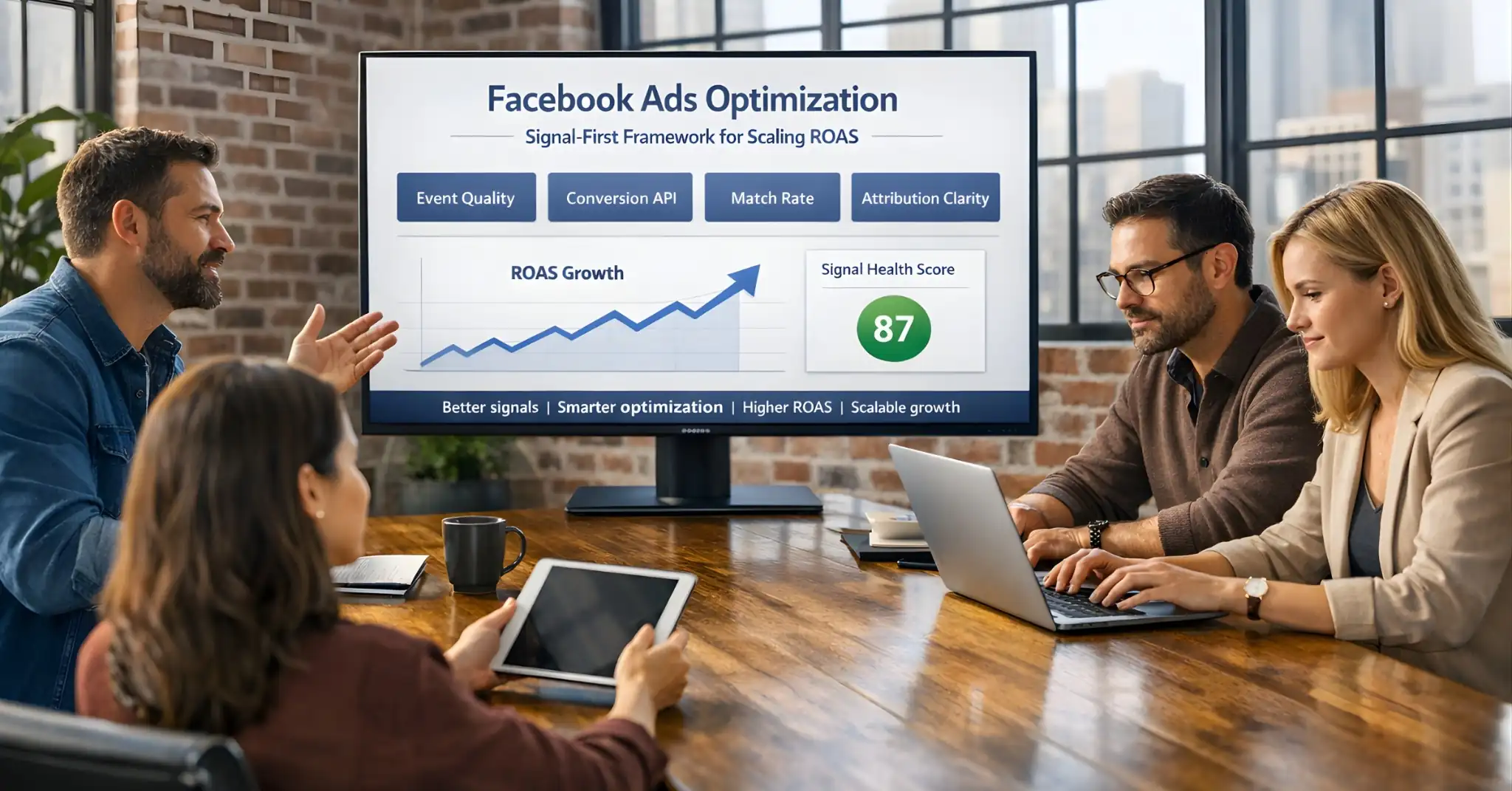
Here's what most Facebook optimization guides won't tell you: the problem isn't your ads. It's your signal. Meta's algorithm is a machine learning system that optimizes based on conversion data. When 40-60% of that data never reaches the platform, the algorithm learns from a distorted picture of your customers.
It bids wrong. It targets wrong. It shows your ads to the wrong people.
Before you tweak another headline or test another audience, fix what the algorithm sees. That's where optimization actually starts.
Why Facebook Ads Stop Scaling
Facebook's advertising system is fundamentally an algorithm that learns from your conversion data. Every purchase, add-to-cart, and lead form submission teaches the algorithm who your customers are and where to find more of them.
The problem: most of that teaching data never arrives.
THE SIGNAL GAP
════════════════════════════════════════════════════════════════════════════

    WHAT YOU THINK IS HAPPENING:
    ────────────────────────────
    Customer clicks ad → Pixel fires → Meta learns → Better targeting


    WHAT'S ACTUALLY HAPPENING:
    ──────────────────────────
    Customer clicks ad → [SIGNAL LOSS] → Meta learns partial data →
    Distorted targeting → Wasted spend


    WHERE SIGNAL LOSS OCCURS:
    ─────────────────────────
    • iOS App Tracking Transparency: 75-85% opt out
    • Ad blockers: 30-40% of desktop users
    • Safari/Firefox: Cookie restrictions, 7-day caps
    • Cross-device journeys: Phone click, laptop purchase
    • Consent banners: GDPR/CCPA compliance


    THE RESULT:
    ───────────
    40-60% of your conversions are invisible to Meta.

    The algorithm is optimizing based on HALF your actual customers.
    It doesn't know what a good customer looks like because it
    can only see a fraction of them.

════════════════════════════════════════════════════════════════════════════
THE SIGNAL GAP
════════════════════════════════════════════════════════════════════════════

    WHAT YOU THINK IS HAPPENING:
    ────────────────────────────
    Customer clicks ad → Pixel fires → Meta learns → Better targeting


    WHAT'S ACTUALLY HAPPENING:
    ──────────────────────────
    Customer clicks ad → [SIGNAL LOSS] → Meta learns partial data →
    Distorted targeting → Wasted spend


    WHERE SIGNAL LOSS OCCURS:
    ─────────────────────────
    • iOS App Tracking Transparency: 75-85% opt out
    • Ad blockers: 30-40% of desktop users
    • Safari/Firefox: Cookie restrictions, 7-day caps
    • Cross-device journeys: Phone click, laptop purchase
    • Consent banners: GDPR/CCPA compliance


    THE RESULT:
    ───────────
    40-60% of your conversions are invisible to Meta.

    The algorithm is optimizing based on HALF your actual customers.
    It doesn't know what a good customer looks like because it
    can only see a fraction of them.

════════════════════════════════════════════════════════════════════════════
THE SIGNAL GAP
════════════════════════════════════════════════════════════════════════════

    WHAT YOU THINK IS HAPPENING:
    ────────────────────────────
    Customer clicks ad → Pixel fires → Meta learns → Better targeting


    WHAT'S ACTUALLY HAPPENING:
    ──────────────────────────
    Customer clicks ad → [SIGNAL LOSS] → Meta learns partial data →
    Distorted targeting → Wasted spend


    WHERE SIGNAL LOSS OCCURS:
    ─────────────────────────
    • iOS App Tracking Transparency: 75-85% opt out
    • Ad blockers: 30-40% of desktop users
    • Safari/Firefox: Cookie restrictions, 7-day caps
    • Cross-device journeys: Phone click, laptop purchase
    • Consent banners: GDPR/CCPA compliance


    THE RESULT:
    ───────────
    40-60% of your conversions are invisible to Meta.

    The algorithm is optimizing based on HALF your actual customers.
    It doesn't know what a good customer looks like because it
    can only see a fraction of them.

════════════════════════════════════════════════════════════════════════════
This is why campaigns plateau. This is why scaling breaks performance. This is why your best audiences stop converting.
The algorithm isn't broken. It's blind.
The Signal-First Optimization Framework
Most optimization guides start with audiences, creatives, or bidding strategies. That's backwards. You can't optimize what you can't measure.
THE SIGNAL-FIRST HIERARCHY
════════════════════════════════════════════════════════════════════════════

    LEVEL 1: SIGNAL FOUNDATION (Fix this first)
    ────────────────────────────────────────────
    Impact: 10x multiplier on everything below

    • Conversion tracking accuracy
    • Server-side event capture (CAPI)
    • Event Match Quality (EMQ) score
    • Conversion API deduplication


    LEVEL 2: CAMPAIGN ARCHITECTURE
    ──────────────────────────────
    Impact: High

    • Campaign structure (prospecting vs. retargeting)
    • Conversion event selection
    • Attribution settings
    • Budget distribution


    LEVEL 3: AUDIENCE STRATEGY
    ──────────────────────────
    Impact: Medium-High

    • Audience segmentation
    • Lookalike quality and size
    • Exclusions
    • Advantage+ audience settings


    LEVEL 4: CREATIVE OPTIMIZATION
    ─────────────────────────────
    Impact: Medium

    • Creative testing methodology
    • Format selection
    • Hook and offer testing
    • Landing page alignment


    LEVEL 5: MICRO-OPTIMIZATIONS
    ───────────────────────────
    Impact: Low

    • Bid adjustments
    • Placement refinements
    • Scheduling
    • Minor copy tweaks

════════════════════════════════════════════════════════════════════════════

    Most advertisers spend 80% of their time on Levels 4-5.
    The biggest gains come from Levels 1-2.

════════════════════════════════════════════════════════════════════════════
THE SIGNAL-FIRST HIERARCHY
════════════════════════════════════════════════════════════════════════════

    LEVEL 1: SIGNAL FOUNDATION (Fix this first)
    ────────────────────────────────────────────
    Impact: 10x multiplier on everything below

    • Conversion tracking accuracy
    • Server-side event capture (CAPI)
    • Event Match Quality (EMQ) score
    • Conversion API deduplication


    LEVEL 2: CAMPAIGN ARCHITECTURE
    ──────────────────────────────
    Impact: High

    • Campaign structure (prospecting vs. retargeting)
    • Conversion event selection
    • Attribution settings
    • Budget distribution


    LEVEL 3: AUDIENCE STRATEGY
    ──────────────────────────
    Impact: Medium-High

    • Audience segmentation
    • Lookalike quality and size
    • Exclusions
    • Advantage+ audience settings


    LEVEL 4: CREATIVE OPTIMIZATION
    ─────────────────────────────
    Impact: Medium

    • Creative testing methodology
    • Format selection
    • Hook and offer testing
    • Landing page alignment


    LEVEL 5: MICRO-OPTIMIZATIONS
    ───────────────────────────
    Impact: Low

    • Bid adjustments
    • Placement refinements
    • Scheduling
    • Minor copy tweaks

════════════════════════════════════════════════════════════════════════════

    Most advertisers spend 80% of their time on Levels 4-5.
    The biggest gains come from Levels 1-2.

════════════════════════════════════════════════════════════════════════════
THE SIGNAL-FIRST HIERARCHY
════════════════════════════════════════════════════════════════════════════

    LEVEL 1: SIGNAL FOUNDATION (Fix this first)
    ────────────────────────────────────────────
    Impact: 10x multiplier on everything below

    • Conversion tracking accuracy
    • Server-side event capture (CAPI)
    • Event Match Quality (EMQ) score
    • Conversion API deduplication


    LEVEL 2: CAMPAIGN ARCHITECTURE
    ──────────────────────────────
    Impact: High

    • Campaign structure (prospecting vs. retargeting)
    • Conversion event selection
    • Attribution settings
    • Budget distribution


    LEVEL 3: AUDIENCE STRATEGY
    ──────────────────────────
    Impact: Medium-High

    • Audience segmentation
    • Lookalike quality and size
    • Exclusions
    • Advantage+ audience settings


    LEVEL 4: CREATIVE OPTIMIZATION
    ─────────────────────────────
    Impact: Medium

    • Creative testing methodology
    • Format selection
    • Hook and offer testing
    • Landing page alignment


    LEVEL 5: MICRO-OPTIMIZATIONS
    ───────────────────────────
    Impact: Low

    • Bid adjustments
    • Placement refinements
    • Scheduling
    • Minor copy tweaks

════════════════════════════════════════════════════════════════════════════

    Most advertisers spend 80% of their time on Levels 4-5.
    The biggest gains come from Levels 1-2.

════════════════════════════════════════════════════════════════════════════
Work from the top down. Fixing signal quality multiplies the impact of every optimization below it.
Level 1: Fix Your Signal Foundation
Before touching ads, audit what Meta actually sees.
Check Your Event Match Quality (EMQ)
EMQ is Meta's score for how well your conversion data matches users in their system. Higher EMQ means better attribution and better optimization.
EVENT MATCH QUALITY (EMQ)
════════════════════════════════════════════════════════════════════════════

    WHERE TO FIND IT:
    ─────────────────
    Events Manager → Data Sources → Your Pixel → Overview → EMQ Score


    WHAT THE SCORES MEAN:
    ─────────────────────

    SCORE           STATUS          ACTION
    ─────           ──────          ──────

    8.0 - 10.0      Excellent       Maintain current setup
    6.0 - 7.9       Good            Room for improvement
    4.0 - 5.9       Needs work      Significant optimization needed
    Below 4.0       Poor            Major gaps in tracking


    HOW TO IMPROVE EMQ:
    ───────────────────
    • Pass more customer parameters (email, phone, name)
    • Implement Conversions API (<a href="https://pantosource.com/blog/how-server-side-tracking-works" data-framer-link="Link:{"url":"https://pantosource.com/blog/how-server-side-tracking-works","type":"url"}">server-side</a>)
    • Hash customer data before sending
    • Ensure fbclid passes through your forms
    • Deduplicate browser and server events

════════════════════════════════════════════════════════════════════════════
EVENT MATCH QUALITY (EMQ)
════════════════════════════════════════════════════════════════════════════

    WHERE TO FIND IT:
    ─────────────────
    Events Manager → Data Sources → Your Pixel → Overview → EMQ Score


    WHAT THE SCORES MEAN:
    ─────────────────────

    SCORE           STATUS          ACTION
    ─────           ──────          ──────

    8.0 - 10.0      Excellent       Maintain current setup
    6.0 - 7.9       Good            Room for improvement
    4.0 - 5.9       Needs work      Significant optimization needed
    Below 4.0       Poor            Major gaps in tracking


    HOW TO IMPROVE EMQ:
    ───────────────────
    • Pass more customer parameters (email, phone, name)
    • Implement Conversions API (<a href="https://pantosource.com/blog/how-server-side-tracking-works" data-framer-link="Link:{"url":"https://pantosource.com/blog/how-server-side-tracking-works","type":"url"}">server-side</a>)
    • Hash customer data before sending
    • Ensure fbclid passes through your forms
    • Deduplicate browser and server events

════════════════════════════════════════════════════════════════════════════
EVENT MATCH QUALITY (EMQ)
════════════════════════════════════════════════════════════════════════════

    WHERE TO FIND IT:
    ─────────────────
    Events Manager → Data Sources → Your Pixel → Overview → EMQ Score


    WHAT THE SCORES MEAN:
    ─────────────────────

    SCORE           STATUS          ACTION
    ─────           ──────          ──────

    8.0 - 10.0      Excellent       Maintain current setup
    6.0 - 7.9       Good            Room for improvement
    4.0 - 5.9       Needs work      Significant optimization needed
    Below 4.0       Poor            Major gaps in tracking


    HOW TO IMPROVE EMQ:
    ───────────────────
    • Pass more customer parameters (email, phone, name)
    • Implement Conversions API (<a href="https://pantosource.com/blog/how-server-side-tracking-works" data-framer-link="Link:{"url":"https://pantosource.com/blog/how-server-side-tracking-works","type":"url"}">server-side</a>)
    • Hash customer data before sending
    • Ensure fbclid passes through your forms
    • Deduplicate browser and server events

════════════════════════════════════════════════════════════════════════════
Target: EMQ of 8.0+ for all key conversion events (Purchase, Lead, Add to Cart).
Implement Server-Side Tracking (Conversions API)
Browser-based pixels miss conversions due to ad blockers, iOS restrictions, and cookie limitations. Server-side tracking captures what pixels miss.
BROWSER PIXEL vs. SERVER-SIDE TRACKING
════════════════════════════════════════════════════════════════════════════

    BROWSER PIXEL ALONE:
    ─────────────────────
    Conversion happens → Browser fires pixel → [BLOCKED] → Meta never sees it

    Blocked by:
    • iOS ATT opt-out
    • Ad blockers
    • Cookie restrictions
    • Browser crashes/closes


    WITH SERVER-SIDE (CAPI):
    ────────────────────────
    Conversion happens → Server sends event → Direct to Meta → Captured

    Benefits:
    • Bypasses browser restrictions
    • More reliable data transfer
    • Better customer matching
    • Higher EMQ scores


    BEST PRACTICE: USE BOTH
    ───────────────────────
    Pixel + CAPI together with deduplication

    Pixel catches fast events (page views, add to cart)
    CAPI catches reliable conversions (purchases, leads)
    Deduplication prevents double-counting

════════════════════════════════════════════════════════════════════════════
BROWSER PIXEL vs. SERVER-SIDE TRACKING
════════════════════════════════════════════════════════════════════════════

    BROWSER PIXEL ALONE:
    ─────────────────────
    Conversion happens → Browser fires pixel → [BLOCKED] → Meta never sees it

    Blocked by:
    • iOS ATT opt-out
    • Ad blockers
    • Cookie restrictions
    • Browser crashes/closes


    WITH SERVER-SIDE (CAPI):
    ────────────────────────
    Conversion happens → Server sends event → Direct to Meta → Captured

    Benefits:
    • Bypasses browser restrictions
    • More reliable data transfer
    • Better customer matching
    • Higher EMQ scores


    BEST PRACTICE: USE BOTH
    ───────────────────────
    Pixel + CAPI together with deduplication

    Pixel catches fast events (page views, add to cart)
    CAPI catches reliable conversions (purchases, leads)
    Deduplication prevents double-counting

════════════════════════════════════════════════════════════════════════════
BROWSER PIXEL vs. SERVER-SIDE TRACKING
════════════════════════════════════════════════════════════════════════════

    BROWSER PIXEL ALONE:
    ─────────────────────
    Conversion happens → Browser fires pixel → [BLOCKED] → Meta never sees it

    Blocked by:
    • iOS ATT opt-out
    • Ad blockers
    • Cookie restrictions
    • Browser crashes/closes


    WITH SERVER-SIDE (CAPI):
    ────────────────────────
    Conversion happens → Server sends event → Direct to Meta → Captured

    Benefits:
    • Bypasses browser restrictions
    • More reliable data transfer
    • Better customer matching
    • Higher EMQ scores


    BEST PRACTICE: USE BOTH
    ───────────────────────
    Pixel + CAPI together with deduplication

    Pixel catches fast events (page views, add to cart)
    CAPI catches reliable conversions (purchases, leads)
    Deduplication prevents double-counting

════════════════════════════════════════════════════════════════════════════
Deduplication prevents double-counting. For the Shopify-specific walkthrough on setting up CAPI on Shopify — including theme integration and deduplication keys — see that guide.
Calculate Your Tracking Accuracy
Before optimizing, know how much data you're actually capturing.
TRACKING ACCURACY FORMULA
════════════════════════════════════════════════════════════════════════════

    Tracking Accuracy = (Meta-Reported Conversions ÷ Backend Conversions) × 100


    EXAMPLE:
    ────────
    Meta reports:     180 purchases this month
    Shopify shows:    320 purchases this month

    Tracking Accuracy = (180 ÷ 320) × 100 = 56%

    You're missing 44% of your conversion data.
    The algorithm is learning from barely half your customers.


    BENCHMARKS:
    ───────────
    85-100%     Excellent — algorithm has full picture
    70-84%      Acceptable — some blind spots
    50-69%      Problem — significant optimization gaps
    Below 50%   Critical — fix before any other optimization

════════════════════════════════════════════════════════════════════════════
TRACKING ACCURACY FORMULA
════════════════════════════════════════════════════════════════════════════

    Tracking Accuracy = (Meta-Reported Conversions ÷ Backend Conversions) × 100


    EXAMPLE:
    ────────
    Meta reports:     180 purchases this month
    Shopify shows:    320 purchases this month

    Tracking Accuracy = (180 ÷ 320) × 100 = 56%

    You're missing 44% of your conversion data.
    The algorithm is learning from barely half your customers.


    BENCHMARKS:
    ───────────
    85-100%     Excellent — algorithm has full picture
    70-84%      Acceptable — some blind spots
    50-69%      Problem — significant optimization gaps
    Below 50%   Critical — fix before any other optimization

════════════════════════════════════════════════════════════════════════════
TRACKING ACCURACY FORMULA
════════════════════════════════════════════════════════════════════════════

    Tracking Accuracy = (Meta-Reported Conversions ÷ Backend Conversions) × 100


    EXAMPLE:
    ────────
    Meta reports:     180 purchases this month
    Shopify shows:    320 purchases this month

    Tracking Accuracy = (180 ÷ 320) × 100 = 56%

    You're missing 44% of your conversion data.
    The algorithm is learning from barely half your customers.


    BENCHMARKS:
    ───────────
    85-100%     Excellent — algorithm has full picture
    70-84%      Acceptable — some blind spots
    50-69%      Problem — significant optimization gaps
    Below 50%   Critical — fix before any other optimization

════════════════════════════════════════════════════════════════════════════
If your tracking accuracy is below 70%, stop all other optimization work. Fix the signal first. Everything else is built on a broken foundation. To walk through a live setup — including tracking accuracy validation and EMQ recovery in real time — that walkthrough makes it concrete.For Ecommerce: Your Catalog is a Signal Source
If you run Dynamic Product Ads (DPA), your product catalog is a massive — and often overlooked — signal source.
CATALOG AS SIGNAL
════════════════════════════════════════════════════════════════════════════

    YOUR CATALOG FEEDS THE ALGORITHM:
    ──────────────────────────────────
    Meta uses your catalog data to:

    • Match products to user interests
    • Determine which products to show which users
    • Optimize Dynamic Product Ads (DPA)
    • Power Advantage+ Shopping campaigns


    CATALOG ELEMENTS THAT MATTER:
    ─────────────────────────────

    IMAGES:
    • High-resolution product photos
    • Multiple angles when possible
    • Clean, consistent backgrounds
    • Products clearly visible (no tiny thumbnails)

    METADATA:
    • Accurate, specific product titles
    • Detailed descriptions with keywords
    • Correct categories and product types
    • Material, color, size attributes
    • Current pricing (including sale prices)
    • Stock availability (in_stock vs. out_of_stock)


    THE SIGNAL IMPACT:
    ──────────────────
    Poor catalog = Algorithm can't match products to users effectively
    Rich catalog = Better product-to-user matching = Higher ROAS


    QUICK AUDIT:
    ────────────
    Commerce Manager → Catalog → Diagnostics

    Check for:
    • Missing images
    • Rejected items
    • Missing required fields
    • Stale inventory data

════════════════════════════════════════════════════════════════════════════
CATALOG AS SIGNAL
════════════════════════════════════════════════════════════════════════════

    YOUR CATALOG FEEDS THE ALGORITHM:
    ──────────────────────────────────
    Meta uses your catalog data to:

    • Match products to user interests
    • Determine which products to show which users
    • Optimize Dynamic Product Ads (DPA)
    • Power Advantage+ Shopping campaigns


    CATALOG ELEMENTS THAT MATTER:
    ─────────────────────────────

    IMAGES:
    • High-resolution product photos
    • Multiple angles when possible
    • Clean, consistent backgrounds
    • Products clearly visible (no tiny thumbnails)

    METADATA:
    • Accurate, specific product titles
    • Detailed descriptions with keywords
    • Correct categories and product types
    • Material, color, size attributes
    • Current pricing (including sale prices)
    • Stock availability (in_stock vs. out_of_stock)


    THE SIGNAL IMPACT:
    ──────────────────
    Poor catalog = Algorithm can't match products to users effectively
    Rich catalog = Better product-to-user matching = Higher ROAS


    QUICK AUDIT:
    ────────────
    Commerce Manager → Catalog → Diagnostics

    Check for:
    • Missing images
    • Rejected items
    • Missing required fields
    • Stale inventory data

════════════════════════════════════════════════════════════════════════════
CATALOG AS SIGNAL
════════════════════════════════════════════════════════════════════════════

    YOUR CATALOG FEEDS THE ALGORITHM:
    ──────────────────────────────────
    Meta uses your catalog data to:

    • Match products to user interests
    • Determine which products to show which users
    • Optimize Dynamic Product Ads (DPA)
    • Power Advantage+ Shopping campaigns


    CATALOG ELEMENTS THAT MATTER:
    ─────────────────────────────

    IMAGES:
    • High-resolution product photos
    • Multiple angles when possible
    • Clean, consistent backgrounds
    • Products clearly visible (no tiny thumbnails)

    METADATA:
    • Accurate, specific product titles
    • Detailed descriptions with keywords
    • Correct categories and product types
    • Material, color, size attributes
    • Current pricing (including sale prices)
    • Stock availability (in_stock vs. out_of_stock)


    THE SIGNAL IMPACT:
    ──────────────────
    Poor catalog = Algorithm can't match products to users effectively
    Rich catalog = Better product-to-user matching = Higher ROAS


    QUICK AUDIT:
    ────────────
    Commerce Manager → Catalog → Diagnostics

    Check for:
    • Missing images
    • Rejected items
    • Missing required fields
    • Stale inventory data

════════════════════════════════════════════════════════════════════════════
For DPA campaigns, catalog quality directly impacts performance. Clean up your feed before scaling spend.
Level 2: Campaign Architecture
With clean signal, structure your campaigns for algorithmic learning.
The Simplified Campaign Structure
In 2026, Meta's algorithms perform best with simplified structures that give them room to learn.
RECOMMENDED CAMPAIGN STRUCTURE
════════════════════════════════════════════════════════════════════════════

    PROSPECTING (60-70% of budget):
    ───────────────────────────────
    Goal: Find new customers who don't know you

    Campaign Type: Advantage+ Shopping or Sales Campaign
    Audience: Broad (let Meta find your customers)
    Conversion Event: Purchase (or highest-value event)


    RETARGETING (30-40% of budget):
    ───────────────────────────────
    Goal: Convert people who already engaged

    Campaign Type: Manual Sales Campaign
    Audiences:
    • Site visitors (7-30 days)
    • Add to cart abandoners
    • Video viewers (75%+)
    • Engaged with ads/page


    WHY SIMPLIFIED WORKS:
    ─────────────────────
    • More data per ad set = faster learning
    • Less audience overlap = cleaner attribution
    • Algorithm has room to optimize
    • Easier to analyze and iterate

════════════════════════════════════════════════════════════════════════════
RECOMMENDED CAMPAIGN STRUCTURE
════════════════════════════════════════════════════════════════════════════

    PROSPECTING (60-70% of budget):
    ───────────────────────────────
    Goal: Find new customers who don't know you

    Campaign Type: Advantage+ Shopping or Sales Campaign
    Audience: Broad (let Meta find your customers)
    Conversion Event: Purchase (or highest-value event)


    RETARGETING (30-40% of budget):
    ───────────────────────────────
    Goal: Convert people who already engaged

    Campaign Type: Manual Sales Campaign
    Audiences:
    • Site visitors (7-30 days)
    • Add to cart abandoners
    • Video viewers (75%+)
    • Engaged with ads/page


    WHY SIMPLIFIED WORKS:
    ─────────────────────
    • More data per ad set = faster learning
    • Less audience overlap = cleaner attribution
    • Algorithm has room to optimize
    • Easier to analyze and iterate

════════════════════════════════════════════════════════════════════════════
RECOMMENDED CAMPAIGN STRUCTURE
════════════════════════════════════════════════════════════════════════════

    PROSPECTING (60-70% of budget):
    ───────────────────────────────
    Goal: Find new customers who don't know you

    Campaign Type: Advantage+ Shopping or Sales Campaign
    Audience: Broad (let Meta find your customers)
    Conversion Event: Purchase (or highest-value event)


    RETARGETING (30-40% of budget):
    ───────────────────────────────
    Goal: Convert people who already engaged

    Campaign Type: Manual Sales Campaign
    Audiences:
    • Site visitors (7-30 days)
    • Add to cart abandoners
    • Video viewers (75%+)
    • Engaged with ads/page


    WHY SIMPLIFIED WORKS:
    ─────────────────────
    • More data per ad set = faster learning
    • Less audience overlap = cleaner attribution
    • Algorithm has room to optimize
    • Easier to analyze and iterate

════════════════════════════════════════════════════════════════════════════
The Advantage+ Reality
Advantage+ Shopping Campaigns (ASC) are black boxes. You can't control targeting, placements, or bids. The algorithm decides everything.
ADVANTAGE+ OPTIMIZATION LEVERS
════════════════════════════════════════════════════════════════════════════

    WHAT YOU CAN'T CONTROL:
    ───────────────────────
    • Audience targeting (algorithm chooses)
    • Placements (algorithm distributes)
    • Bid amounts (algorithm sets)
    • Budget distribution across creatives


    WHAT YOU CAN CONTROL:
    ─────────────────────

    1. SIGNAL — The conversion data you send
       └── This is your primary optimization lever

    2. CREATIVE — The ads the algorithm uses
       └── Diversity matters more than individual winners

    3. EXISTING CUSTOMER CAP — Budget limit on retargeting
       └── Set 0-10% to focus on new customer acquisition

    4. COUNTRY TARGETING — Geographic boundaries
       └── Limit to countries you can actually serve


    THE IMPLICATION:
    ────────────────
    In Advantage+, signal quality isn't just important —
    it's your PRIMARY optimization lever.

    Feed the algorithm better data, get better customers.

════════════════════════════════════════════════════════════════════════════
ADVANTAGE+ OPTIMIZATION LEVERS
════════════════════════════════════════════════════════════════════════════

    WHAT YOU CAN'T CONTROL:
    ───────────────────────
    • Audience targeting (algorithm chooses)
    • Placements (algorithm distributes)
    • Bid amounts (algorithm sets)
    • Budget distribution across creatives


    WHAT YOU CAN CONTROL:
    ─────────────────────

    1. SIGNAL — The conversion data you send
       └── This is your primary optimization lever

    2. CREATIVE — The ads the algorithm uses
       └── Diversity matters more than individual winners

    3. EXISTING CUSTOMER CAP — Budget limit on retargeting
       └── Set 0-10% to focus on new customer acquisition

    4. COUNTRY TARGETING — Geographic boundaries
       └── Limit to countries you can actually serve


    THE IMPLICATION:
    ────────────────
    In Advantage+, signal quality isn't just important —
    it's your PRIMARY optimization lever.

    Feed the algorithm better data, get better customers.

════════════════════════════════════════════════════════════════════════════
ADVANTAGE+ OPTIMIZATION LEVERS
════════════════════════════════════════════════════════════════════════════

    WHAT YOU CAN'T CONTROL:
    ───────────────────────
    • Audience targeting (algorithm chooses)
    • Placements (algorithm distributes)
    • Bid amounts (algorithm sets)
    • Budget distribution across creatives


    WHAT YOU CAN CONTROL:
    ─────────────────────

    1. SIGNAL — The conversion data you send
       └── This is your primary optimization lever

    2. CREATIVE — The ads the algorithm uses
       └── Diversity matters more than individual winners

    3. EXISTING CUSTOMER CAP — Budget limit on retargeting
       └── Set 0-10% to focus on new customer acquisition

    4. COUNTRY TARGETING — Geographic boundaries
       └── Limit to countries you can actually serve


    THE IMPLICATION:
    ────────────────
    In Advantage+, signal quality isn't just important —
    it's your PRIMARY optimization lever.

    Feed the algorithm better data, get better customers.

════════════════════════════════════════════════════════════════════════════
Attribution Settings That Match Reality
Your attribution window should match your actual customer journey.
ATTRIBUTION WINDOW SELECTION
════════════════════════════════════════════════════════════════════════════

    PRODUCT TYPE               RECOMMENDED WINDOW
    ────────────               ──────────────────

    Impulse purchases          7-day click, 1-day view
    (under $50)

    Considered purchases       7-day click, 1-day view
    ($50-200)

    High-ticket items          7-day click, 1-day view
    ($200+)                    (consider 28-day for analysis)

    B2B / Long sales cycle     7-day click
                               (disable view-through)


    ⚠️  WARNING: VIEW-THROUGH ATTRIBUTION
    ─────────────────────────────────────
    1-day view credits conversions to ad IMPRESSIONS (no click).

    This often inflates reported conversions by 30-50%
    compared to click-only attribution.

    View-through claims credit for customers who may
    have purchased anyway. Always compare:
    • Total Conversions (click + view)
    • Click-Only Conversions

    The gap shows potential over-attribution.

════════════════════════════════════════════════════════════════════════════
ATTRIBUTION WINDOW SELECTION
════════════════════════════════════════════════════════════════════════════

    PRODUCT TYPE               RECOMMENDED WINDOW
    ────────────               ──────────────────

    Impulse purchases          7-day click, 1-day view
    (under $50)

    Considered purchases       7-day click, 1-day view
    ($50-200)

    High-ticket items          7-day click, 1-day view
    ($200+)                    (consider 28-day for analysis)

    B2B / Long sales cycle     7-day click
                               (disable view-through)


    ⚠️  WARNING: VIEW-THROUGH ATTRIBUTION
    ─────────────────────────────────────
    1-day view credits conversions to ad IMPRESSIONS (no click).

    This often inflates reported conversions by 30-50%
    compared to click-only attribution.

    View-through claims credit for customers who may
    have purchased anyway. Always compare:
    • Total Conversions (click + view)
    • Click-Only Conversions

    The gap shows potential over-attribution.

════════════════════════════════════════════════════════════════════════════
ATTRIBUTION WINDOW SELECTION
════════════════════════════════════════════════════════════════════════════

    PRODUCT TYPE               RECOMMENDED WINDOW
    ────────────               ──────────────────

    Impulse purchases          7-day click, 1-day view
    (under $50)

    Considered purchases       7-day click, 1-day view
    ($50-200)

    High-ticket items          7-day click, 1-day view
    ($200+)                    (consider 28-day for analysis)

    B2B / Long sales cycle     7-day click
                               (disable view-through)


    ⚠️  WARNING: VIEW-THROUGH ATTRIBUTION
    ─────────────────────────────────────
    1-day view credits conversions to ad IMPRESSIONS (no click).

    This often inflates reported conversions by 30-50%
    compared to click-only attribution.

    View-through claims credit for customers who may
    have purchased anyway. Always compare:
    • Total Conversions (click + view)
    • Click-Only Conversions

    The gap shows potential over-attribution.

════════════════════════════════════════════════════════════════════════════
Level 3: Audience Strategy
With signal and structure in place, optimize who sees your ads.
Broad vs. Targeted in 2026
Meta's algorithm has become extremely good at finding customers within broad audiences — if you give it clean signal.
AUDIENCE STRATEGY BY SIGNAL QUALITY
════════════════════════════════════════════════════════════════════════════

    HIGH SIGNAL QUALITY (85%+ tracking accuracy):
    ─────────────────────────────────────────────
    Go broad. Let the algorithm find your customers.

    • Use Advantage+ Shopping with minimal restrictions
    • Broad targeting outperforms detailed targeting
    • Trust the algorithm (it has good data to learn from)


    LOW SIGNAL QUALITY (below 70%):
    ───────────────────────────────
    Be more targeted. Algorithm can't optimize on broken data.

    • Use manual campaigns with defined audiences
    • Lookalikes from highest-value customers
    • Interest stacking based on known customer profiles
    • Retargeting with shorter windows


    THE PRINCIPLE:
    ──────────────
    Signal quality determines audience strategy.

    Good signal → Go broad, trust algorithm
    Poor signal → Stay targeted, guide algorithm

════════════════════════════════════════════════════════════════════════════
AUDIENCE STRATEGY BY SIGNAL QUALITY
════════════════════════════════════════════════════════════════════════════

    HIGH SIGNAL QUALITY (85%+ tracking accuracy):
    ─────────────────────────────────────────────
    Go broad. Let the algorithm find your customers.

    • Use Advantage+ Shopping with minimal restrictions
    • Broad targeting outperforms detailed targeting
    • Trust the algorithm (it has good data to learn from)


    LOW SIGNAL QUALITY (below 70%):
    ───────────────────────────────
    Be more targeted. Algorithm can't optimize on broken data.

    • Use manual campaigns with defined audiences
    • Lookalikes from highest-value customers
    • Interest stacking based on known customer profiles
    • Retargeting with shorter windows


    THE PRINCIPLE:
    ──────────────
    Signal quality determines audience strategy.

    Good signal → Go broad, trust algorithm
    Poor signal → Stay targeted, guide algorithm

════════════════════════════════════════════════════════════════════════════
AUDIENCE STRATEGY BY SIGNAL QUALITY
════════════════════════════════════════════════════════════════════════════

    HIGH SIGNAL QUALITY (85%+ tracking accuracy):
    ─────────────────────────────────────────────
    Go broad. Let the algorithm find your customers.

    • Use Advantage+ Shopping with minimal restrictions
    • Broad targeting outperforms detailed targeting
    • Trust the algorithm (it has good data to learn from)


    LOW SIGNAL QUALITY (below 70%):
    ───────────────────────────────
    Be more targeted. Algorithm can't optimize on broken data.

    • Use manual campaigns with defined audiences
    • Lookalikes from highest-value customers
    • Interest stacking based on known customer profiles
    • Retargeting with shorter windows


    THE PRINCIPLE:
    ──────────────
    Signal quality determines audience strategy.

    Good signal → Go broad, trust algorithm
    Poor signal → Stay targeted, guide algorithm

════════════════════════════════════════════════════════════════════════════
Lookalike Audience Quality
Not all lookalikes are equal. The source audience determines the output quality.
LOOKALIKE AUDIENCE HIERARCHY
════════════════════════════════════════════════════════════════════════════

    HIGHEST QUALITY SOURCES:
    ────────────────────────
    • Top 10% customers by LTV
    • Repeat purchasers (2+ orders)
    • High-AOV customers
    • Full-price buyers (not discount hunters)


    MEDIUM QUALITY SOURCES:
    ───────────────────────
    • All purchasers
    • High-intent events (Add to Cart, Initiate Checkout)
    • Email subscribers who engaged


    LOWER QUALITY SOURCES:
    ──────────────────────
    • All site visitors
    • Page/post engagers
    • Video viewers (any length)
    • Email list (including unengaged)


    SIZE RECOMMENDATIONS:
    ─────────────────────
    1-2%  — Highest quality, smallest reach
    3-5%  — Balanced quality and reach
    6-10% — Broader reach, lower precision

════════════════════════════════════════════════════════════════════════════
LOOKALIKE AUDIENCE HIERARCHY
════════════════════════════════════════════════════════════════════════════

    HIGHEST QUALITY SOURCES:
    ────────────────────────
    • Top 10% customers by LTV
    • Repeat purchasers (2+ orders)
    • High-AOV customers
    • Full-price buyers (not discount hunters)


    MEDIUM QUALITY SOURCES:
    ───────────────────────
    • All purchasers
    • High-intent events (Add to Cart, Initiate Checkout)
    • Email subscribers who engaged


    LOWER QUALITY SOURCES:
    ──────────────────────
    • All site visitors
    • Page/post engagers
    • Video viewers (any length)
    • Email list (including unengaged)


    SIZE RECOMMENDATIONS:
    ─────────────────────
    1-2%  — Highest quality, smallest reach
    3-5%  — Balanced quality and reach
    6-10% — Broader reach, lower precision

════════════════════════════════════════════════════════════════════════════
LOOKALIKE AUDIENCE HIERARCHY
════════════════════════════════════════════════════════════════════════════

    HIGHEST QUALITY SOURCES:
    ────────────────────────
    • Top 10% customers by LTV
    • Repeat purchasers (2+ orders)
    • High-AOV customers
    • Full-price buyers (not discount hunters)


    MEDIUM QUALITY SOURCES:
    ───────────────────────
    • All purchasers
    • High-intent events (Add to Cart, Initiate Checkout)
    • Email subscribers who engaged


    LOWER QUALITY SOURCES:
    ──────────────────────
    • All site visitors
    • Page/post engagers
    • Video viewers (any length)
    • Email list (including unengaged)


    SIZE RECOMMENDATIONS:
    ─────────────────────
    1-2%  — Highest quality, smallest reach
    3-5%  — Balanced quality and reach
    6-10% — Broader reach, lower precision

════════════════════════════════════════════════════════════════════════════
Build lookalikes from your best customers, not all customers. Quality in → Quality out.
Level 4: Creative Optimization
Creative is the variable you refresh most often. Test systematically.
Creative as Targeting: The New Interest Group
In 2026, you don't find customers with interest groups. You find them with your hook.
CREATIVE AS TARGETING
════════════════════════════════════════════════════════════════════════════

    THE OLD WAY (2020):
    ────────────────────
    Target: "People interested in Skincare + Sensitive Skin + Anti-Aging"
    Creative: Generic product image

    Result: Interest targeting found the audience, creative converted them.


    THE NEW WAY (2026):
    ───────────────────
    Target: Broad or Advantage+
    Creative Hook: "Finally — a serum for sensitive skin that actually works"

    Result: The CREATIVE finds the audience. The algorithm "reads" your
    hook and shows it to people who engage with sensitive skin content.


    HOW IT WORKS:
    ─────────────
    Meta's algorithm analyzes your creative:

    • Text in the hook and body copy
    • Visual elements and products shown
    • Audio and spoken words in video
    • Landing page content

    It matches this to users who engage with similar content.
    Your creative IS your targeting.


    THE IMPLICATION:
    ────────────────
    • Different hooks = Different audiences
    • "Struggling with acne?" finds acne sufferers
    • "Look 10 years younger" finds anti-aging audience
    • "Gym bag essentials" finds fitness enthusiasts

    Don't narrow your audience. Narrow your hook.

════════════════════════════════════════════════════════════════════════════
CREATIVE AS TARGETING
════════════════════════════════════════════════════════════════════════════

    THE OLD WAY (2020):
    ────────────────────
    Target: "People interested in Skincare + Sensitive Skin + Anti-Aging"
    Creative: Generic product image

    Result: Interest targeting found the audience, creative converted them.


    THE NEW WAY (2026):
    ───────────────────
    Target: Broad or Advantage+
    Creative Hook: "Finally — a serum for sensitive skin that actually works"

    Result: The CREATIVE finds the audience. The algorithm "reads" your
    hook and shows it to people who engage with sensitive skin content.


    HOW IT WORKS:
    ─────────────
    Meta's algorithm analyzes your creative:

    • Text in the hook and body copy
    • Visual elements and products shown
    • Audio and spoken words in video
    • Landing page content

    It matches this to users who engage with similar content.
    Your creative IS your targeting.


    THE IMPLICATION:
    ────────────────
    • Different hooks = Different audiences
    • "Struggling with acne?" finds acne sufferers
    • "Look 10 years younger" finds anti-aging audience
    • "Gym bag essentials" finds fitness enthusiasts

    Don't narrow your audience. Narrow your hook.

════════════════════════════════════════════════════════════════════════════
CREATIVE AS TARGETING
════════════════════════════════════════════════════════════════════════════

    THE OLD WAY (2020):
    ────────────────────
    Target: "People interested in Skincare + Sensitive Skin + Anti-Aging"
    Creative: Generic product image

    Result: Interest targeting found the audience, creative converted them.


    THE NEW WAY (2026):
    ───────────────────
    Target: Broad or Advantage+
    Creative Hook: "Finally — a serum for sensitive skin that actually works"

    Result: The CREATIVE finds the audience. The algorithm "reads" your
    hook and shows it to people who engage with sensitive skin content.


    HOW IT WORKS:
    ─────────────
    Meta's algorithm analyzes your creative:

    • Text in the hook and body copy
    • Visual elements and products shown
    • Audio and spoken words in video
    • Landing page content

    It matches this to users who engage with similar content.
    Your creative IS your targeting.


    THE IMPLICATION:
    ────────────────
    • Different hooks = Different audiences
    • "Struggling with acne?" finds acne sufferers
    • "Look 10 years younger" finds anti-aging audience
    • "Gym bag essentials" finds fitness enthusiasts

    Don't narrow your audience. Narrow your hook.

════════════════════════════════════════════════════════════════════════════
This is why creative diversity matters more than audience segmentation. Each creative variation finds its own audience within broad targeting.
The Creative Testing Hierarchy
Test the elements with biggest impact first.
CREATIVE TESTING PRIORITY
════════════════════════════════════════════════════════════════════════════

    TEST IN THIS ORDER:
    ───────────────────

    1. HOOK (First 3 seconds)
       Impact: Highest
       Determines whether anyone watches/reads
       Also determines WHO sees the ad (creative as targeting)

    2. OFFER
       Impact: High
       The value proposition and pricing

    3. FORMAT
       Impact: Medium-High
       Video vs. static vs. carousel vs. UGC

    4. CREATIVE ANGLE
       Impact: Medium
       Problem-focused vs. solution-focused vs. testimonial

    5. CTA
       Impact: Low-Medium
       Shop Now vs. Learn More vs. Get Offer

    6. BODY COPY
       Impact: Low
       Description and supporting text


    TESTING RULES:
    ──────────────
    • One variable at a time
    • Minimum 1,000 impressions per variant
    • 3-7 day test windows
    • Statistical significance before declaring winners

════════════════════════════════════════════════════════════════════════════
CREATIVE TESTING PRIORITY
════════════════════════════════════════════════════════════════════════════

    TEST IN THIS ORDER:
    ───────────────────

    1. HOOK (First 3 seconds)
       Impact: Highest
       Determines whether anyone watches/reads
       Also determines WHO sees the ad (creative as targeting)

    2. OFFER
       Impact: High
       The value proposition and pricing

    3. FORMAT
       Impact: Medium-High
       Video vs. static vs. carousel vs. UGC

    4. CREATIVE ANGLE
       Impact: Medium
       Problem-focused vs. solution-focused vs. testimonial

    5. CTA
       Impact: Low-Medium
       Shop Now vs. Learn More vs. Get Offer

    6. BODY COPY
       Impact: Low
       Description and supporting text


    TESTING RULES:
    ──────────────
    • One variable at a time
    • Minimum 1,000 impressions per variant
    • 3-7 day test windows
    • Statistical significance before declaring winners

════════════════════════════════════════════════════════════════════════════
CREATIVE TESTING PRIORITY
════════════════════════════════════════════════════════════════════════════

    TEST IN THIS ORDER:
    ───────────────────

    1. HOOK (First 3 seconds)
       Impact: Highest
       Determines whether anyone watches/reads
       Also determines WHO sees the ad (creative as targeting)

    2. OFFER
       Impact: High
       The value proposition and pricing

    3. FORMAT
       Impact: Medium-High
       Video vs. static vs. carousel vs. UGC

    4. CREATIVE ANGLE
       Impact: Medium
       Problem-focused vs. solution-focused vs. testimonial

    5. CTA
       Impact: Low-Medium
       Shop Now vs. Learn More vs. Get Offer

    6. BODY COPY
       Impact: Low
       Description and supporting text


    TESTING RULES:
    ──────────────
    • One variable at a time
    • Minimum 1,000 impressions per variant
    • 3-7 day test windows
    • Statistical significance before declaring winners

════════════════════════════════════════════════════════════════════════════
Advantage+ Creative: When to Use Auto-Enhancements
Meta's Advantage+ Creative automatically modifies your ads — brightening videos, swapping music, adjusting aspect ratios, adding text overlays.
ADVANTAGE+ CREATIVE ENHANCEMENTS
════════════════════════════════════════════════════════════════════════════

    WHAT META AUTO-MODIFIES:
    ────────────────────────
    • Video brightness and contrast
    • Background music
    • Aspect ratio cropping
    • Text overlay positioning
    • Image filters and adjustments


    ⚠️  WARNING: BRAND GUIDELINE RISK
    ─────────────────────────────────
    Auto-enhancements can "break" carefully crafted brand assets.

    Your perfectly color-graded video? Brightened.
    Your specific brand music? Swapped.
    Your exact framing? Cropped.


    WHEN TO TOGGLE OFF:
    ───────────────────
    ✗ High-production brand videos
    ✗ Assets with specific color requirements
    ✗ Content with licensed/branded music
    ✗ Carefully composed visual framing


    WHEN TO LEAVE ON:
    ─────────────────
    ✓ UGC (User Generated Content)
    ✓ Lo-fi, authentic-style content
    ✓ Quick test creatives
    ✓ Performance-focused ads without strict brand guidelines


    HOW TO CONTROL:
    ───────────────
    Ad level → Advantage+ creative → Toggle specific enhancements

    Review each enhancement individually. You can disable
    music changes but keep aspect ratio adjustments, for example.

════════════════════════════════════════════════════════════════════════════
ADVANTAGE+ CREATIVE ENHANCEMENTS
════════════════════════════════════════════════════════════════════════════

    WHAT META AUTO-MODIFIES:
    ────────────────────────
    • Video brightness and contrast
    • Background music
    • Aspect ratio cropping
    • Text overlay positioning
    • Image filters and adjustments


    ⚠️  WARNING: BRAND GUIDELINE RISK
    ─────────────────────────────────
    Auto-enhancements can "break" carefully crafted brand assets.

    Your perfectly color-graded video? Brightened.
    Your specific brand music? Swapped.
    Your exact framing? Cropped.


    WHEN TO TOGGLE OFF:
    ───────────────────
    ✗ High-production brand videos
    ✗ Assets with specific color requirements
    ✗ Content with licensed/branded music
    ✗ Carefully composed visual framing


    WHEN TO LEAVE ON:
    ─────────────────
    ✓ UGC (User Generated Content)
    ✓ Lo-fi, authentic-style content
    ✓ Quick test creatives
    ✓ Performance-focused ads without strict brand guidelines


    HOW TO CONTROL:
    ───────────────
    Ad level → Advantage+ creative → Toggle specific enhancements

    Review each enhancement individually. You can disable
    music changes but keep aspect ratio adjustments, for example.

════════════════════════════════════════════════════════════════════════════
ADVANTAGE+ CREATIVE ENHANCEMENTS
════════════════════════════════════════════════════════════════════════════

    WHAT META AUTO-MODIFIES:
    ────────────────────────
    • Video brightness and contrast
    • Background music
    • Aspect ratio cropping
    • Text overlay positioning
    • Image filters and adjustments


    ⚠️  WARNING: BRAND GUIDELINE RISK
    ─────────────────────────────────
    Auto-enhancements can "break" carefully crafted brand assets.

    Your perfectly color-graded video? Brightened.
    Your specific brand music? Swapped.
    Your exact framing? Cropped.


    WHEN TO TOGGLE OFF:
    ───────────────────
    ✗ High-production brand videos
    ✗ Assets with specific color requirements
    ✗ Content with licensed/branded music
    ✗ Carefully composed visual framing


    WHEN TO LEAVE ON:
    ─────────────────
    ✓ UGC (User Generated Content)
    ✓ Lo-fi, authentic-style content
    ✓ Quick test creatives
    ✓ Performance-focused ads without strict brand guidelines


    HOW TO CONTROL:
    ───────────────
    Ad level → Advantage+ creative → Toggle specific enhancements

    Review each enhancement individually. You can disable
    music changes but keep aspect ratio adjustments, for example.

════════════════════════════════════════════════════════════════════════════
Creative Diversity for Advantage+
In Advantage+ campaigns, creative diversity matters more than finding a single winner.
CREATIVE DIVERSITY FRAMEWORK
════════════════════════════════════════════════════════════════════════════

    MINIMUM CREATIVE MIX:
    ─────────────────────
    • 5-10 ad creatives per Advantage+ campaign
    • Mix of formats (video, static, carousel)
    • Mix of angles (problem, solution, social proof)
    • Mix of styles (polished, UGC, lifestyle)


    WHY DIVERSITY MATTERS:
    ──────────────────────
    The algorithm shows different creatives to different people.

    • Video works for some audiences
    • Static works for others
    • UGC resonates with certain demographics
    • Polished creative appeals to different segments

    By providing diversity, you let the algorithm match
    creative to audience automatically.


    REFRESH CADENCE:
    ────────────────
    • Add 2-3 new creatives weekly
    • Pause creatives with CPM 2x+ above average
    • Let algorithm distribute (don't force equal spend)

════════════════════════════════════════════════════════════════════════════
CREATIVE DIVERSITY FRAMEWORK
════════════════════════════════════════════════════════════════════════════

    MINIMUM CREATIVE MIX:
    ─────────────────────
    • 5-10 ad creatives per Advantage+ campaign
    • Mix of formats (video, static, carousel)
    • Mix of angles (problem, solution, social proof)
    • Mix of styles (polished, UGC, lifestyle)


    WHY DIVERSITY MATTERS:
    ──────────────────────
    The algorithm shows different creatives to different people.

    • Video works for some audiences
    • Static works for others
    • UGC resonates with certain demographics
    • Polished creative appeals to different segments

    By providing diversity, you let the algorithm match
    creative to audience automatically.


    REFRESH CADENCE:
    ────────────────
    • Add 2-3 new creatives weekly
    • Pause creatives with CPM 2x+ above average
    • Let algorithm distribute (don't force equal spend)

════════════════════════════════════════════════════════════════════════════
CREATIVE DIVERSITY FRAMEWORK
════════════════════════════════════════════════════════════════════════════

    MINIMUM CREATIVE MIX:
    ─────────────────────
    • 5-10 ad creatives per Advantage+ campaign
    • Mix of formats (video, static, carousel)
    • Mix of angles (problem, solution, social proof)
    • Mix of styles (polished, UGC, lifestyle)


    WHY DIVERSITY MATTERS:
    ──────────────────────
    The algorithm shows different creatives to different people.

    • Video works for some audiences
    • Static works for others
    • UGC resonates with certain demographics
    • Polished creative appeals to different segments

    By providing diversity, you let the algorithm match
    creative to audience automatically.


    REFRESH CADENCE:
    ────────────────
    • Add 2-3 new creatives weekly
    • Pause creatives with CPM 2x+ above average
    • Let algorithm distribute (don't force equal spend)

════════════════════════════════════════════════════════════════════════════
Level 5: Measuring What Matters
Platform-reported ROAS isn't the same as actual ROAS.
True ROAS vs. Platform ROAS
THE ROAS REALITY CHECK
════════════════════════════════════════════════════════════════════════════

    PLATFORM-REPORTED ROAS:
    ───────────────────────
    Revenue Meta attributes to ads ÷ Ad Spend

    Problems:
    • Over-attributes via view-through
    • Misses some conversions (signal loss)
    • Attribution window may not match sales cycle
    • Can double-count with other platforms


    TRUE ROAS:
    ──────────
    Backend Revenue from Facebook Traffic ÷ Ad Spend

    How to calculate:
    1. Tag all purchases by acquisition source
    2. Pull revenue from customers acquired via Facebook
    3. Divide by total Facebook ad spend


    EXAMPLE:
    ────────
    Meta Ads Manager reports:     $50,000 revenue, 5.0 ROAS
    Backend data shows:           $38,000 from FB customers, 3.8 ROAS

    The gap reveals over-attribution.
    Optimize based on true ROAS, not platform ROAS.

════════════════════════════════════════════════════════════════════════════
THE ROAS REALITY CHECK
════════════════════════════════════════════════════════════════════════════

    PLATFORM-REPORTED ROAS:
    ───────────────────────
    Revenue Meta attributes to ads ÷ Ad Spend

    Problems:
    • Over-attributes via view-through
    • Misses some conversions (signal loss)
    • Attribution window may not match sales cycle
    • Can double-count with other platforms


    TRUE ROAS:
    ──────────
    Backend Revenue from Facebook Traffic ÷ Ad Spend

    How to calculate:
    1. Tag all purchases by acquisition source
    2. Pull revenue from customers acquired via Facebook
    3. Divide by total Facebook ad spend


    EXAMPLE:
    ────────
    Meta Ads Manager reports:     $50,000 revenue, 5.0 ROAS
    Backend data shows:           $38,000 from FB customers, 3.8 ROAS

    The gap reveals over-attribution.
    Optimize based on true ROAS, not platform ROAS.

════════════════════════════════════════════════════════════════════════════
THE ROAS REALITY CHECK
════════════════════════════════════════════════════════════════════════════

    PLATFORM-REPORTED ROAS:
    ───────────────────────
    Revenue Meta attributes to ads ÷ Ad Spend

    Problems:
    • Over-attributes via view-through
    • Misses some conversions (signal loss)
    • Attribution window may not match sales cycle
    • Can double-count with other platforms


    TRUE ROAS:
    ──────────
    Backend Revenue from Facebook Traffic ÷ Ad Spend

    How to calculate:
    1. Tag all purchases by acquisition source
    2. Pull revenue from customers acquired via Facebook
    3. Divide by total Facebook ad spend


    EXAMPLE:
    ────────
    Meta Ads Manager reports:     $50,000 revenue, 5.0 ROAS
    Backend data shows:           $38,000 from FB customers, 3.8 ROAS

    The gap reveals over-attribution.
    Optimize based on true ROAS, not platform ROAS.

════════════════════════════════════════════════════════════════════════════
The Metrics That Matter
FACEBOOK ADS METRICS FRAMEWORK
════════════════════════════════════════════════════════════════════════════

    PRIMARY METRICS (Business outcomes):
    ────────────────────────────────────
    • True ROAS (backend revenue ÷ spend)
    • True CPA (spend ÷ backend customers)
    • Customer Acquisition Cost (new customers only)
    • Contribution Margin


    DIAGNOSTIC METRICS (Optimization signals):
    ──────────────────────────────────────────
    • CPM — Cost to reach 1,000 people
    • CTR — Are ads compelling enough to click?
    • CPC — Cost efficiency of clicks
    • CVR — Landing page effectiveness
    • Frequency — Ad fatigue indicator


    SIGNAL QUALITY METRICS:
    ───────────────────────
    • Tracking Accuracy (Meta vs. backend)
    • Event Match Quality (EMQ)
    • Conversion lag (time between click and conversion)


    THE HIERARCHY:
    ──────────────
    Primary metrics tell you if you're profitable.
    Diagnostic metrics tell you where to optimize.
    Signal metrics tell you if your data is trustworthy.

════════════════════════════════════════════════════════════════════════════
FACEBOOK ADS METRICS FRAMEWORK
════════════════════════════════════════════════════════════════════════════

    PRIMARY METRICS (Business outcomes):
    ────────────────────────────────────
    • True ROAS (backend revenue ÷ spend)
    • True CPA (spend ÷ backend customers)
    • Customer Acquisition Cost (new customers only)
    • Contribution Margin


    DIAGNOSTIC METRICS (Optimization signals):
    ──────────────────────────────────────────
    • CPM — Cost to reach 1,000 people
    • CTR — Are ads compelling enough to click?
    • CPC — Cost efficiency of clicks
    • CVR — Landing page effectiveness
    • Frequency — Ad fatigue indicator


    SIGNAL QUALITY METRICS:
    ───────────────────────
    • Tracking Accuracy (Meta vs. backend)
    • Event Match Quality (EMQ)
    • Conversion lag (time between click and conversion)


    THE HIERARCHY:
    ──────────────
    Primary metrics tell you if you're profitable.
    Diagnostic metrics tell you where to optimize.
    Signal metrics tell you if your data is trustworthy.

════════════════════════════════════════════════════════════════════════════
FACEBOOK ADS METRICS FRAMEWORK
════════════════════════════════════════════════════════════════════════════

    PRIMARY METRICS (Business outcomes):
    ────────────────────────────────────
    • True ROAS (backend revenue ÷ spend)
    • True CPA (spend ÷ backend customers)
    • Customer Acquisition Cost (new customers only)
    • Contribution Margin


    DIAGNOSTIC METRICS (Optimization signals):
    ──────────────────────────────────────────
    • CPM — Cost to reach 1,000 people
    • CTR — Are ads compelling enough to click?
    • CPC — Cost efficiency of clicks
    • CVR — Landing page effectiveness
    • Frequency — Ad fatigue indicator


    SIGNAL QUALITY METRICS:
    ───────────────────────
    • Tracking Accuracy (Meta vs. backend)
    • Event Match Quality (EMQ)
    • Conversion lag (time between click and conversion)


    THE HIERARCHY:
    ──────────────
    Primary metrics tell you if you're profitable.
    Diagnostic metrics tell you where to optimize.
    Signal metrics tell you if your data is trustworthy.

════════════════════════════════════════════════════════════════════════════
The Optimization Loop
Optimization isn't a one-time fix. It's a continuous cycle.
THE CONTINUOUS OPTIMIZATION LOOP
════════════════════════════════════════════════════════════════════════════

    WEEKLY:
    ───────
    • Check EMQ scores — any drops?
    • Review creative performance — fatigue?
    • Compare platform ROAS vs. true ROAS
    • Add 2-3 new creative variants
    • Pause underperformers (CPM 2x+ above average)


    MONTHLY:
    ────────
    • Audit tracking accuracy (Meta vs. backend)
    • Analyze customer quality by campaign
    • Refresh lookalike audiences
    • Test new audience angles
    • Review attribution window alignment


    QUARTERLY:
    ──────────
    • Full signal audit
    • Campaign structure review
    • LTV analysis by acquisition source
    • Consider incrementality testing
    • Strategic budget reallocation

════════════════════════════════════════════════════════════════════════════
THE CONTINUOUS OPTIMIZATION LOOP
════════════════════════════════════════════════════════════════════════════

    WEEKLY:
    ───────
    • Check EMQ scores — any drops?
    • Review creative performance — fatigue?
    • Compare platform ROAS vs. true ROAS
    • Add 2-3 new creative variants
    • Pause underperformers (CPM 2x+ above average)


    MONTHLY:
    ────────
    • Audit tracking accuracy (Meta vs. backend)
    • Analyze customer quality by campaign
    • Refresh lookalike audiences
    • Test new audience angles
    • Review attribution window alignment


    QUARTERLY:
    ──────────
    • Full signal audit
    • Campaign structure review
    • LTV analysis by acquisition source
    • Consider incrementality testing
    • Strategic budget reallocation

════════════════════════════════════════════════════════════════════════════
THE CONTINUOUS OPTIMIZATION LOOP
════════════════════════════════════════════════════════════════════════════

    WEEKLY:
    ───────
    • Check EMQ scores — any drops?
    • Review creative performance — fatigue?
    • Compare platform ROAS vs. true ROAS
    • Add 2-3 new creative variants
    • Pause underperformers (CPM 2x+ above average)


    MONTHLY:
    ────────
    • Audit tracking accuracy (Meta vs. backend)
    • Analyze customer quality by campaign
    • Refresh lookalike audiences
    • Test new audience angles
    • Review attribution window alignment


    QUARTERLY:
    ──────────
    • Full signal audit
    • Campaign structure review
    • LTV analysis by acquisition source
    • Consider incrementality testing
    • Strategic budget reallocation

════════════════════════════════════════════════════════════════════════════
Common Facebook Ads Optimization Mistakes
Avoid these patterns that waste budget:
OPTIMIZATION MISTAKES (RANKED BY COST)
════════════════════════════════════════════════════════════════════════════

    CRITICAL (Fix immediately):
    ───────────────────────────
    1. OPTIMIZING WITH BROKEN TRACKING
       If 40-60% of conversions are invisible, you're optimizing
       toward a distorted customer profile. Fix signal first.

    2. TRUSTING PLATFORM ROAS
       Meta takes credit for conversions that would have happened
       anyway (especially via view-through). Compare to backend.


    HIGH COST (Fix soon):
    ─────────────────────
    3. OVER-SEGMENTING CAMPAIGNS
       Too many ad sets = not enough data per ad set = slow learning.
       Consolidate for algorithmic efficiency.

    4. KILLING ADS TOO EARLY
       Learning phase needs 50 conversions over 7 days.
       Pausing before then resets everything.

    5. IGNORING CREATIVE FATIGUE
       CTR declining, CPM rising, frequency above 3?
       Time for new creative, not more budget.


    MODERATE COST:
    ──────────────
    6. Wrong attribution window for your sales cycle
    7. Building lookalikes from all customers (not best customers)
    8. Optimizing for low-value events (leads instead of purchases)

════════════════════════════════════════════════════════════════════════════
OPTIMIZATION MISTAKES (RANKED BY COST)
════════════════════════════════════════════════════════════════════════════

    CRITICAL (Fix immediately):
    ───────────────────────────
    1. OPTIMIZING WITH BROKEN TRACKING
       If 40-60% of conversions are invisible, you're optimizing
       toward a distorted customer profile. Fix signal first.

    2. TRUSTING PLATFORM ROAS
       Meta takes credit for conversions that would have happened
       anyway (especially via view-through). Compare to backend.


    HIGH COST (Fix soon):
    ─────────────────────
    3. OVER-SEGMENTING CAMPAIGNS
       Too many ad sets = not enough data per ad set = slow learning.
       Consolidate for algorithmic efficiency.

    4. KILLING ADS TOO EARLY
       Learning phase needs 50 conversions over 7 days.
       Pausing before then resets everything.

    5. IGNORING CREATIVE FATIGUE
       CTR declining, CPM rising, frequency above 3?
       Time for new creative, not more budget.


    MODERATE COST:
    ──────────────
    6. Wrong attribution window for your sales cycle
    7. Building lookalikes from all customers (not best customers)
    8. Optimizing for low-value events (leads instead of purchases)

════════════════════════════════════════════════════════════════════════════
OPTIMIZATION MISTAKES (RANKED BY COST)
════════════════════════════════════════════════════════════════════════════

    CRITICAL (Fix immediately):
    ───────────────────────────
    1. OPTIMIZING WITH BROKEN TRACKING
       If 40-60% of conversions are invisible, you're optimizing
       toward a distorted customer profile. Fix signal first.

    2. TRUSTING PLATFORM ROAS
       Meta takes credit for conversions that would have happened
       anyway (especially via view-through). Compare to backend.


    HIGH COST (Fix soon):
    ─────────────────────
    3. OVER-SEGMENTING CAMPAIGNS
       Too many ad sets = not enough data per ad set = slow learning.
       Consolidate for algorithmic efficiency.

    4. KILLING ADS TOO EARLY
       Learning phase needs 50 conversions over 7 days.
       Pausing before then resets everything.

    5. IGNORING CREATIVE FATIGUE
       CTR declining, CPM rising, frequency above 3?
       Time for new creative, not more budget.


    MODERATE COST:
    ──────────────
    6. Wrong attribution window for your sales cycle
    7. Building lookalikes from all customers (not best customers)
    8. Optimizing for low-value events (leads instead of purchases)

════════════════════════════════════════════════════════════════════════════
Optimize based on true ROAS, not platform ROAS. For the deeper breakdown of why Meta's reported numbers diverge from reality — including the Reality Gap calculation and modeling problem — see a related guide on facebook ads attribution.
The Bottom Line
Facebook ads optimization isn't about finding the perfect audience or the winning creative. It's about giving Meta's algorithm the data it needs to find your customers.
When 40-60% of your conversions are invisible, no amount of audience testing or creative iteration will fix performance. The algorithm is optimizing toward a distorted picture of your customers. It's finding more of the wrong people because it can only see a fraction of the right ones.
The signal-first framework changes that:
Fix your signal — Get tracking accuracy above 85%, EMQ above 8.0
Simplify your structure — Fewer campaigns, more data per ad set
Let the algorithm work — With clean data, broad targeting outperforms
Provide creative diversity — Let Meta match creative to audience
Measure what matters — True ROAS, not platform ROAS
True ROAS, not platform ROAS — for how this same dynamic plays out across both Meta and Google, see a related guide on facebook vs google ads tracking comparison.
The brands scaling profitably on Facebook in 2026 aren't the ones with secret audiences or viral creatives. They're the ones whose algorithms can actually see their customers.
Fix the signal. Then optimize. In that order.
Get Started
Start Tracking Every Sale Today
Join 1,389+ e-commerce stores. Set up in 5 minutes, see results in days.