
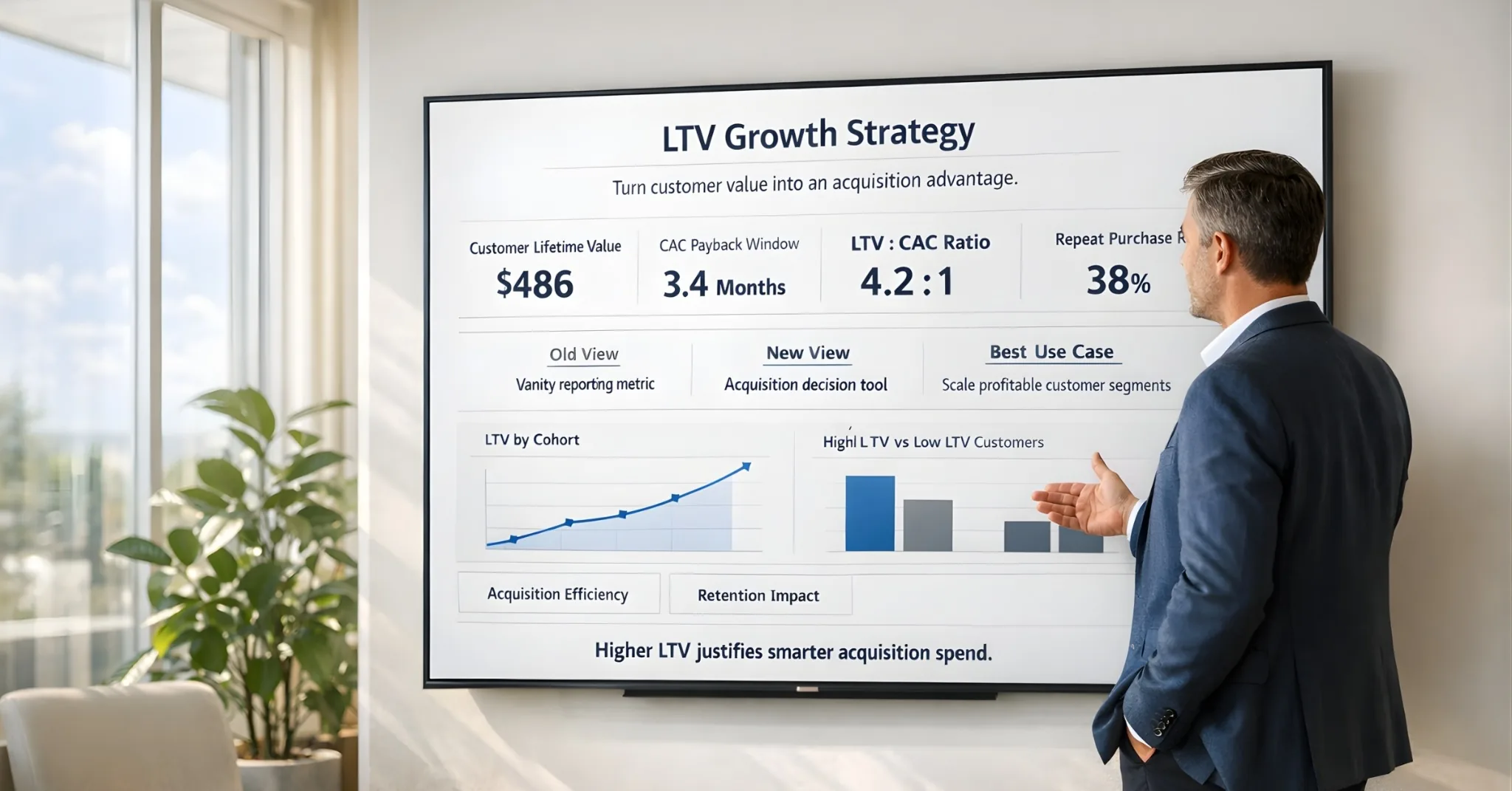
Most brands treat LTV as a reporting metric. Something finance calculates quarterly. A number that sits in a dashboard, occasionally referenced but rarely acted upon.
This is a missed opportunity.
In the algorithmic advertising era, LTV isn't just a measurement — it's an input. It tells platforms which customers to find more of. It determines how much you can afford to spend on acquisition. It separates brands that scale profitably from those that burn cash chasing revenue.
The brands winning today don't just calculate LTV. They weaponize it.
What LTV Actually Measures
Customer Lifetime Value (LTV) is the total revenue (or profit) a customer generates over their entire relationship with your business. Simple concept, but the implications are profound.
THE LTV EQUATION
════════════════════════════════════════════════════════════════════════════

    At its core:

    LTV  =  How much they spend  ×  How often  ×  How long


    SIMPLE FORMULA:
    ───────────────
    LTV = Average Order Value × Purchase Frequency × Customer Lifespan

    Example:
    AOV = $75
    Purchase Frequency = 2.5 orders/year
    Customer Lifespan = 3 years

    LTV = $75 × 2.5 × 3 = $562.50


    WHY IT MATTERS:
    ───────────────
    If you know a customer is worth $562 over their lifetime,
    you know how much you can spend to acquire them.

    At a 3:1 LTV:CAC target, you can spend up to $187 to acquire
    that customer and still hit your profitability goals.

════════════════════════════════════════════════════════════════════════════
THE LTV EQUATION
════════════════════════════════════════════════════════════════════════════

    At its core:

    LTV  =  How much they spend  ×  How often  ×  How long


    SIMPLE FORMULA:
    ───────────────
    LTV = Average Order Value × Purchase Frequency × Customer Lifespan

    Example:
    AOV = $75
    Purchase Frequency = 2.5 orders/year
    Customer Lifespan = 3 years

    LTV = $75 × 2.5 × 3 = $562.50


    WHY IT MATTERS:
    ───────────────
    If you know a customer is worth $562 over their lifetime,
    you know how much you can spend to acquire them.

    At a 3:1 LTV:CAC target, you can spend up to $187 to acquire
    that customer and still hit your profitability goals.

════════════════════════════════════════════════════════════════════════════
THE LTV EQUATION
════════════════════════════════════════════════════════════════════════════

    At its core:

    LTV  =  How much they spend  ×  How often  ×  How long


    SIMPLE FORMULA:
    ───────────────
    LTV = Average Order Value × Purchase Frequency × Customer Lifespan

    Example:
    AOV = $75
    Purchase Frequency = 2.5 orders/year
    Customer Lifespan = 3 years

    LTV = $75 × 2.5 × 3 = $562.50


    WHY IT MATTERS:
    ───────────────
    If you know a customer is worth $562 over their lifetime,
    you know how much you can spend to acquire them.

    At a 3:1 LTV:CAC target, you can spend up to $187 to acquire
    that customer and still hit your profitability goals.

════════════════════════════════════════════════════════════════════════════
AOV is the first lever in the LTV equation — and it's also the most directly controllable. For the deeper view of how average order value connects here — including the bundling and threshold strategies that lift it — see that guide.The power of LTV isn't in the number itself — it's in what it enables. When you know customer value, you can make acquisition decisions with confidence instead of guessing.
Why Most LTV Calculations Are Wrong
Here's the uncomfortable truth: the LTV number in your dashboard is probably wrong. Not slightly off — fundamentally flawed in ways that lead to bad decisions.
COMMON LTV CALCULATION MISTAKES
════════════════════════════════════════════════════════════════════════════

    MISTAKE 1: USING REVENUE INSTEAD OF PROFIT
    ───────────────────────────────────────────
    Revenue LTV:     $562
    Profit margin:   40%
    Actual LTV:      $225  ← This is what matters

    Spending $187 to acquire a $225 profit customer = thin margin
    Spending $187 to acquire a $562 revenue customer = illusion


    MISTAKE 2: AVERAGING ACROSS ALL CUSTOMERS
    ──────────────────────────────────────────
    Your "average" LTV blends:
    • One-time buyers who never return ($75 LTV)
    • Loyal repeat customers ($800+ LTV)
    • Everyone in between

    Result: A meaningless number that describes nobody.


    MISTAKE 3: IGNORING ACQUISITION SOURCE
    ──────────────────────────────────────
    Customers from Meta ads:       $420 LTV
    Customers from Google Search:  $680 LTV
    Customers from TikTok:         $280 LTV

    "Average" LTV:                 $460

    The average tells you nothing about where to spend.


    MISTAKE 4: INCOMPLETE DATA
    ──────────────────────────
    If your tracking misses 40-60% of conversions, your LTV
    calculations are based on a biased sample of customers.

    You're measuring the customers you CAN see, not all of them.

════════════════════════════════════════════════════════════════════════════
COMMON LTV CALCULATION MISTAKES
════════════════════════════════════════════════════════════════════════════

    MISTAKE 1: USING REVENUE INSTEAD OF PROFIT
    ───────────────────────────────────────────
    Revenue LTV:     $562
    Profit margin:   40%
    Actual LTV:      $225  ← This is what matters

    Spending $187 to acquire a $225 profit customer = thin margin
    Spending $187 to acquire a $562 revenue customer = illusion


    MISTAKE 2: AVERAGING ACROSS ALL CUSTOMERS
    ──────────────────────────────────────────
    Your "average" LTV blends:
    • One-time buyers who never return ($75 LTV)
    • Loyal repeat customers ($800+ LTV)
    • Everyone in between

    Result: A meaningless number that describes nobody.


    MISTAKE 3: IGNORING ACQUISITION SOURCE
    ──────────────────────────────────────
    Customers from Meta ads:       $420 LTV
    Customers from Google Search:  $680 LTV
    Customers from TikTok:         $280 LTV

    "Average" LTV:                 $460

    The average tells you nothing about where to spend.


    MISTAKE 4: INCOMPLETE DATA
    ──────────────────────────
    If your tracking misses 40-60% of conversions, your LTV
    calculations are based on a biased sample of customers.

    You're measuring the customers you CAN see, not all of them.

════════════════════════════════════════════════════════════════════════════
COMMON LTV CALCULATION MISTAKES
════════════════════════════════════════════════════════════════════════════

    MISTAKE 1: USING REVENUE INSTEAD OF PROFIT
    ───────────────────────────────────────────
    Revenue LTV:     $562
    Profit margin:   40%
    Actual LTV:      $225  ← This is what matters

    Spending $187 to acquire a $225 profit customer = thin margin
    Spending $187 to acquire a $562 revenue customer = illusion


    MISTAKE 2: AVERAGING ACROSS ALL CUSTOMERS
    ──────────────────────────────────────────
    Your "average" LTV blends:
    • One-time buyers who never return ($75 LTV)
    • Loyal repeat customers ($800+ LTV)
    • Everyone in between

    Result: A meaningless number that describes nobody.


    MISTAKE 3: IGNORING ACQUISITION SOURCE
    ──────────────────────────────────────
    Customers from Meta ads:       $420 LTV
    Customers from Google Search:  $680 LTV
    Customers from TikTok:         $280 LTV

    "Average" LTV:                 $460

    The average tells you nothing about where to spend.


    MISTAKE 4: INCOMPLETE DATA
    ──────────────────────────
    If your tracking misses 40-60% of conversions, your LTV
    calculations are based on a biased sample of customers.

    You're measuring the customers you CAN see, not all of them.

════════════════════════════════════════════════════════════════════════════
The Power Law of Customer Value
Here's why "average LTV" is especially dangerous: customer value follows a power law distribution.
THE LTV POWER LAW
════════════════════════════════════════════════════════════════════════════

    Your top 20% of customers generate ~80% of your LTV.
    Your bottom 50% might generate less than 10%.


    CUSTOMER VALUE DISTRIBUTION:
    ────────────────────────────

    TOP 20%         [$════════════════════════════════════════]  80% of LTV
    (Brand Believers)

    MIDDLE 30%      [$════════]                                  15% of LTV
    (Occasional Buyers)

    BOTTOM 50%      [$══]                                         5% of LTV
    (One-and-Done)


    THE IMPLICATION:
    ────────────────
    "Average" LTV blends whales with minnows.

    It tells you nothing about:
    • Which channels find the whales
    • Which acquisition strategies attract one-and-dones
    • Where to focus your budget

    This is why segmented LTV (by source, by behavior) is the weapon.
    Average LTV is just a number.

════════════════════════════════════════════════════════════════════════════
THE LTV POWER LAW
════════════════════════════════════════════════════════════════════════════

    Your top 20% of customers generate ~80% of your LTV.
    Your bottom 50% might generate less than 10%.


    CUSTOMER VALUE DISTRIBUTION:
    ────────────────────────────

    TOP 20%         [$════════════════════════════════════════]  80% of LTV
    (Brand Believers)

    MIDDLE 30%      [$════════]                                  15% of LTV
    (Occasional Buyers)

    BOTTOM 50%      [$══]                                         5% of LTV
    (One-and-Done)


    THE IMPLICATION:
    ────────────────
    "Average" LTV blends whales with minnows.

    It tells you nothing about:
    • Which channels find the whales
    • Which acquisition strategies attract one-and-dones
    • Where to focus your budget

    This is why segmented LTV (by source, by behavior) is the weapon.
    Average LTV is just a number.

════════════════════════════════════════════════════════════════════════════
THE LTV POWER LAW
════════════════════════════════════════════════════════════════════════════

    Your top 20% of customers generate ~80% of your LTV.
    Your bottom 50% might generate less than 10%.


    CUSTOMER VALUE DISTRIBUTION:
    ────────────────────────────

    TOP 20%         [$════════════════════════════════════════]  80% of LTV
    (Brand Believers)

    MIDDLE 30%      [$════════]                                  15% of LTV
    (Occasional Buyers)

    BOTTOM 50%      [$══]                                         5% of LTV
    (One-and-Done)


    THE IMPLICATION:
    ────────────────
    "Average" LTV blends whales with minnows.

    It tells you nothing about:
    • Which channels find the whales
    • Which acquisition strategies attract one-and-dones
    • Where to focus your budget

    This is why segmented LTV (by source, by behavior) is the weapon.
    Average LTV is just a number.

════════════════════════════════════════════════════════════════════════════
The LTV Formulas That Actually Matter
Skip the academic formulas. These are the calculations that drive real decisions.
Profit-Based LTV
Revenue is vanity. Profit is sanity.
PROFIT-BASED LTV
════════════════════════════════════════════════════════════════════════════

    FORMULA (Spreadsheet-Ready):
    ────────────────────────────

    Profit LTV = (AOV − Variable Costs per Order) × Total Orders per Lifespan


    VARIABLE COSTS PER ORDER INCLUDE:
    ──────────────────────────────────
    • COGS (cost of goods sold)
    • Shipping (outbound + returns)
    • Payment processing fees
    • Platform transaction fees
    • Return/refund costs (amortized)


    EXAMPLE:
    ────────
    Average Order Value (AOV):       $80
    Variable costs per order:        $32 (40%)
    Profit per order:                $48

    Average orders per lifespan:     5 orders

    Profit LTV = $48 × 5 = $240


    THE PROFIT GAP VISUAL:
    ──────────────────────

    Revenue LTV        Profit LTV
    ───────────        ──────────
    [$400══════════]   [$240════]

                       ◄── This is what you can actually spend ──►

    Revenue LTV looks impressive. Profit LTV is what matters
    for acquisition decisions.

════════════════════════════════════════════════════════════════════════════
PROFIT-BASED LTV
════════════════════════════════════════════════════════════════════════════

    FORMULA (Spreadsheet-Ready):
    ────────────────────────────

    Profit LTV = (AOV − Variable Costs per Order) × Total Orders per Lifespan


    VARIABLE COSTS PER ORDER INCLUDE:
    ──────────────────────────────────
    • COGS (cost of goods sold)
    • Shipping (outbound + returns)
    • Payment processing fees
    • Platform transaction fees
    • Return/refund costs (amortized)


    EXAMPLE:
    ────────
    Average Order Value (AOV):       $80
    Variable costs per order:        $32 (40%)
    Profit per order:                $48

    Average orders per lifespan:     5 orders

    Profit LTV = $48 × 5 = $240


    THE PROFIT GAP VISUAL:
    ──────────────────────

    Revenue LTV        Profit LTV
    ───────────        ──────────
    [$400══════════]   [$240════]

                       ◄── This is what you can actually spend ──►

    Revenue LTV looks impressive. Profit LTV is what matters
    for acquisition decisions.

════════════════════════════════════════════════════════════════════════════
PROFIT-BASED LTV
════════════════════════════════════════════════════════════════════════════

    FORMULA (Spreadsheet-Ready):
    ────────────────────────────

    Profit LTV = (AOV − Variable Costs per Order) × Total Orders per Lifespan


    VARIABLE COSTS PER ORDER INCLUDE:
    ──────────────────────────────────
    • COGS (cost of goods sold)
    • Shipping (outbound + returns)
    • Payment processing fees
    • Platform transaction fees
    • Return/refund costs (amortized)


    EXAMPLE:
    ────────
    Average Order Value (AOV):       $80
    Variable costs per order:        $32 (40%)
    Profit per order:                $48

    Average orders per lifespan:     5 orders

    Profit LTV = $48 × 5 = $240


    THE PROFIT GAP VISUAL:
    ──────────────────────

    Revenue LTV        Profit LTV
    ───────────        ──────────
    [$400══════════]   [$240════]

                       ◄── This is what you can actually spend ──►

    Revenue LTV looks impressive. Profit LTV is what matters
    for acquisition decisions.

════════════════════════════════════════════════════════════════════════════
LTV:nCAC Ratio
The most important health metric for sustainable growth. Use nCAC (New Customer Acquisition Cost) to avoid blending acquisition with retention.
LTV:nCAC RATIO
════════════════════════════════════════════════════════════════════════════

                        Profit LTV
    LTV:nCAC Ratio  =  ────────────
                          nCAC


    EXAMPLE:
    ────────
    Profit LTV:    $240
    nCAC:          $60

    LTV:nCAC = $240 ÷ $60 = 4:1


    THE PROFIT GAP VISUAL:
    ──────────────────────

    ┌─────────────────────────────────────────────────────────────────────┐
    │                                                                     │
    │  nCAC              PROFIT LTV                                       │
    │  ────              ──────────                                       │
    │                                                                     │
    │  [$60══]     →     [$240═══════════════════════════════]           │
    │                                                                     │
    │              ◄──────────── $180 Profit Gap ────────────►           │
    │                                                                     │
    │  This gap is your margin for error, overhead, and profit.          │
    │  Wider gap = healthier business. Narrow gap = fragile.             │
    │                                                                     │
    └─────────────────────────────────────────────────────────────────────┘


    BENCHMARKS:
    ───────────
    Below 1:1       Losing money on every customer
    1:1 - 2:1       Break-even territory — fragile, no margin for error
    3:1             Industry standard for healthy growth
    4:1+            Excellent — room to invest aggressively


    THE nCAC DISTINCTION:
    ─────────────────────
    nCAC = Cost to acquire NEW customers only

    Don't blend returning customer purchases into CAC.
    That hides poor acquisition behind strong retention.

════════════════════════════════════════════════════════════════════════════
LTV:nCAC RATIO
════════════════════════════════════════════════════════════════════════════

                        Profit LTV
    LTV:nCAC Ratio  =  ────────────
                          nCAC


    EXAMPLE:
    ────────
    Profit LTV:    $240
    nCAC:          $60

    LTV:nCAC = $240 ÷ $60 = 4:1


    THE PROFIT GAP VISUAL:
    ──────────────────────

    ┌─────────────────────────────────────────────────────────────────────┐
    │                                                                     │
    │  nCAC              PROFIT LTV                                       │
    │  ────              ──────────                                       │
    │                                                                     │
    │  [$60══]     →     [$240═══════════════════════════════]           │
    │                                                                     │
    │              ◄──────────── $180 Profit Gap ────────────►           │
    │                                                                     │
    │  This gap is your margin for error, overhead, and profit.          │
    │  Wider gap = healthier business. Narrow gap = fragile.             │
    │                                                                     │
    └─────────────────────────────────────────────────────────────────────┘


    BENCHMARKS:
    ───────────
    Below 1:1       Losing money on every customer
    1:1 - 2:1       Break-even territory — fragile, no margin for error
    3:1             Industry standard for healthy growth
    4:1+            Excellent — room to invest aggressively


    THE nCAC DISTINCTION:
    ─────────────────────
    nCAC = Cost to acquire NEW customers only

    Don't blend returning customer purchases into CAC.
    That hides poor acquisition behind strong retention.

════════════════════════════════════════════════════════════════════════════
LTV:nCAC RATIO
════════════════════════════════════════════════════════════════════════════

                        Profit LTV
    LTV:nCAC Ratio  =  ────────────
                          nCAC


    EXAMPLE:
    ────────
    Profit LTV:    $240
    nCAC:          $60

    LTV:nCAC = $240 ÷ $60 = 4:1


    THE PROFIT GAP VISUAL:
    ──────────────────────

    ┌─────────────────────────────────────────────────────────────────────┐
    │                                                                     │
    │  nCAC              PROFIT LTV                                       │
    │  ────              ──────────                                       │
    │                                                                     │
    │  [$60══]     →     [$240═══════════════════════════════]           │
    │                                                                     │
    │              ◄──────────── $180 Profit Gap ────────────►           │
    │                                                                     │
    │  This gap is your margin for error, overhead, and profit.          │
    │  Wider gap = healthier business. Narrow gap = fragile.             │
    │                                                                     │
    └─────────────────────────────────────────────────────────────────────┘


    BENCHMARKS:
    ───────────
    Below 1:1       Losing money on every customer
    1:1 - 2:1       Break-even territory — fragile, no margin for error
    3:1             Industry standard for healthy growth
    4:1+            Excellent — room to invest aggressively


    THE nCAC DISTINCTION:
    ─────────────────────
    nCAC = Cost to acquire NEW customers only

    Don't blend returning customer purchases into CAC.
    That hides poor acquisition behind strong retention.

════════════════════════════════════════════════════════════════════════════
Once your LTV:nCAC ratio supports aggressive investment, the constraint shifts to whether your tracking infrastructure can scale with you. See pricing built for scaling brands for how the cost layer maps to growth volume.
Payback Period
How long until a customer pays back their acquisition cost? This determines cash flow requirements.
PAYBACK PERIOD
════════════════════════════════════════════════════════════════════════════

                                  nCAC
    Payback (months)  =  ─────────────────────────
                          Monthly Profit per Customer


    EXAMPLE:
    ────────
    nCAC:                        $150
    Annual profit per customer:  $240
    Monthly profit:              $20

    Payback = $150 ÷ $20 = 7.5 months


    BENCHMARKS:
    ───────────
    Under 6 months      Excellent — fast cash recovery
    6-12 months         Healthy for most DTC brands
    12-18 months        Requires capital planning
    Over 18 months      Cash flow risk

════════════════════════════════════════════════════════════════════════════
PAYBACK PERIOD
════════════════════════════════════════════════════════════════════════════

                                  nCAC
    Payback (months)  =  ─────────────────────────
                          Monthly Profit per Customer


    EXAMPLE:
    ────────
    nCAC:                        $150
    Annual profit per customer:  $240
    Monthly profit:              $20

    Payback = $150 ÷ $20 = 7.5 months


    BENCHMARKS:
    ───────────
    Under 6 months      Excellent — fast cash recovery
    6-12 months         Healthy for most DTC brands
    12-18 months        Requires capital planning
    Over 18 months      Cash flow risk

════════════════════════════════════════════════════════════════════════════
PAYBACK PERIOD
════════════════════════════════════════════════════════════════════════════

                                  nCAC
    Payback (months)  =  ─────────────────────────
                          Monthly Profit per Customer


    EXAMPLE:
    ────────
    nCAC:                        $150
    Annual profit per customer:  $240
    Monthly profit:              $20

    Payback = $150 ÷ $20 = 7.5 months


    BENCHMARKS:
    ───────────
    Under 6 months      Excellent — fast cash recovery
    6-12 months         Healthy for most DTC brands
    12-18 months        Requires capital planning
    Over 18 months      Cash flow risk

════════════════════════════════════════════════════════════════════════════
LTV by Acquisition Source: Where It Gets Powerful
Average LTV is a starting point. LTV by acquisition source is a competitive advantage.
Different channels attract different customers. Understanding which sources deliver high-LTV customers transforms your media buying strategy.
LTV BY ACQUISITION SOURCE (EXAMPLE)
════════════════════════════════════════════════════════════════════════════

    SOURCE              LTV        nCAC      LTV:nCAC    VERDICT
    ──────              ───        ────      ────────    ───────

    Google Brand        $720       $45       16:1        Scale aggressively
    Google Non-Brand    $580       $85       6.8:1       Strong performer
    Meta Prospecting    $420       $95       4.4:1       Healthy, scale
    Meta Retargeting    $650       $35       18.6:1      Maximize budget
    TikTok              $280       $65       4.3:1       Test and monitor
    Influencer          $510       $120      4.3:1       Selective scaling
    Email/Owned         $880       $5        176:1       Max out capacity

════════════════════════════════════════════════════════════════════════════

    WHAT THIS REVEALS:
    ───────────────────
    • TikTok has lowest LTV — those customers don't retain well
    • Google Brand searchers are your best customers
    • Meta retargeting is high-LTV (they already know you)
    • Email/owned media is massively undervalued

    STRATEGIC IMPLICATION:
    ──────────────────────
    Stop optimizing all channels to the same ROAS target.
    Different sources = different LTV = different acceptable CAC.

════════════════════════════════════════════════════════════════════════════
LTV BY ACQUISITION SOURCE (EXAMPLE)
════════════════════════════════════════════════════════════════════════════

    SOURCE              LTV        nCAC      LTV:nCAC    VERDICT
    ──────              ───        ────      ────────    ───────

    Google Brand        $720       $45       16:1        Scale aggressively
    Google Non-Brand    $580       $85       6.8:1       Strong performer
    Meta Prospecting    $420       $95       4.4:1       Healthy, scale
    Meta Retargeting    $650       $35       18.6:1      Maximize budget
    TikTok              $280       $65       4.3:1       Test and monitor
    Influencer          $510       $120      4.3:1       Selective scaling
    Email/Owned         $880       $5        176:1       Max out capacity

════════════════════════════════════════════════════════════════════════════

    WHAT THIS REVEALS:
    ───────────────────
    • TikTok has lowest LTV — those customers don't retain well
    • Google Brand searchers are your best customers
    • Meta retargeting is high-LTV (they already know you)
    • Email/owned media is massively undervalued

    STRATEGIC IMPLICATION:
    ──────────────────────
    Stop optimizing all channels to the same ROAS target.
    Different sources = different LTV = different acceptable CAC.

════════════════════════════════════════════════════════════════════════════
LTV BY ACQUISITION SOURCE (EXAMPLE)
════════════════════════════════════════════════════════════════════════════

    SOURCE              LTV        nCAC      LTV:nCAC    VERDICT
    ──────              ───        ────      ────────    ───────

    Google Brand        $720       $45       16:1        Scale aggressively
    Google Non-Brand    $580       $85       6.8:1       Strong performer
    Meta Prospecting    $420       $95       4.4:1       Healthy, scale
    Meta Retargeting    $650       $35       18.6:1      Maximize budget
    TikTok              $280       $65       4.3:1       Test and monitor
    Influencer          $510       $120      4.3:1       Selective scaling
    Email/Owned         $880       $5        176:1       Max out capacity

════════════════════════════════════════════════════════════════════════════

    WHAT THIS REVEALS:
    ───────────────────
    • TikTok has lowest LTV — those customers don't retain well
    • Google Brand searchers are your best customers
    • Meta retargeting is high-LTV (they already know you)
    • Email/owned media is massively undervalued

    STRATEGIC IMPLICATION:
    ──────────────────────
    Stop optimizing all channels to the same ROAS target.
    Different sources = different LTV = different acceptable CAC.

════════════════════════════════════════════════════════════════════════════
For the parallel view of how this same LTV-by-source logic applies in long-cycle B2B journeys, see a related guide on B2B attribution.
Cohort Analysis: LTV Over Time
LTV isn't static. Track how customer value develops over time by acquisition cohort.
LTV COHORT ANALYSIS
════════════════════════════════════════════════════════════════════════════

    CUMULATIVE LTV BY MONTHS SINCE FIRST PURCHASE:

    COHORT      M1      M3      M6      M12     M24     M36
    ──────      ──      ──      ──      ───     ───     ───

    Jan '25     $85     $142    $195    $310    $485    $620
    Apr '25     $78     $125    $168    $275    $410    —
    Jul '25     $92     $158    $215    $345    —       —
    Oct '25     $88     $140    $190    —       —       —


    VALUE STACKING VISUAL (Jan '25 Cohort):
    ───────────────────────────────────────

    M36  [$620═══════════════════════════════════════════════════════]
         │
    M24  [$485═════════════════════════════════════════]
         │
    M12  [$310══════════════════════════]
         │
    M6   [$195═══════════════]
         │
    M3   [$142════════]
         │
    M1   [$85═══]
         └──────────────────────────────────────────────────────────────►
                                                                    TIME

    Each layer = additional value from repeat purchases.
    The curve flattens when customers churn or reduce frequency.

════════════════════════════════════════════════════════════════════════════

    WHAT TO LOOK FOR:
    ─────────────────
    • Is LTV growing or shrinking for newer cohorts?
    • When does the curve flatten? (Customer lifespan estimate)
    • Which cohorts outperform? What was different about them?
    • How long until you recover CAC? (Payback period)

════════════════════════════════════════════════════════════════════════════
LTV COHORT ANALYSIS
════════════════════════════════════════════════════════════════════════════

    CUMULATIVE LTV BY MONTHS SINCE FIRST PURCHASE:

    COHORT      M1      M3      M6      M12     M24     M36
    ──────      ──      ──      ──      ───     ───     ───

    Jan '25     $85     $142    $195    $310    $485    $620
    Apr '25     $78     $125    $168    $275    $410    —
    Jul '25     $92     $158    $215    $345    —       —
    Oct '25     $88     $140    $190    —       —       —


    VALUE STACKING VISUAL (Jan '25 Cohort):
    ───────────────────────────────────────

    M36  [$620═══════════════════════════════════════════════════════]
         │
    M24  [$485═════════════════════════════════════════]
         │
    M12  [$310══════════════════════════]
         │
    M6   [$195═══════════════]
         │
    M3   [$142════════]
         │
    M1   [$85═══]
         └──────────────────────────────────────────────────────────────►
                                                                    TIME

    Each layer = additional value from repeat purchases.
    The curve flattens when customers churn or reduce frequency.

════════════════════════════════════════════════════════════════════════════

    WHAT TO LOOK FOR:
    ─────────────────
    • Is LTV growing or shrinking for newer cohorts?
    • When does the curve flatten? (Customer lifespan estimate)
    • Which cohorts outperform? What was different about them?
    • How long until you recover CAC? (Payback period)

════════════════════════════════════════════════════════════════════════════
LTV COHORT ANALYSIS
════════════════════════════════════════════════════════════════════════════

    CUMULATIVE LTV BY MONTHS SINCE FIRST PURCHASE:

    COHORT      M1      M3      M6      M12     M24     M36
    ──────      ──      ──      ──      ───     ───     ───

    Jan '25     $85     $142    $195    $310    $485    $620
    Apr '25     $78     $125    $168    $275    $410    —
    Jul '25     $92     $158    $215    $345    —       —
    Oct '25     $88     $140    $190    —       —       —


    VALUE STACKING VISUAL (Jan '25 Cohort):
    ───────────────────────────────────────

    M36  [$620═══════════════════════════════════════════════════════]
         │
    M24  [$485═════════════════════════════════════════]
         │
    M12  [$310══════════════════════════]
         │
    M6   [$195═══════════════]
         │
    M3   [$142════════]
         │
    M1   [$85═══]
         └──────────────────────────────────────────────────────────────►
                                                                    TIME

    Each layer = additional value from repeat purchases.
    The curve flattens when customers churn or reduce frequency.

════════════════════════════════════════════════════════════════════════════

    WHAT TO LOOK FOR:
    ─────────────────
    • Is LTV growing or shrinking for newer cohorts?
    • When does the curve flatten? (Customer lifespan estimate)
    • Which cohorts outperform? What was different about them?
    • How long until you recover CAC? (Payback period)

════════════════════════════════════════════════════════════════════════════
Predictive LTV: The Acquisition Weapon
Here's where LTV becomes truly powerful: using it as an input to advertising algorithms.
Instead of waiting years to know a customer's actual LTV, predict it early and tell platforms which customers are most valuable.
PREDICTIVE LTV FOR ADVERTISING
════════════════════════════════════════════════════════════════════════════

    THE CONCEPT:
    ────────────
    Based on first purchase behavior, predict lifetime value.
    Send that predicted value to ad platforms as conversion value.
    Let algorithms optimize for high-LTV customers, not just any customers.


    PREDICTIVE SIGNALS:
    ───────────────────
    First purchase signals that predict higher LTV:

    • Higher first order value
    • Purchased from full-price collection (not sale items)
    • Bought subscription or bundle
    • Added to email/SMS list
    • Created account at checkout
    • Purchased from high-LTV product category


    DISCOUNT SENSITIVITY — THE KEY SIGNAL:
    ──────────────────────────────────────

    "BRAND BELIEVERS"              "DISCOUNT HUNTERS"
    ─────────────────              ──────────────────

    Full-price purchasers          Only buy with 20%+ codes
    Higher repeat rate             Low repeat rate
    Less price sensitive           Wait for sales
    Higher predicted LTV           Lower predicted LTV

    A customer who only buys with a 30% code has significantly
    lower predicted LTV than a full-price buyer. Track this.


    IMPLEMENTATION:
    ───────────────
    1. Build predictive model from historical data
       (which first-purchase behaviors predict repeat purchases?)

    2. Score new customers at time of purchase
       (assign predicted LTV based on their signals)

    3. Send predicted LTV as conversion value to platforms
       (via server-side tracking for accuracy)

    4. Optimize campaigns for value, not volume
       (platforms find more customers who look like your best ones)


    THE PREDICTIVE LTV DATA FLOW:
    ─────────────────────────────

    ┌─────────────┐         ┌──────────────┐         ┌─────────────┐
    │   FIRST     │         │  PREDICTIVE  │         │     AD      │
    │  PURCHASE   │   →     │  LTV MODEL   │   →     │  PLATFORM   │
    │   DATA      │         │              │         │             │
    └─────────────┘         └──────────────┘         └─────────────┘
          │                        │                        │
    Captures:                 Scores:                  Optimizes:
    • Order value             • High/Med/Low LTV       • Finds more
    • Discount used?          • Predicted $              high-LTV
    • Product category        • Confidence             • Bids higher
    • Email signup?             level                    for quality
    • Account created?                                 • Avoids low-LTV
                                                         lookalikes

════════════════════════════════════════════════════════════════════════════

    THE RESULT:
    ────────────
    Instead of: "Find people who will buy once"
    Algorithm learns: "Find people who will buy repeatedly"

    Same ad spend, higher quality customers.

════════════════════════════════════════════════════════════════════════════
PREDICTIVE LTV FOR ADVERTISING
════════════════════════════════════════════════════════════════════════════

    THE CONCEPT:
    ────────────
    Based on first purchase behavior, predict lifetime value.
    Send that predicted value to ad platforms as conversion value.
    Let algorithms optimize for high-LTV customers, not just any customers.


    PREDICTIVE SIGNALS:
    ───────────────────
    First purchase signals that predict higher LTV:

    • Higher first order value
    • Purchased from full-price collection (not sale items)
    • Bought subscription or bundle
    • Added to email/SMS list
    • Created account at checkout
    • Purchased from high-LTV product category


    DISCOUNT SENSITIVITY — THE KEY SIGNAL:
    ──────────────────────────────────────

    "BRAND BELIEVERS"              "DISCOUNT HUNTERS"
    ─────────────────              ──────────────────

    Full-price purchasers          Only buy with 20%+ codes
    Higher repeat rate             Low repeat rate
    Less price sensitive           Wait for sales
    Higher predicted LTV           Lower predicted LTV

    A customer who only buys with a 30% code has significantly
    lower predicted LTV than a full-price buyer. Track this.


    IMPLEMENTATION:
    ───────────────
    1. Build predictive model from historical data
       (which first-purchase behaviors predict repeat purchases?)

    2. Score new customers at time of purchase
       (assign predicted LTV based on their signals)

    3. Send predicted LTV as conversion value to platforms
       (via server-side tracking for accuracy)

    4. Optimize campaigns for value, not volume
       (platforms find more customers who look like your best ones)


    THE PREDICTIVE LTV DATA FLOW:
    ─────────────────────────────

    ┌─────────────┐         ┌──────────────┐         ┌─────────────┐
    │   FIRST     │         │  PREDICTIVE  │         │     AD      │
    │  PURCHASE   │   →     │  LTV MODEL   │   →     │  PLATFORM   │
    │   DATA      │         │              │         │             │
    └─────────────┘         └──────────────┘         └─────────────┘
          │                        │                        │
    Captures:                 Scores:                  Optimizes:
    • Order value             • High/Med/Low LTV       • Finds more
    • Discount used?          • Predicted $              high-LTV
    • Product category        • Confidence             • Bids higher
    • Email signup?             level                    for quality
    • Account created?                                 • Avoids low-LTV
                                                         lookalikes

════════════════════════════════════════════════════════════════════════════

    THE RESULT:
    ────────────
    Instead of: "Find people who will buy once"
    Algorithm learns: "Find people who will buy repeatedly"

    Same ad spend, higher quality customers.

════════════════════════════════════════════════════════════════════════════
PREDICTIVE LTV FOR ADVERTISING
════════════════════════════════════════════════════════════════════════════

    THE CONCEPT:
    ────────────
    Based on first purchase behavior, predict lifetime value.
    Send that predicted value to ad platforms as conversion value.
    Let algorithms optimize for high-LTV customers, not just any customers.


    PREDICTIVE SIGNALS:
    ───────────────────
    First purchase signals that predict higher LTV:

    • Higher first order value
    • Purchased from full-price collection (not sale items)
    • Bought subscription or bundle
    • Added to email/SMS list
    • Created account at checkout
    • Purchased from high-LTV product category


    DISCOUNT SENSITIVITY — THE KEY SIGNAL:
    ──────────────────────────────────────

    "BRAND BELIEVERS"              "DISCOUNT HUNTERS"
    ─────────────────              ──────────────────

    Full-price purchasers          Only buy with 20%+ codes
    Higher repeat rate             Low repeat rate
    Less price sensitive           Wait for sales
    Higher predicted LTV           Lower predicted LTV

    A customer who only buys with a 30% code has significantly
    lower predicted LTV than a full-price buyer. Track this.


    IMPLEMENTATION:
    ───────────────
    1. Build predictive model from historical data
       (which first-purchase behaviors predict repeat purchases?)

    2. Score new customers at time of purchase
       (assign predicted LTV based on their signals)

    3. Send predicted LTV as conversion value to platforms
       (via server-side tracking for accuracy)

    4. Optimize campaigns for value, not volume
       (platforms find more customers who look like your best ones)


    THE PREDICTIVE LTV DATA FLOW:
    ─────────────────────────────

    ┌─────────────┐         ┌──────────────┐         ┌─────────────┐
    │   FIRST     │         │  PREDICTIVE  │         │     AD      │
    │  PURCHASE   │   →     │  LTV MODEL   │   →     │  PLATFORM   │
    │   DATA      │         │              │         │             │
    └─────────────┘         └──────────────┘         └─────────────┘
          │                        │                        │
    Captures:                 Scores:                  Optimizes:
    • Order value             • High/Med/Low LTV       • Finds more
    • Discount used?          • Predicted $              high-LTV
    • Product category        • Confidence             • Bids higher
    • Email signup?             level                    for quality
    • Account created?                                 • Avoids low-LTV
                                                         lookalikes

════════════════════════════════════════════════════════════════════════════

    THE RESULT:
    ────────────
    Instead of: "Find people who will buy once"
    Algorithm learns: "Find people who will buy repeatedly"

    Same ad spend, higher quality customers.

════════════════════════════════════════════════════════════════════════════
This is the same Value-Based Bidding concept applied to LTV. Send the algorithm better signal, get better customers.
The Data Foundation Problem
All of this depends on accurate tracking. If your conversion data is incomplete, your LTV calculations inherit that incompleteness.
When 40-60% of conversions are invisible due to iOS opt-outs, ad blockers, and browser restrictions, your LTV analysis has blind spots:
Missing customers — Some purchasers never appear in your tracking
Biased samples — The customers you CAN track may not represent all customers
Broken attribution — You can't tie LTV back to acquisition source if you don't know where customers came from
Server-side tracking captures conversions that browser pixels miss, providing a more complete dataset for LTV analysis. Without it, you're building strategy on a sample, not the full picture.
Making LTV Actionable
LTV is only valuable if it drives decisions. Here's how to operationalize it. For the broader view of how LTV operationalization fits within ecommerce growth strategies — covering retention, expansion, and channel mix — see that guide:
LTV ACTION FRAMEWORK
════════════════════════════════════════════════════════════════════════════

    1. SET CHANNEL-SPECIFIC CAC TARGETS
    ───────────────────────────────────
    Don't use one ROAS target for all channels.

    High-LTV channel (Google Brand): Accept $100 CAC
    Low-LTV channel (TikTok):        Cap at $50 CAC

    Same LTV:CAC ratio, different absolute targets.


    2. REALLOCATE BUDGET BY LTV
    ───────────────────────────
    Current: Even budget split across channels
    Better: Weight budget toward high-LTV sources

    If Google delivers 2x the LTV of TikTok, it deserves
    a higher share of budget (even at higher CPMs).


    3. BUILD LOOKALIKES FROM HIGH-LTV CUSTOMERS
    ───────────────────────────────────────────
    Stop building lookalikes from "all purchasers."
    Build from your top 20% by LTV.

    Quality in → Quality out.


    4. USE PREDICTIVE LTV FOR BIDDING
    ─────────────────────────────────
    Send predicted LTV as conversion value.
    Let algorithms optimize for customer quality, not just volume.


    5. MONITOR COHORT TRENDS
    ────────────────────────
    Is LTV trending up or down for new cohorts?
    Early warning system for acquisition quality problems.

════════════════════════════════════════════════════════════════════════════
LTV ACTION FRAMEWORK
════════════════════════════════════════════════════════════════════════════

    1. SET CHANNEL-SPECIFIC CAC TARGETS
    ───────────────────────────────────
    Don't use one ROAS target for all channels.

    High-LTV channel (Google Brand): Accept $100 CAC
    Low-LTV channel (TikTok):        Cap at $50 CAC

    Same LTV:CAC ratio, different absolute targets.


    2. REALLOCATE BUDGET BY LTV
    ───────────────────────────
    Current: Even budget split across channels
    Better: Weight budget toward high-LTV sources

    If Google delivers 2x the LTV of TikTok, it deserves
    a higher share of budget (even at higher CPMs).


    3. BUILD LOOKALIKES FROM HIGH-LTV CUSTOMERS
    ───────────────────────────────────────────
    Stop building lookalikes from "all purchasers."
    Build from your top 20% by LTV.

    Quality in → Quality out.


    4. USE PREDICTIVE LTV FOR BIDDING
    ─────────────────────────────────
    Send predicted LTV as conversion value.
    Let algorithms optimize for customer quality, not just volume.


    5. MONITOR COHORT TRENDS
    ────────────────────────
    Is LTV trending up or down for new cohorts?
    Early warning system for acquisition quality problems.

════════════════════════════════════════════════════════════════════════════
LTV ACTION FRAMEWORK
════════════════════════════════════════════════════════════════════════════

    1. SET CHANNEL-SPECIFIC CAC TARGETS
    ───────────────────────────────────
    Don't use one ROAS target for all channels.

    High-LTV channel (Google Brand): Accept $100 CAC
    Low-LTV channel (TikTok):        Cap at $50 CAC

    Same LTV:CAC ratio, different absolute targets.


    2. REALLOCATE BUDGET BY LTV
    ───────────────────────────
    Current: Even budget split across channels
    Better: Weight budget toward high-LTV sources

    If Google delivers 2x the LTV of TikTok, it deserves
    a higher share of budget (even at higher CPMs).


    3. BUILD LOOKALIKES FROM HIGH-LTV CUSTOMERS
    ───────────────────────────────────────────
    Stop building lookalikes from "all purchasers."
    Build from your top 20% by LTV.

    Quality in → Quality out.


    4. USE PREDICTIVE LTV FOR BIDDING
    ─────────────────────────────────
    Send predicted LTV as conversion value.
    Let algorithms optimize for customer quality, not just volume.


    5. MONITOR COHORT TRENDS
    ────────────────────────
    Is LTV trending up or down for new cohorts?
    Early warning system for acquisition quality problems.

════════════════════════════════════════════════════════════════════════════
The Bottom Line
LTV isn't a reporting metric. It's a strategic weapon.
The brands that win don't just calculate lifetime value — they use it to make every acquisition decision smarter. They set channel-specific CAC targets based on LTV by source. They build lookalike audiences from high-LTV customers. They send predictive LTV to ad platforms to optimize for quality, not just volume.
But all of this depends on accurate data. If your tracking is missing 40-60% of conversions, your LTV calculations are built on incomplete information. Fix the data foundation first.
Then weaponize your LTV. Stop treating it as a number finance reviews quarterly. Start using it as the input that determines where every acquisition dollar goes.
That's how you scale profitably.
Get Started
Start Tracking Every Sale Today
Join 1,389+ e-commerce stores. Set up in 5 minutes, see results in days.