Meta Ads Measurement: The 3-Source Method for True ROAS
Panto Source
Facebook Ads Manager shows 50 conversions. Your CRM shows 30 qualified leads. Finance confirms 25 actual sales.
Three systems. Three numbers. One question: Which do you trust when making budget decisions?
Here's the uncomfortable answer: none of them alone. Each source measures something different. Meta tracks ad interactions. Your CRM tracks lead status. Finance tracks revenue. The gap between these numbers isn't a bug — it's a feature of how modern measurement works.
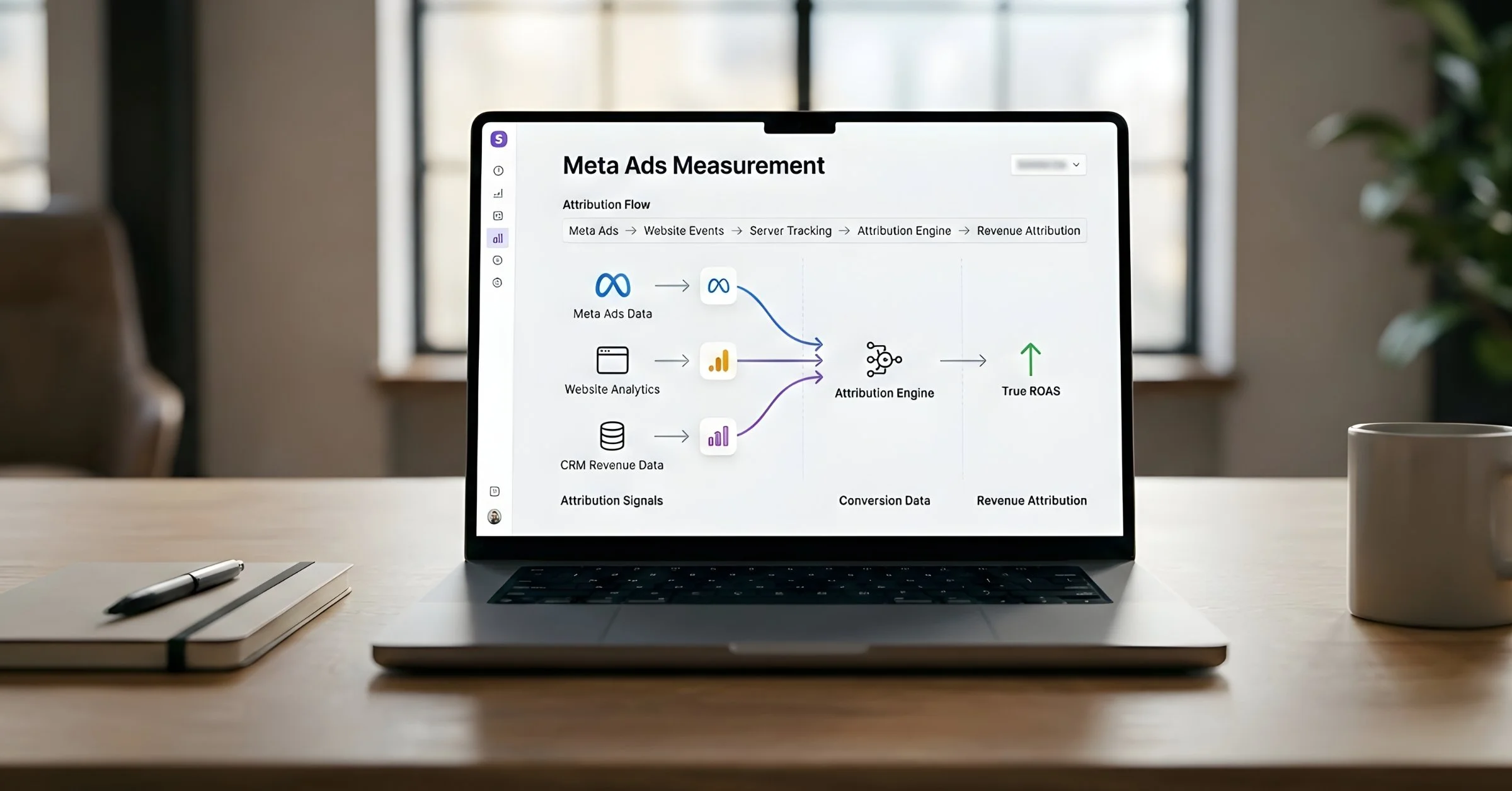
This guide shows you how to use all three sources together to find the number that actually matters: true ROAS.
The Measurement Gap: Why Your Numbers Never Match
Before fixing the problem, understand why it exists. Meta, your CRM, and your finance data aren't measuring the same thing.
What each source actually measures:
THE THREE DATA SOURCES═══════════════════════════════════════════════════════════════════════META ADS MANAGER:├── Measures:Ad interactions that preceded conversions├── Includes:Directly observed + modeled + estimated conversions├── Limitations:Cant see what happens after the conversion event├── Blind spots:Ad blockers,iOS opt-outs,cross-device gaps└── Answers:"How many conversions did my ads influence?"YOUR CRM:├── Measures:Lead/customer status and progression├── Includes:Only contacts that entered your system├── Limitations:Cant always attribute back to specific ads├── Blind spots:Anonymous visitors who didn't convert to leads
└── Answers:"How many leads became customers?"FINANCE/REVENUE:├── Measures:Actual money collected├── Includes:Only confirmed payments├── Limitations:No visibility into marketing source├── Blind spots:The entire marketing journey└── Answers:"How much revenue did we actually generate?"
THE THREE DATA SOURCES═══════════════════════════════════════════════════════════════════════META ADS MANAGER:├── Measures:Ad interactions that preceded conversions├── Includes:Directly observed + modeled + estimated conversions├── Limitations:Cant see what happens after the conversion event├── Blind spots:Ad blockers,iOS opt-outs,cross-device gaps└── Answers:"How many conversions did my ads influence?"YOUR CRM:├── Measures:Lead/customer status and progression├── Includes:Only contacts that entered your system├── Limitations:Cant always attribute back to specific ads├── Blind spots:Anonymous visitors who didn't convert to leads
└── Answers:"How many leads became customers?"FINANCE/REVENUE:├── Measures:Actual money collected├── Includes:Only confirmed payments├── Limitations:No visibility into marketing source├── Blind spots:The entire marketing journey└── Answers:"How much revenue did we actually generate?"
THE THREE DATA SOURCES═══════════════════════════════════════════════════════════════════════META ADS MANAGER:├── Measures:Ad interactions that preceded conversions├── Includes:Directly observed + modeled + estimated conversions├── Limitations:Cant see what happens after the conversion event├── Blind spots:Ad blockers,iOS opt-outs,cross-device gaps└── Answers:"How many conversions did my ads influence?"YOUR CRM:├── Measures:Lead/customer status and progression├── Includes:Only contacts that entered your system├── Limitations:Cant always attribute back to specific ads├── Blind spots:Anonymous visitors who didn't convert to leads
└── Answers:"How many leads became customers?"FINANCE/REVENUE:├── Measures:Actual money collected├── Includes:Only confirmed payments├── Limitations:No visibility into marketing source├── Blind spots:The entire marketing journey└── Answers:"How much revenue did we actually generate?"
Why the gaps exist:
The Meta-to-CRM gap happens because Meta counts modeled conversions (statistical estimates) alongside directly observed ones. Post-iOS 14.5, roughly 40-60% of Meta's reported conversions are modeled — educated guesses based on patterns from users who do allow tracking. These estimates help Meta's algorithm optimize, but they're not verified sales.
The CRM-to-Finance gap happens because not every lead converts, and not every conversion results in collected payment. Refunds, chargebacks, failed payments, and canceled orders all create discrepancies.
The 3-Source Framework: How to Find True ROAS
Instead of choosing one source to trust, use all three together. Each answers a different question, and combining them gives you the complete picture.
Source 1: Meta Ads Manager (Signal Quality)
Meta's data tells you how well your ads are performing relative to each other — even if the absolute numbers aren't perfectly accurate.
What to use it for:
Comparing campaigns, ad sets, and creatives against each other
Feeding optimization signals back to Meta's algorithm
What NOT to use it for:
Calculating actual ROAS for budget decisions
Reporting revenue to stakeholders
Determining absolute conversion counts
Key metrics to track:
Relative CPA trends: Is Campaign A getting more efficient over time?
Event Match Quality (EMQ): Target 7.5+ for purchase events
Frequency: Watch for fatigue above 4-5 impressions
CTR and engagement: Early indicators of creative performance
Source 2: CRM Data (Journey Tracking)
Your CRM connects ad clicks to actual customer records. This is where attribution becomes real.
What to use it for:
Tracing which campaigns drove which actual customers
Understanding the full customer journey (multiple touchpoints)
Calculating lead-to-customer conversion rates
Identifying high-value customer segments by acquisition source
What NOT to use it for:
Real-time optimization (data lags behind)
Understanding anonymous visitor behavior
Measuring top-of-funnel awareness
Key metrics to track:
Source-attributed customers: How many CRM records came from Meta?
Lead-to-close rate by source: Do Meta leads convert better or worse than Google leads?
Time to conversion: How long from first touch to purchase?
Customer LTV by acquisition source: Are Meta-acquired customers more valuable long-term?
Source 3: Finance/Revenue (Ground Truth)
This is your source of truth for actual business outcomes. Revenue doesn't lie.
What to use it for:
Calculating true ROAS (ad spend vs. collected revenue)
Making budget allocation decisions
Reporting to leadership
Validating CRM and Meta data
What NOT to use it for:
Optimizing individual campaigns (too aggregated)
Real-time adjustments (data arrives late)
Understanding why performance changed
Key metrics to track:
Attributed revenue: Revenue from customers traced back to Meta ads
True ROAS: Attributed revenue ÷ Meta ad spend
Blended ROAS: Total revenue ÷ total marketing spend (all channels)
Profit margin by acquisition source: After COGS and fulfillment
Connecting the Sources: The Reconciliation Process
Here's how to bring all three sources together:
The Reconciliation Funnel: Where Data Leaks
Before diving into the steps, understand where data drops off between sources:
THE RECONCILIATION FUNNEL:WHERE YOUR DATA LEAKS═══════════════════════════════════════════════════════════════════════META ADS MANAGER┌─────────────────────────────────────────────────────────────────┐│ 500REPORTED CONVERSIONS ││(Directly observed + Modeled + Estimated)│└─────────────────────────────────────────────────────────────────┘│┌───────────────┴───────────────┐│ LEAKAGE ZONE 1││ • Modeled conversions(40-60% of total)│ • Duplicate/bot conversions ││ • Attribution window disputes││ • Cross-device gaps │└───────────────┬───────────────┘▼YOUR CRM┌─────────────────────────────────────────────────────────────────┐│ 350VERIFIED CUSTOMERS(70%)││(Actual contacts withMeta attribution)│└─────────────────────────────────────────────────────────────────┘│┌───────────────┴───────────────┐│ LEAKAGE ZONE 2││ • Refunds and returns ││ • Chargebacks ││ • Failed payments ││ • Canceled orders │└───────────────┬───────────────┘▼FINANCE / REVENUE┌─────────────────────────────────────────────────────────────────┐│ 290CONFIRMED SALES = $87,000(58%)││(Actual collectedrevenue)│└─────────────────────────────────────────────────────────────────┘YOUR TRUE ROAS = $87,000÷ $30,000ad spend = 2.9x(Not the 5.0x Meta reported)
THE RECONCILIATION FUNNEL:WHERE YOUR DATA LEAKS═══════════════════════════════════════════════════════════════════════META ADS MANAGER┌─────────────────────────────────────────────────────────────────┐│ 500REPORTED CONVERSIONS ││(Directly observed + Modeled + Estimated)│└─────────────────────────────────────────────────────────────────┘│┌───────────────┴───────────────┐│ LEAKAGE ZONE 1││ • Modeled conversions(40-60% of total)│ • Duplicate/bot conversions ││ • Attribution window disputes││ • Cross-device gaps │└───────────────┬───────────────┘▼YOUR CRM┌─────────────────────────────────────────────────────────────────┐│ 350VERIFIED CUSTOMERS(70%)││(Actual contacts withMeta attribution)│└─────────────────────────────────────────────────────────────────┘│┌───────────────┴───────────────┐│ LEAKAGE ZONE 2││ • Refunds and returns ││ • Chargebacks ││ • Failed payments ││ • Canceled orders │└───────────────┬───────────────┘▼FINANCE / REVENUE┌─────────────────────────────────────────────────────────────────┐│ 290CONFIRMED SALES = $87,000(58%)││(Actual collectedrevenue)│└─────────────────────────────────────────────────────────────────┘YOUR TRUE ROAS = $87,000÷ $30,000ad spend = 2.9x(Not the 5.0x Meta reported)
THE RECONCILIATION FUNNEL:WHERE YOUR DATA LEAKS═══════════════════════════════════════════════════════════════════════META ADS MANAGER┌─────────────────────────────────────────────────────────────────┐│ 500REPORTED CONVERSIONS ││(Directly observed + Modeled + Estimated)│└─────────────────────────────────────────────────────────────────┘│┌───────────────┴───────────────┐│ LEAKAGE ZONE 1││ • Modeled conversions(40-60% of total)│ • Duplicate/bot conversions ││ • Attribution window disputes││ • Cross-device gaps │└───────────────┬───────────────┘▼YOUR CRM┌─────────────────────────────────────────────────────────────────┐│ 350VERIFIED CUSTOMERS(70%)││(Actual contacts withMeta attribution)│└─────────────────────────────────────────────────────────────────┘│┌───────────────┴───────────────┐│ LEAKAGE ZONE 2││ • Refunds and returns ││ • Chargebacks ││ • Failed payments ││ • Canceled orders │└───────────────┬───────────────┘▼FINANCE / REVENUE┌─────────────────────────────────────────────────────────────────┐│ 290CONFIRMED SALES = $87,000(58%)││(Actual collectedrevenue)│└─────────────────────────────────────────────────────────────────┘YOUR TRUE ROAS = $87,000÷ $30,000ad spend = 2.9x(Not the 5.0x Meta reported)
Step 1: Establish Tracking Infrastructure (The fbclid Handshake)
Before you can reconcile, you need data flowing between sources. The critical piece is preserving the fbclid — Meta's click identifier that serves as the "glue" connecting everything together.To see the tracking workflow behind this — including how server-side capture, identity resolution, and CAPI delivery handle fbclid persistence end-to-end — that walkthrough makes the architecture concrete. This ID is what allows Meta to match a conversion back to the original ad click, even if the user converts on a completely different device days later.
The fbclid Journey: From Ad Click to Revenue Attribution
THE FBCLID HANDSHAKE:HOW ATTRIBUTION ACTUALLY WORKS═══════════════════════════════════════════════════════════════════════STEP 1:USER CLICKS META AD──────────────────────────────────────────────────────────────────────URL generated:yoursite.com/landing?utm_source=facebook&utm_medium=paid&utm_campaign=spring_sale&fbclid=AbCdEf123456
│▼
STEP 2:LANDING PAGE CAPTURES PARAMETERS──────────────────────────────────────────────────────────────────────Your site JavaScript extracts:├── utm_source:facebook├── utm_medium:paid├── utm_campaign:spring_sale└── fbclid:AbCdEf123456 ← THE CRITICAL PIECEStoresin:Browser cookie + Hidden form fields│▼
STEP 3:USER CONVERTS → CRM STORES EVERYTHING──────────────────────────────────────────────────────────────────────CRM Contact Record:├── Name:John Smith├── Email:john@example.com├── Source:facebook / paid├── Campaign:spring_sale├── fbclid:AbCdEf123456 ← STORED WITH CONTACT└── Conversion Date:2026-02-25│▼
STEP 4:CAPI SENDS DATA BACK TO META──────────────────────────────────────────────────────────────────────Your Server → Meta Conversions API:{"event_name":"Purchase","user_data":{"em":[hashed email],"ph":[hashed phone],"fbc":"fb.1.1234567890.AbCdEf123456"← FBCLID RETURNED},"custom_data":{"value":299.00,"currency":"USD"}}│▼
STEP 5:META CLOSES THE LOOP──────────────────────────────────────────────────────────────────────Meta matches:├── Original ad click(via fbclid)├── User profile(via hashedemail/phone)├── Conversion event(Purchase)└── Revenue($299)→ Attribution complete. Algorithmlearns. EMQimproves
THE FBCLID HANDSHAKE:HOW ATTRIBUTION ACTUALLY WORKS═══════════════════════════════════════════════════════════════════════STEP 1:USER CLICKS META AD──────────────────────────────────────────────────────────────────────URL generated:yoursite.com/landing?utm_source=facebook&utm_medium=paid&utm_campaign=spring_sale&fbclid=AbCdEf123456
│▼
STEP 2:LANDING PAGE CAPTURES PARAMETERS──────────────────────────────────────────────────────────────────────Your site JavaScript extracts:├── utm_source:facebook├── utm_medium:paid├── utm_campaign:spring_sale└── fbclid:AbCdEf123456 ← THE CRITICAL PIECEStoresin:Browser cookie + Hidden form fields│▼
STEP 3:USER CONVERTS → CRM STORES EVERYTHING──────────────────────────────────────────────────────────────────────CRM Contact Record:├── Name:John Smith├── Email:john@example.com├── Source:facebook / paid├── Campaign:spring_sale├── fbclid:AbCdEf123456 ← STORED WITH CONTACT└── Conversion Date:2026-02-25│▼
STEP 4:CAPI SENDS DATA BACK TO META──────────────────────────────────────────────────────────────────────Your Server → Meta Conversions API:{"event_name":"Purchase","user_data":{"em":[hashed email],"ph":[hashed phone],"fbc":"fb.1.1234567890.AbCdEf123456"← FBCLID RETURNED},"custom_data":{"value":299.00,"currency":"USD"}}│▼
STEP 5:META CLOSES THE LOOP──────────────────────────────────────────────────────────────────────Meta matches:├── Original ad click(via fbclid)├── User profile(via hashedemail/phone)├── Conversion event(Purchase)└── Revenue($299)→ Attribution complete. Algorithmlearns. EMQimproves
THE FBCLID HANDSHAKE:HOW ATTRIBUTION ACTUALLY WORKS═══════════════════════════════════════════════════════════════════════STEP 1:USER CLICKS META AD──────────────────────────────────────────────────────────────────────URL generated:yoursite.com/landing?utm_source=facebook&utm_medium=paid&utm_campaign=spring_sale&fbclid=AbCdEf123456
│▼
STEP 2:LANDING PAGE CAPTURES PARAMETERS──────────────────────────────────────────────────────────────────────Your site JavaScript extracts:├── utm_source:facebook├── utm_medium:paid├── utm_campaign:spring_sale└── fbclid:AbCdEf123456 ← THE CRITICAL PIECEStoresin:Browser cookie + Hidden form fields│▼
STEP 3:USER CONVERTS → CRM STORES EVERYTHING──────────────────────────────────────────────────────────────────────CRM Contact Record:├── Name:John Smith├── Email:john@example.com├── Source:facebook / paid├── Campaign:spring_sale├── fbclid:AbCdEf123456 ← STORED WITH CONTACT└── Conversion Date:2026-02-25│▼
STEP 4:CAPI SENDS DATA BACK TO META──────────────────────────────────────────────────────────────────────Your Server → Meta Conversions API:{"event_name":"Purchase","user_data":{"em":[hashed email],"ph":[hashed phone],"fbc":"fb.1.1234567890.AbCdEf123456"← FBCLID RETURNED},"custom_data":{"value":299.00,"currency":"USD"}}│▼
STEP 5:META CLOSES THE LOOP──────────────────────────────────────────────────────────────────────Meta matches:├── Original ad click(via fbclid)├── User profile(via hashedemail/phone)├── Conversion event(Purchase)└── Revenue($299)→ Attribution complete. Algorithmlearns. EMQimproves
Why this matters for cross-device attribution: A user might click your ad on their phone during lunch, then complete the purchase on their laptop that evening. Without the fbclid stored in your CRM and sent back via CAPI, Meta has no way to connect that laptop purchase to the original mobile ad click. The fbclid is the glue that makes cross-device attribution possible.
Implementation checklist for the handshake:
UTM parameters on all ad URLs (utm_source, utm_medium, utm_campaign, utm_content)
JavaScript to capture fbclid from URL on landing pages
Hidden form fields or cookie to persist fbclid through conversion
CRM field to store fbclid with each contact record
CAPI implementation sending fbc parameter with conversion events
CRM → Finance connection:
Link CRM contact records to transaction/payment records
Tag transactions with original acquisition source
Track refunds and chargebacks back to source
Step 2: Calculate Your Conversion Discount Rate
Compare Meta's reported conversions to your verified outcomes over 30-90 days:
CONVERSION DISCOUNT RATE CALCULATION═══════════════════════════════════════════════════════════════════════META REPORTED:500conversions(last 90days)CRM VERIFIED CUSTOMERS:350customers attributed to MetaFINANCE CONFIRMED REVENUE:$87,500from Meta-attributed customersCONVERSION DISCOUNT RATE:├── Meta → CRM:350÷ 500 = 70% (30% of Meta conversions aren't real customers)
├── CRM → Finance:$87,500÷(350 × $300 AOV) = 83% (17% lost torefunds/chargebacks)└── Meta → Finance:70% × 83% = 58% of Meta conversions = confirmed revenueTRUE ROAS CALCULATION:├── Meta reported ROAS:$150,000÷ $30,000spend = 5.0x├── Actual ROAS:$87,500÷ $30,000spend = 2.9x└── Discount:42% lower than platform-reported
CONVERSION DISCOUNT RATE CALCULATION═══════════════════════════════════════════════════════════════════════META REPORTED:500conversions(last 90days)CRM VERIFIED CUSTOMERS:350customers attributed to MetaFINANCE CONFIRMED REVENUE:$87,500from Meta-attributed customersCONVERSION DISCOUNT RATE:├── Meta → CRM:350÷ 500 = 70% (30% of Meta conversions aren't real customers)
├── CRM → Finance:$87,500÷(350 × $300 AOV) = 83% (17% lost torefunds/chargebacks)└── Meta → Finance:70% × 83% = 58% of Meta conversions = confirmed revenueTRUE ROAS CALCULATION:├── Meta reported ROAS:$150,000÷ $30,000spend = 5.0x├── Actual ROAS:$87,500÷ $30,000spend = 2.9x└── Discount:42% lower than platform-reported
CONVERSION DISCOUNT RATE CALCULATION═══════════════════════════════════════════════════════════════════════META REPORTED:500conversions(last 90days)CRM VERIFIED CUSTOMERS:350customers attributed to MetaFINANCE CONFIRMED REVENUE:$87,500from Meta-attributed customersCONVERSION DISCOUNT RATE:├── Meta → CRM:350÷ 500 = 70% (30% of Meta conversions aren't real customers)
├── CRM → Finance:$87,500÷(350 × $300 AOV) = 83% (17% lost torefunds/chargebacks)└── Meta → Finance:70% × 83% = 58% of Meta conversions = confirmed revenueTRUE ROAS CALCULATION:├── Meta reported ROAS:$150,000÷ $30,000spend = 5.0x├── Actual ROAS:$87,500÷ $30,000spend = 2.9x└── Discount:42% lower than platform-reported
Step 3: Apply the Discount to Future Decisions
Once you know your conversion discount rate, apply it to Meta's real-time data:
Meta shows 4x ROAS on a campaign → Actual ROAS is likely ~2.3x (58% of reported)
Meta shows 100 conversions this week → Expect ~58 verified customers
Campaign A shows 20% better performance than Campaign B → This relative comparison is reliable
Important: Recalculate your discount rate quarterly. It changes based on:
Seasonality (holiday buyers have different refund rates)
Product mix (some products have higher return rates)
Audience changes (new audiences may convert differently)
Meta introduced Incremental Attribution in April 2025 to measure true causal impact, not just correlation. This represents a fundamental shift in how Meta answers the question: from "Who clicked before buying?" to "Who wouldn't have bought without the ad?"For the deeper view of the attribution models breakdown — including how lift-based models compare to traditional ones — see that guide.
Last-Click vs. Lift: Why Your Numbers Go Down But Profit Goes Up
LAST-CLICK ATTRIBUTION(Traditional)═══════════════════════════════════════════════════════════════════════
Question:"Which ad did they click before converting?"User Journey:[Sees Ad]→[Clicks Ad]→[Browses Site]→[Leaves]→[Returns Direct]→[Buys]↑└── <a href="https://pantosource.com/blog/last-click-attribution"data-framer-link="Link:{"url":"https://pantosource.com/blog/last-click-attribution","type":"url"}">last click</a> GETS 100% CREDIT
Problem:This user might have bought anyway. Thead gets credit fora sale it didn't actually cause.
Reported ROAS:5.0x(looks great!)
Reality:Some of these conversions would have happened without ads.
INCREMENTALATTRIBUTION(Lift-Based)═══════════════════════════════════════════════════════════════════════
Question:"Would they have bought WITHOUT the ad?"┌─────────────────────────────────────────────────────┐│ CONTROL GROUP ││(Didn't see your ads) │
│ ││ Conversion Rate:2.0% ││(These peopleboughtanyway)│└─────────────────────────────────────────────────────┘┌─────────────────────────────────────────────────────┐│ EXPOSED GROUP ││(Saw yourads)││ ││ Conversion Rate:3.2% ││(These peoplebought)│└─────────────────────────────────────────────────────┘INCREMENTAL LIFT = 3.2% - 2.0% = 1.2%
→ Only 1.2% of conversions were CAUSED by the ad→ The other 2.0% would have happened anywayReported ROAS:2.8x(looks lower!)
Reality:This is what your ads ACTUALLY contributed.
Moreaccurate forbudget decisions
LAST-CLICK ATTRIBUTION(Traditional)═══════════════════════════════════════════════════════════════════════
Question:"Which ad did they click before converting?"User Journey:[Sees Ad]→[Clicks Ad]→[Browses Site]→[Leaves]→[Returns Direct]→[Buys]↑└── <a href="https://pantosource.com/blog/last-click-attribution"data-framer-link="Link:{"url":"https://pantosource.com/blog/last-click-attribution","type":"url"}">last click</a> GETS 100% CREDIT
Problem:This user might have bought anyway. Thead gets credit fora sale it didn't actually cause.
Reported ROAS:5.0x(looks great!)
Reality:Some of these conversions would have happened without ads.
INCREMENTALATTRIBUTION(Lift-Based)═══════════════════════════════════════════════════════════════════════
Question:"Would they have bought WITHOUT the ad?"┌─────────────────────────────────────────────────────┐│ CONTROL GROUP ││(Didn't see your ads) │
│ ││ Conversion Rate:2.0% ││(These peopleboughtanyway)│└─────────────────────────────────────────────────────┘┌─────────────────────────────────────────────────────┐│ EXPOSED GROUP ││(Saw yourads)││ ││ Conversion Rate:3.2% ││(These peoplebought)│└─────────────────────────────────────────────────────┘INCREMENTAL LIFT = 3.2% - 2.0% = 1.2%
→ Only 1.2% of conversions were CAUSED by the ad→ The other 2.0% would have happened anywayReported ROAS:2.8x(looks lower!)
Reality:This is what your ads ACTUALLY contributed.
Moreaccurate forbudget decisions
LAST-CLICK ATTRIBUTION(Traditional)═══════════════════════════════════════════════════════════════════════
Question:"Which ad did they click before converting?"User Journey:[Sees Ad]→[Clicks Ad]→[Browses Site]→[Leaves]→[Returns Direct]→[Buys]↑└── <a href="https://pantosource.com/blog/last-click-attribution"data-framer-link="Link:{"url":"https://pantosource.com/blog/last-click-attribution","type":"url"}">last click</a> GETS 100% CREDIT
Problem:This user might have bought anyway. Thead gets credit fora sale it didn't actually cause.
Reported ROAS:5.0x(looks great!)
Reality:Some of these conversions would have happened without ads.
INCREMENTALATTRIBUTION(Lift-Based)═══════════════════════════════════════════════════════════════════════
Question:"Would they have bought WITHOUT the ad?"┌─────────────────────────────────────────────────────┐│ CONTROL GROUP ││(Didn't see your ads) │
│ ││ Conversion Rate:2.0% ││(These peopleboughtanyway)│└─────────────────────────────────────────────────────┘┌─────────────────────────────────────────────────────┐│ EXPOSED GROUP ││(Saw yourads)││ ││ Conversion Rate:3.2% ││(These peoplebought)│└─────────────────────────────────────────────────────┘INCREMENTAL LIFT = 3.2% - 2.0% = 1.2%
→ Only 1.2% of conversions were CAUSED by the ad→ The other 2.0% would have happened anywayReported ROAS:2.8x(looks lower!)
Reality:This is what your ads ACTUALLY contributed.
Moreaccurate forbudget decisions
Last-click is one of several models that define how credit gets assigned across touchpoints. For the broader view of the core attribution models — including time-decay, position-based, and data-driven — see that guide.
What this means for your campaigns:
Campaign Type
Last-Click ROAS
Incremental ROAS
What It Means
Prospecting (cold)
2.5x
2.3x
Close match — these audiences need your ads to convert
Retargeting
8.0x
1.5x
Big gap — many would have bought without the retargeting ad
The counterintuitive insight: Your retargeting campaigns probably look amazing in Ads Manager but deliver less incremental value than prospecting. Incremental Attribution helps you stop over-investing in campaigns that claim credit for conversions they didn't cause.For the parallel view of how linear attribution compares — distributing equal credit across all touchpoints rather than collapsing to the last click — see that breakdown.
Advantage+ Shopping Campaigns (ASC): The 2026 Nuance
In 2026, most Meta ad spend flows through Advantage+ Shopping Campaigns. These AI-driven campaigns are notorious for "stealing" credit from organic traffic and existing customers to make their ROAS look better than it actually is.
Pro Tip: If your ASC campaign has an "Incremental ROAS" significantly lower than its "Standard ROAS," the algorithm is likely retargeting your existing customers too aggressively. Increase your "Existing Customer Budget Cap" to force Meta to find fresh incremental revenue instead of claiming credit for customers who would have bought anyway.
True ROAS Formula (Incorporating Discount Rates)
For a more precise calculation that accounts for both measurement gaps and incrementality, use this formula:
This is 42% lower than Meta's reported 5.0x ROAS — but it's the number you should use for budget decisions.
Aggregated Event Measurement (AEM) Maturity
AEM limits you to 8 prioritized conversion events per domain for iOS users. By 2026, most advertisers have adapted, but prioritization still matters:
Recommended priority order:
Purchase (always #1)
Lead / InitiateCheckout
AddToCart
AddPaymentInfo
ViewContent
Search
PageView
Custom events
Conversions API as Standard
CAPI is no longer optional. In 2026, pixel-only tracking captures roughly 40-60% of actual conversions. The standard setup is now:
Pixel + CAPI together (dual-layer tracking)
Event deduplication via shared event_id
EMQ scores of 7.5+ for purchase events
Server events equal to or higher than browser events
For the deeper playbook on Meta ads data quality — covering EMQ optimization, deduplication mechanics, identifier prioritization, and signal recovery — see that guide.
The Decision Framework: When to Trust Which Source
Decision Type
Primary Source
Supporting Sources
Which creative is winning?
Meta Ads Manager
—
Which audience converts best?
Meta Ads Manager
CRM (for LTV data)
Should I scale this campaign?
CRM + Finance
Meta (for relative performance)
What's my actual ROAS?
Finance
CRM (for attribution)
How should I allocate budget across channels?
Finance (blended)
CRM (for source attribution)
Is this campaign profitable?
Finance
Apply conversion discount rate to Meta data
Once you've stabilized Meta-specific measurement, the next layer is the broader advertising measurement framework — covering MER, blended metrics, and cross-channel reconciliation that sit on top of any single platform. The decision matrix below shows where each source plugs into that framework.
Quick Implementation Checklist
Week 1: Audit Current State
Verify Pixel + CAPI are both active (check Events Manager for "Server" label)
Check EMQ scores for key events (target 7.5+)
Confirm UTM parameters on all ad URLs
Test fbclid capture on landing pages (check browser cookies/hidden fields)
Create dashboard showing all three sources side-by-side
Calculate true ROAS using Finance data
Compare Last-Click vs Incremental ROAS by campaign type
Document discount rate for team reference
Ongoing:
Recalculate discount rate quarterly
Monitor EMQ scores weekly
Reconcile Meta vs CRM vs Finance monthly
Review Incremental Attribution for retargeting campaigns
The Bottom Line
Your Meta Ads Manager isn't lying to you — it's just answering a different question than the one you're asking. Meta tells you how many conversions your ads influenced. Your CRM tells you how many leads became customers. Finance tells you how much money you actually made.
True measurement requires all three:
Use Meta for optimization — Compare campaigns, identify winners, feed the algorithm
Use CRM for attribution — Connect ad clicks to actual customers
Use Finance for decisions — Calculate real ROAS, allocate budget, report results
The advertisers winning in 2026 aren't those with the most sophisticated tracking. They're the ones who understand what each data source tells them — and what it doesn't. When you stop expecting Meta to be your source of truth and start using it as one input in a 3-source system, you make better decisions.
Know your conversion discount rate. Trust the relative comparisons. Verify with revenue. That's measurement that works.
Get Started
Start Tracking Every Sale Today
Join 1,389+ e-commerce stores. Set up in 5 minutes, see results in days.