Advertising

Ad Testing in 2026: Why Your Old Playbook Is Burning Budget (And What to Do Instead)

Panto Source

Panto Source

Ad Testing

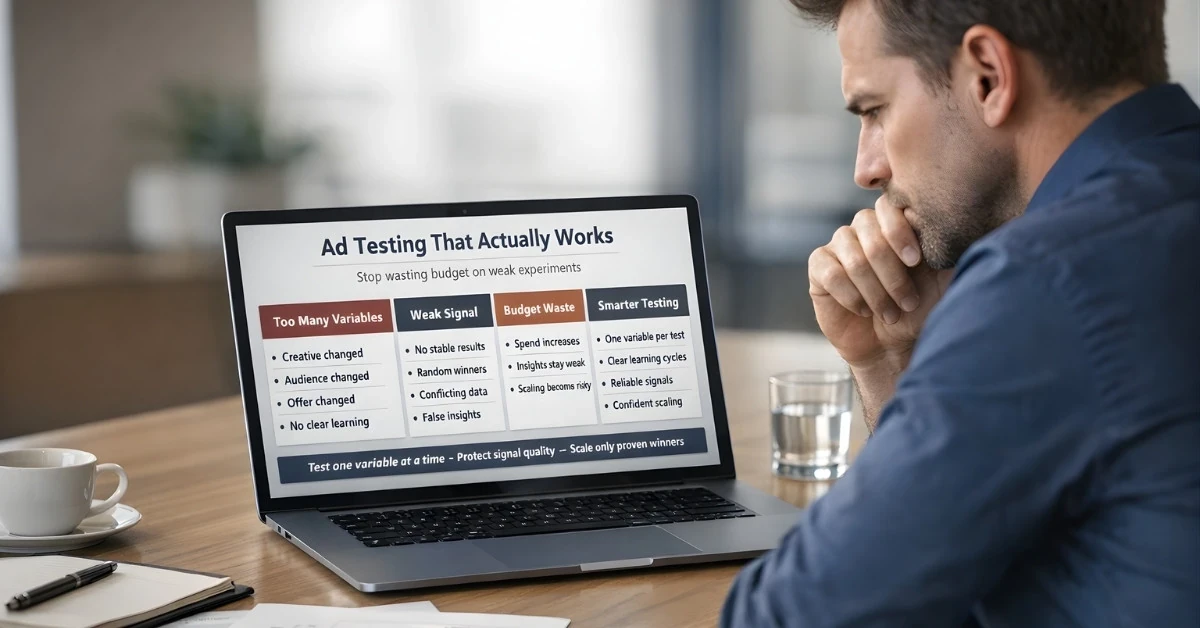
The way you tested ads in 2023 doesn't work anymore.

If you're still running isolated split tests, manually segmenting audiences, or waiting weeks to declare winners, you're not just behind — you're actively burning money.

Ad testing in 2026 operates under completely different rules. Meta's Andromeda algorithm update changed how creative diversity gets rewarded. Advantage+ campaigns shifted control from advertisers to AI. And the death of third-party cookies means the data you're using to judge your tests might be wrong.

This guide breaks down what actually works for testing ads in 2026 — and the mistakes that are quietly killing your campaigns.

Why Ad Testing Matters More Than Ever

Here's the reality: 70-80% of your ad performance now comes from creative quality, not targeting or budget.

That's a complete inversion from five years ago. Back then, you could run mediocre creative to a perfectly targeted audience and print money. Today, the algorithm handles targeting. Your job is to feed it creative that converts.

But here's the catch — you can't just guess which creative will win. You have to test. And in 2026, testing wrong is often worse than not testing at all.

Bad testing leads to three expensive mistakes:

  1. Killing winners early — You pause an ad that was actually working because your tracking missed conversions

  2. Scaling losers — You pour budget into an ad that looks good in Ads Manager but isn't driving real revenue

  3. Creative fatigue blindness — You keep running the same concepts because you never tested alternatives

The brands winning in 2026 aren't testing more. They're testing smarter — with better frameworks, cleaner data, and faster iteration cycles.

The New Rules of Ad Testing in 2026

Rule 1: Creative Diversity Beats Creative Volume

Meta's Andromeda algorithm update changed everything. The old playbook said: find a winner, then create 20 variations of it. The new playbook says: find a winner, then create completely different concepts.

Why? Andromeda now penalizes creative similarity. If you're running five ads that all look the same, you're competing against yourself — and the algorithm will suppress all of them.

What this means for testing:

Instead of testing Hook A vs. Hook B on the same video, test entirely different creative formats:

  • A UGC testimonial vs. a product demo vs. a lifestyle image

  • Different creators, different messaging angles, different visual styles

When you find a winning concept, don't iterate endlessly on it. Repurpose the winning message into new formats:

  • Winning video? Extract the hook and create a static version

  • Winning static? Turn the headline into a video hook

  • Winning carousel? Test the same story as a single image

This is creative diversity in action — and it's what the algorithm rewards in 2026.

THE CONCEPT DIVERSITY PYRAMID
════════════════════════════════════════════════════════════════════════════

                        ┌─────────────┐
                        NEW COPY   Lowest impact (5-15% lift)
                        Same hook, Test last
                        new words  
                        └──────┬──────┘
                               
                    ┌──────────┴──────────┐
                    NEW HOOK       Medium impact (20-40% lift)
                    Same concept,      Test after concept wins
                    different opening  
                    └──────────┬──────────┘
                               
            ┌──────────────────┴──────────────────┐
            NEW CONCEPT                Highest impact (100-300% lift)
            Different format, angle, creator   Test FIRST
            UGC vs. Demo vs. Lifestyle vs.     
            Problem/Solution vs. Testimonial   
            └─────────────────────────────────────┘

════════════════════════════════════════════════════════════════════════════

START AT THE BASE: Test completely new concepts before optimizing hooks or copy.
Most brands waste budget testing copy variations when the concept itself is broken

THE CONCEPT DIVERSITY PYRAMID
════════════════════════════════════════════════════════════════════════════

                        ┌─────────────┐
                        NEW COPY   Lowest impact (5-15% lift)
                        Same hook, Test last
                        new words  
                        └──────┬──────┘
                               
                    ┌──────────┴──────────┐
                    NEW HOOK       Medium impact (20-40% lift)
                    Same concept,      Test after concept wins
                    different opening  
                    └──────────┬──────────┘
                               
            ┌──────────────────┴──────────────────┐
            NEW CONCEPT                Highest impact (100-300% lift)
            Different format, angle, creator   Test FIRST
            UGC vs. Demo vs. Lifestyle vs.     
            Problem/Solution vs. Testimonial   
            └─────────────────────────────────────┘

════════════════════════════════════════════════════════════════════════════

START AT THE BASE: Test completely new concepts before optimizing hooks or copy.
Most brands waste budget testing copy variations when the concept itself is broken

THE CONCEPT DIVERSITY PYRAMID
════════════════════════════════════════════════════════════════════════════

                        ┌─────────────┐
                        NEW COPY   Lowest impact (5-15% lift)
                        Same hook, Test last
                        new words  
                        └──────┬──────┘
                               
                    ┌──────────┴──────────┐
                    NEW HOOK       Medium impact (20-40% lift)
                    Same concept,      Test after concept wins
                    different opening  
                    └──────────┬──────────┘
                               
            ┌──────────────────┴──────────────────┐
            NEW CONCEPT                Highest impact (100-300% lift)
            Different format, angle, creator   Test FIRST
            UGC vs. Demo vs. Lifestyle vs.     
            Problem/Solution vs. Testimonial   
            └─────────────────────────────────────┘

════════════════════════════════════════════════════════════════════════════

START AT THE BASE: Test completely new concepts before optimizing hooks or copy.
Most brands waste budget testing copy variations when the concept itself is broken

Rule 2: Test Structure Matters More Than Test Volume

The "Test vs. Scale" campaign structure still works — but it's evolved.

The 2026 framework:

THE 2026 TESTING ARCHITECTURE
════════════════════════════════════════════════════════════════════════════

                         ┌─────────────────────────────────────┐
                         TESTING CAMPAIGN            
                                       (CBO)                  
                         Budget: 10-15% of total        
                         └─────────────────┬───────────────────┘
                                           
                    ┌──────────────────────┼──────────────────────┐
                    
                    
          ┌─────────────────┐   ┌─────────────────┐   ┌─────────────────┐
          Ad Set 1:     Ad Set 2:     Ad Set 3:     
          Broad Targeting Lookalikes    Advantage+     
          3-5 new ads    3-5 new ads    3-5 new ads    
          └────────┬────────┘   └────────┬────────┘   └────────┬────────┘
                   
                   └──────────┬──────────┴──────────┬──────────┘
                              
                     ┌────────▼────────┐   ┌───────▼────────┐
                     WINNERS      ALMOST-WINS   
                     High CTR +     Good CTR but  
                     Stable CPA     needs more    
                     └────────┬────────┘   └───────┬────────┘
                              
                              
          ┌───────────────────────────┐   ┌───────────────────────────┐
          SCALE CAMPAIGN       CHALLENGER CAMPAIGN     
              (Advantage+ or CBO)              (CBO)            
          Budget: 70-80% total    Budget: 10-15% total    
          Proven winners only     Second chance for       
          promising creatives     
          └───────────────────────────┘   └───────────────────────────┘

════════════════════════════════════════════════════════════════════════════
THE 2026 TESTING ARCHITECTURE
════════════════════════════════════════════════════════════════════════════

                         ┌─────────────────────────────────────┐
                         TESTING CAMPAIGN            
                                       (CBO)                  
                         Budget: 10-15% of total        
                         └─────────────────┬───────────────────┘
                                           
                    ┌──────────────────────┼──────────────────────┐
                    
                    
          ┌─────────────────┐   ┌─────────────────┐   ┌─────────────────┐
          Ad Set 1:     Ad Set 2:     Ad Set 3:     
          Broad Targeting Lookalikes    Advantage+     
          3-5 new ads    3-5 new ads    3-5 new ads    
          └────────┬────────┘   └────────┬────────┘   └────────┬────────┘
                   
                   └──────────┬──────────┴──────────┬──────────┘
                              
                     ┌────────▼────────┐   ┌───────▼────────┐
                     WINNERS      ALMOST-WINS   
                     High CTR +     Good CTR but  
                     Stable CPA     needs more    
                     └────────┬────────┘   └───────┬────────┘
                              
                              
          ┌───────────────────────────┐   ┌───────────────────────────┐
          SCALE CAMPAIGN       CHALLENGER CAMPAIGN     
              (Advantage+ or CBO)              (CBO)            
          Budget: 70-80% total    Budget: 10-15% total    
          Proven winners only     Second chance for       
          promising creatives     
          └───────────────────────────┘   └───────────────────────────┘

════════════════════════════════════════════════════════════════════════════
THE 2026 TESTING ARCHITECTURE
════════════════════════════════════════════════════════════════════════════

                         ┌─────────────────────────────────────┐
                         TESTING CAMPAIGN            
                                       (CBO)                  
                         Budget: 10-15% of total        
                         └─────────────────┬───────────────────┘
                                           
                    ┌──────────────────────┼──────────────────────┐
                    
                    
          ┌─────────────────┐   ┌─────────────────┐   ┌─────────────────┐
          Ad Set 1:     Ad Set 2:     Ad Set 3:     
          Broad Targeting Lookalikes    Advantage+     
          3-5 new ads    3-5 new ads    3-5 new ads    
          └────────┬────────┘   └────────┬────────┘   └────────┬────────┘
                   
                   └──────────┬──────────┴──────────┬──────────┘
                              
                     ┌────────▼────────┐   ┌───────▼────────┐
                     WINNERS      ALMOST-WINS   
                     High CTR +     Good CTR but  
                     Stable CPA     needs more    
                     └────────┬────────┘   └───────┬────────┘
                              
                              
          ┌───────────────────────────┐   ┌───────────────────────────┐
          SCALE CAMPAIGN       CHALLENGER CAMPAIGN     
              (Advantage+ or CBO)              (CBO)            
          Budget: 70-80% total    Budget: 10-15% total    
          Proven winners only     Second chance for       
          promising creatives     
          └───────────────────────────┘   └───────────────────────────┘

════════════════════════════════════════════════════════════════════════════

Key changes from older frameworks:

  • Advantage+ can handle more ads per ad set — You don't need to micro-segment by format anymore. Static and video can live together.

  • Don't kill high-spending ads with high CPAs — This is the "Breakdown Effect." Meta often pushes spend to ads that are scaling the overall campaign, even if their individual CPA looks worse.

  • Graduate winners quickly — If something works in testing, move it to scale within days, not weeks.

Rule 2b: Google PMax Testing Is Different

While the framework above applies to Meta, testing on Google Performance Max follows different rules.

In PMax, you don't test "ads" — you test Asset Groups. And the key variable isn't just the creative; it's the audience signal (themes and customer lists you provide).

The PMax testing nuance:

  • If you change a creative but keep the same audience theme, Google often won't reset the learning phase

  • Testing in PMax is more about testing the signal than testing the image

  • Asset Groups with strong audience signals (like customer match lists) typically outperform broad signals

What this means: On Meta, creative diversity is king. On PMax, signal quality is king. Test different audience themes and asset group structures, not just different images.

Rule 3: Your Tracking Determines Your Test Results

This is where most ad testing falls apart in 2026.

You run a test. Ad A gets a 2.1 ROAS. Ad B gets a 3.4 ROAS. Easy decision — scale Ad B, kill Ad A.

Except your tracking only captured 40% of conversions. And Ad A was actually driving more revenue from iOS users who didn't get tracked. You just killed your best performer.

This happens constantly. Privacy changes, ad blockers, and cookie restrictions mean platform-reported data is often 40-60% incomplete. When your test data is wrong, your decisions are wrong.

The fix:

  • Use server-side tracking — Browser pixels miss conversions. Server-to-server tracking captures what pixels can't.

  • Match your store data to ad data — If Shopify says you made 100 sales but Meta only shows 65, you have a tracking gap.

  • Don't trust short attribution windows — The default 7-day click attribution misses customers who research longer. Look at blended metrics alongside platform metrics.

Accurate tracking doesn't just help you scale winners — it prevents you from killing them.

Rule 4: "Winning" and "Scaling" Are Different KPIs

A winner in your testing campaign isn't automatically a winner at scale. The metrics that identify potential differ from the metrics that confirm profitability.

Testing KPIs (Early Signals):

  • Thumbstop Rate — 0-3 second views ÷ impressions. Tells you if the hook grabs attention.

  • Outbound CTR — Clicks ÷ impressions. Tells you if people want to learn more.

Scaling KPIs (Confirmation Signals):

  • MER (Marketing Efficiency Ratio) — Total revenue ÷ total ad spend. Tells you if the ad is actually profitable.

  • Contribution Margin — Revenue minus all variable costs. Tells you if you're making money.

The rule: A high CTR in testing is a "Go" signal. But only a stable CPA at 5x spend is a "Scale" signal.

THE THUMBSTOP VS. CONVERSION MATRIX
════════════════════════════════════════════════════════════════════════════

                            CONVERSION RATE
                        Low                High
                 ┌─────────────────┬─────────────────┐
                 
            High CLICKBAIT      WINNER       
                 TRAP        
   THUMBSTOP     Scale this.    
     RATE        Hook works,    Creative and   
                 landing page   funnel aligned 
                 doesn't.       │                 │
                 FIX: Landing   
                 page or offer  
                 
                 ├─────────────────┼─────────────────┤
                 
            Low  LOSER        DIAMOND IN     
                 THE ROUGH      
                 Kill it.                        
                 Nothing is     Great product  
                 working.         fit, weak hook 
                 FIX: New hook  
                 or thumbnail   
                 
                 └─────────────────┴─────────────────┘

════════════════════════════════════════════════════════════════════════════
THE THUMBSTOP VS. CONVERSION MATRIX
════════════════════════════════════════════════════════════════════════════

                            CONVERSION RATE
                        Low                High
                 ┌─────────────────┬─────────────────┐
                 
            High CLICKBAIT      WINNER       
                 TRAP        
   THUMBSTOP     Scale this.    
     RATE        Hook works,    Creative and   
                 landing page   funnel aligned 
                 doesn't.       │                 │
                 FIX: Landing   
                 page or offer  
                 
                 ├─────────────────┼─────────────────┤
                 
            Low  LOSER        DIAMOND IN     
                 THE ROUGH      
                 Kill it.                        
                 Nothing is     Great product  
                 working.         fit, weak hook 
                 FIX: New hook  
                 or thumbnail   
                 
                 └─────────────────┴─────────────────┘

════════════════════════════════════════════════════════════════════════════
THE THUMBSTOP VS. CONVERSION MATRIX
════════════════════════════════════════════════════════════════════════════

                            CONVERSION RATE
                        Low                High
                 ┌─────────────────┬─────────────────┐
                 
            High CLICKBAIT      WINNER       
                 TRAP        
   THUMBSTOP     Scale this.    
     RATE        Hook works,    Creative and   
                 landing page   funnel aligned 
                 doesn't.       │                 │
                 FIX: Landing   
                 page or offer  
                 
                 ├─────────────────┼─────────────────┤
                 
            Low  LOSER        DIAMOND IN     
                 THE ROUGH      
                 Kill it.                        
                 Nothing is     Great product  
                 working.         fit, weak hook 
                 FIX: New hook  
                 or thumbnail   
                 
                 └─────────────────┴─────────────────┘

════════════════════════════════════════════════════════════════════════════

Don't kill a "Diamond in the Rough" — fix the hook instead. Don't scale a "Clickbait Trap" — fix the landing page first.

What to Test (In Priority Order)

Not all tests are created equal. Here's where to focus your testing energy in 2026:

Priority 1: Creative Concepts

This is your highest-leverage test. Different creative concepts can swing performance by 200-300%.

What to test:

  • Format: Static vs. video vs. carousel vs. UGC

  • Angle: Problem-aware vs. solution-aware vs. product-focused

  • Hook: First 3 seconds of video, headline on static

  • Creator: Different faces, voices, and presentation styles

How to test: Run 3-5 new creative concepts per week in your testing campaign. Give each concept at least $50-100 in spend before making decisions. Look for early signals in thumbstop rate (for video) and CTR (for static).

Priority 2: Messaging and Copy

Less impactful than creative format, but still worth testing — especially for headlines and hooks.

What to test:

  • Benefit-focused vs. feature-focused copy

  • Social proof vs. direct offer

  • Emoji usage vs. clean text

  • Short copy vs. long copy

Pro tip: Pair the same creative with different copy to isolate what's driving results:

  • Creative A + Copy 1

  • Creative A + Copy 2

  • Creative B + Copy 1

  • Creative B + Copy 2

Priority 3: Audiences

In 2026, audience testing matters less than it used to. Meta's Advantage+ targeting often outperforms manual audience selection. But it's still worth testing:

What to test:

  • Broad targeting vs. Advantage+ targeting

  • Lookalike audiences (purchasers vs. engagers vs. website visitors)

  • Interest stacks (groups of related interests)

Important: Don't judge audiences by individual ad set CPA. The Breakdown Effect means your "worst" performing audience might actually be helping the entire campaign. Look at overall campaign performance when making audience decisions.

Priority 4: Landing Pages

Often overlooked, but landing page tests can dramatically impact conversion rate.

What to test:

  • Product page vs. collection page vs. dedicated landing page

  • Above-the-fold content and offer presentation

  • Social proof placement and density

You don't need a CRO agency for basic tests. Simply change the destination URL in your ads and compare results.

How Long to Run Tests

The old rule was "wait for statistical significance." The new rule is more nuanced:

Minimum test duration: 4-7 days

This gives the algorithm time to optimize delivery and shows your ad to enough people for meaningful data.

Maximum test duration: 30 days

Beyond this, external factors (seasonality, competitor activity, creative fatigue) start to contaminate your results.

Budget guideline: Spend at least 2-3x your target CPA per ad variation before making decisions. If your target CPA is $30, give each ad at least $60-90 in spend.

When to call a test early:

  • If an ad has spent 3x your target CPA with zero conversions, it's likely a loser

  • If an ad has a CTR below 0.5% after 1,000 impressions, the creative isn't resonating

  • If an ad's frequency exceeds 3 in the first week, your audience is too small

The Testing Mistake That Costs Brands Thousands

The single biggest testing mistake in 2026? Making decisions on incomplete data.

When your tracking only captures half of your conversions, every test result is suspect. You might be scaling the ad that's easiest to track, not the ad that's actually performing best.

This is especially dangerous with iOS users, who represent a huge portion of ecommerce buyers but are the hardest to track.

The solution: Fix your tracking before you scale your testing.

Server-side tracking, proper conversion API setup, and first-party data infrastructure aren't optional anymore. They're the foundation that makes everything else work — including your ad tests.

Without accurate data, you're not testing. You're guessing.

The Ghost Winner Problem

There's a specific type of ad that looks like a loser in your dashboard but is actually a winner in your backend. We call these Ghost Winners.

Ghost Winners typically show:

  • Low platform-reported conversions

  • High "Assisted Conversion" value in your CRM

  • Strong performance in post-purchase surveys ("How did you hear about us?")

  • Correlation with overall revenue spikes that don't show in attribution

Why this happens:

Signal loss from iOS privacy and ad blockers affects some ads more than others. Ads targeting cold audiences or running on placements with heavier privacy restrictions often get under-credited — even when they're driving real revenue.

THE SIGNAL DISTORTION CURVE
════════════════════════════════════════════════════════════════════════════

     CPA
      
      
  $120│                                          Recorded CPA
      ╱╱╱  (what you see)
      ╱╱╱╱
  $100│                               ╱╱╱╱
      ╱╱╱╱
      ╱╱╱╱
   $80│                   ╱╱╱╱
      ╱╱╱╱
      ╱╱╱╱
   $60│       ╱╱╱╱─────────────────────────────── Actual CPA
      ╱╱╱╱                                    (what's real)
      ╱╱
   $40│╱
      
      └────────────────────────────────────────────────────────►
        10%     20%     30%     40%     50%     60%
                        SIGNAL LOSS %

════════════════════════════════════════════════════════════════════════════

As signal loss increases, the gap between recorded CPA and actual CPA widens.
At 40% signal loss, you might think an ad costs $100/customer when it's really $60.
You kill it. Your overall MER drops 48 hours later. That was a Ghost Winner

THE SIGNAL DISTORTION CURVE
════════════════════════════════════════════════════════════════════════════

     CPA
      
      
  $120│                                          Recorded CPA
      ╱╱╱  (what you see)
      ╱╱╱╱
  $100│                               ╱╱╱╱
      ╱╱╱╱
      ╱╱╱╱
   $80│                   ╱╱╱╱
      ╱╱╱╱
      ╱╱╱╱
   $60│       ╱╱╱╱─────────────────────────────── Actual CPA
      ╱╱╱╱                                    (what's real)
      ╱╱
   $40│╱
      
      └────────────────────────────────────────────────────────►
        10%     20%     30%     40%     50%     60%
                        SIGNAL LOSS %

════════════════════════════════════════════════════════════════════════════

As signal loss increases, the gap between recorded CPA and actual CPA widens.
At 40% signal loss, you might think an ad costs $100/customer when it's really $60.
You kill it. Your overall MER drops 48 hours later. That was a Ghost Winner

THE SIGNAL DISTORTION CURVE
════════════════════════════════════════════════════════════════════════════

     CPA
      
      
  $120│                                          Recorded CPA
      ╱╱╱  (what you see)
      ╱╱╱╱
  $100│                               ╱╱╱╱
      ╱╱╱╱
      ╱╱╱╱
   $80│                   ╱╱╱╱
      ╱╱╱╱
      ╱╱╱╱
   $60│       ╱╱╱╱─────────────────────────────── Actual CPA
      ╱╱╱╱                                    (what's real)
      ╱╱
   $40│╱
      
      └────────────────────────────────────────────────────────►
        10%     20%     30%     40%     50%     60%
                        SIGNAL LOSS %

════════════════════════════════════════════════════════════════════════════

As signal loss increases, the gap between recorded CPA and actual CPA widens.
At 40% signal loss, you might think an ad costs $100/customer when it's really $60.
You kill it. Your overall MER drops 48 hours later. That was a Ghost Winner

How to catch Ghost Winners:

  • Compare platform data to actual Shopify/backend revenue (not just attributed revenue)

  • Watch for MER drops 24-48 hours after pausing an "underperforming" ad

  • Use post-purchase surveys to identify ads that drive consideration but don't get last-click credit

  • Don't kill an ad based on platform CPA alone — validate against blended metrics first

Quick-Start Testing Checklist

Before you launch:

  • Tracking is set up and matching store data within 10%

  • Test campaign structure is separate from scale campaigns

  • 3-5 creative concepts ready to test (not variations of one concept)

  • Clear hypothesis for each test

  • Budget allocated: 10-15% of total ad spend

During the test:

  • Let ads run for minimum 4-7 days before making decisions

  • Don't judge individual ads by CPA alone (Breakdown Effect)

  • Monitor thumbstop rate and CTR as early indicators

  • Check that conversions are tracking properly

After the test:

  • Graduate winners to scale campaign within days

  • Move "almost winners" to challenger campaign

  • Pause clear losers (3x CPA spend with no conversions)

  • Document learnings for future creative briefs

  • Start next round of concept testing

The Bottom Line

Ad testing in 2026 isn't about running more tests — it's about running smarter tests with better data.

The algorithm handles targeting. Your job is to feed it diverse creative concepts and make decisions based on accurate tracking. The brands that win aren't the ones with the biggest budgets. They're the ones who can identify winners fast, scale them confidently, and iterate before creative fatigue sets in.

Fix your tracking. Test diverse concepts. Trust the framework. That's the 2026 playbook.

Get Started

Start Tracking Every Sale Today

Join 1,389+ e-commerce stores. Set up in 5 minutes, see results in days.
Request Your Demo

By submitting, you agree to our Privacy Policy. We'll reach out within 24 hours to schedule your demo.