The cookie era is over. The first-party era is here.
For two decades, third-party cookies powered digital marketing measurement. They followed users across websites, connected ad clicks to conversions, and fed optimization data to ad platforms. Marketers didn't need to think about how tracking worked — it just did.
That infrastructure has now collapsed. Safari blocks third-party cookies. Firefox does the same. Chrome completed its deprecation in early 2025. iOS requires explicit permission before apps can track users. Privacy regulations give consumers the right to opt out.
We're living in the Post-Cookie Era — and there's no going back.
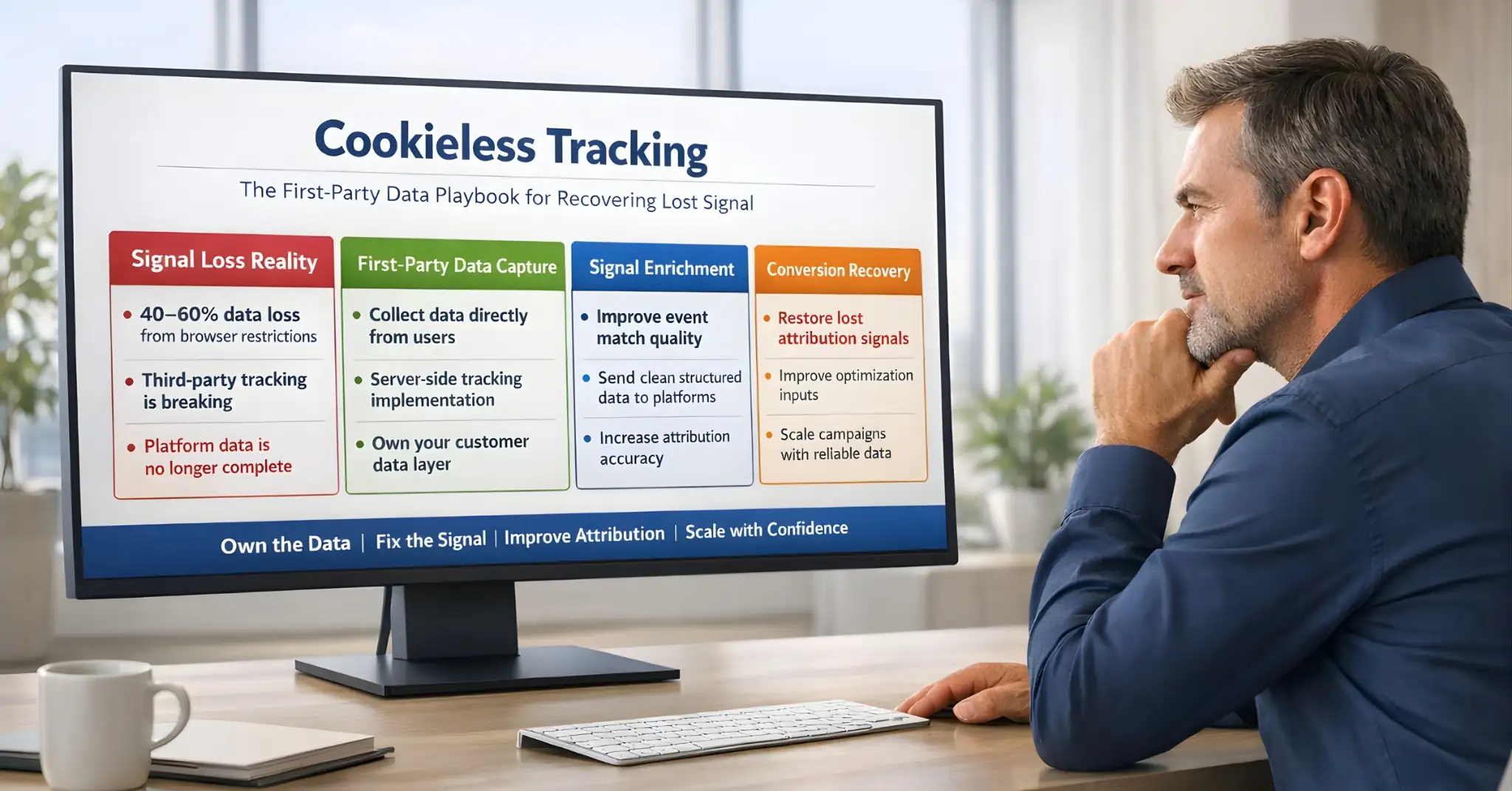
The result: 40-60% of your conversion data never reaches ad platforms. Campaigns that look unprofitable might actually be working. Campaigns you're scaling might be wasting budget. You can't tell the difference because you can't see what's happening.
But here's what most "cookieless" articles miss: the alternative to third-party cookies isn't less data. It's often better data. First-party tracking, server-side measurement, and private identity graphs can deliver more accurate attribution than cookies ever provided.
This isn't about surviving the cookieless transition. It's about thriving in the new reality.
Why Third-Party Cookies Are Disappearing
Understanding the solution requires understanding the problem. Third-party cookies are being blocked for legitimate reasons — and those reasons aren't going away.
FIRST-PARTY vs. THIRD-PARTY COOKIES
════════════════════════════════════════════════════════════════════════════

    FIRST-PARTY COOKIES:
    ─────────────────────
    Set by: The website you're visiting
    Purpose: Login sessions, shopping carts, preferences
    Status: Still allowed, still useful

    Example: Amazon remembers your cart when you return


    THIRD-PARTY COOKIES:
    ────────────────────
    Set by: External domains (ad networks, tracking pixels)
    Purpose: Cross-site tracking, retargeting, attribution
    Status: Being blocked by browsers and privacy regulations

    Example: Facebook pixel tracking you across the web


    WHY THIRD-PARTY COOKIES ARE BEING BLOCKED:
    ───────────────────────────────────────────

    • Privacy concerns — Users don't want to be followed everywhere
    • Regulatory pressure — GDPR, CCPA require consent
    • Browser competition — Privacy is a feature users want
    • Security risks — Cross-site tracking enables data breaches


    THE TIMELINE:
    ─────────────
    2017: Safari launches Intelligent Tracking Prevention
    2019: Firefox blocks third-party cookies by default
    2021: iOS 14.5 App Tracking Transparency launches
    2024: Chrome begins phased third-party cookie deprecation
    2025: Chrome completes third-party cookie removal

    All major browsers now block third-party cookies.
    The Post-Cookie Era is not coming — it's here.


    WHAT REPLACED COOKIES IN CHROME:
    ────────────────────────────────
    Google's Privacy Sandbox introduced new APIs:

    • Topics API: Interest-based targeting without individual tracking
    • Attribution Reporting API: Aggregated conversion measurement
    • Protected Audience API: Retargeting without cross-site tracking

    These browser-level APIs provide some functionality, but they're
    aggregated and limited. They don't replace the need for first-party
    data strategies.

════════════════════════════════════════════════════════════════════════════
FIRST-PARTY vs. THIRD-PARTY COOKIES
════════════════════════════════════════════════════════════════════════════

    FIRST-PARTY COOKIES:
    ─────────────────────
    Set by: The website you're visiting
    Purpose: Login sessions, shopping carts, preferences
    Status: Still allowed, still useful

    Example: Amazon remembers your cart when you return


    THIRD-PARTY COOKIES:
    ────────────────────
    Set by: External domains (ad networks, tracking pixels)
    Purpose: Cross-site tracking, retargeting, attribution
    Status: Being blocked by browsers and privacy regulations

    Example: Facebook pixel tracking you across the web


    WHY THIRD-PARTY COOKIES ARE BEING BLOCKED:
    ───────────────────────────────────────────

    • Privacy concerns — Users don't want to be followed everywhere
    • Regulatory pressure — GDPR, CCPA require consent
    • Browser competition — Privacy is a feature users want
    • Security risks — Cross-site tracking enables data breaches


    THE TIMELINE:
    ─────────────
    2017: Safari launches Intelligent Tracking Prevention
    2019: Firefox blocks third-party cookies by default
    2021: iOS 14.5 App Tracking Transparency launches
    2024: Chrome begins phased third-party cookie deprecation
    2025: Chrome completes third-party cookie removal

    All major browsers now block third-party cookies.
    The Post-Cookie Era is not coming — it's here.


    WHAT REPLACED COOKIES IN CHROME:
    ────────────────────────────────
    Google's Privacy Sandbox introduced new APIs:

    • Topics API: Interest-based targeting without individual tracking
    • Attribution Reporting API: Aggregated conversion measurement
    • Protected Audience API: Retargeting without cross-site tracking

    These browser-level APIs provide some functionality, but they're
    aggregated and limited. They don't replace the need for first-party
    data strategies.

════════════════════════════════════════════════════════════════════════════
FIRST-PARTY vs. THIRD-PARTY COOKIES
════════════════════════════════════════════════════════════════════════════

    FIRST-PARTY COOKIES:
    ─────────────────────
    Set by: The website you're visiting
    Purpose: Login sessions, shopping carts, preferences
    Status: Still allowed, still useful

    Example: Amazon remembers your cart when you return


    THIRD-PARTY COOKIES:
    ────────────────────
    Set by: External domains (ad networks, tracking pixels)
    Purpose: Cross-site tracking, retargeting, attribution
    Status: Being blocked by browsers and privacy regulations

    Example: Facebook pixel tracking you across the web


    WHY THIRD-PARTY COOKIES ARE BEING BLOCKED:
    ───────────────────────────────────────────

    • Privacy concerns — Users don't want to be followed everywhere
    • Regulatory pressure — GDPR, CCPA require consent
    • Browser competition — Privacy is a feature users want
    • Security risks — Cross-site tracking enables data breaches


    THE TIMELINE:
    ─────────────
    2017: Safari launches Intelligent Tracking Prevention
    2019: Firefox blocks third-party cookies by default
    2021: iOS 14.5 App Tracking Transparency launches
    2024: Chrome begins phased third-party cookie deprecation
    2025: Chrome completes third-party cookie removal

    All major browsers now block third-party cookies.
    The Post-Cookie Era is not coming — it's here.


    WHAT REPLACED COOKIES IN CHROME:
    ────────────────────────────────
    Google's Privacy Sandbox introduced new APIs:

    • Topics API: Interest-based targeting without individual tracking
    • Attribution Reporting API: Aggregated conversion measurement
    • Protected Audience API: Retargeting without cross-site tracking

    These browser-level APIs provide some functionality, but they're
    aggregated and limited. They don't replace the need for first-party
    data strategies.

════════════════════════════════════════════════════════════════════════════
All major browsers now block third-party cookies. The Post-Cookie Era is not coming — it's here. The next disruption is already underway: see tracking challenges from AI browsers.
The shift isn't temporary. Privacy-focused tracking is the permanent reality. Building your measurement strategy around third-party cookies was never sustainable — now it's impossible.
The Signal Loss Problem
When browsers block third-party cookies and users opt out of tracking, your conversion data degrades. But the impact isn't obvious in your dashboards — it looks like campaigns just stopped working.
HOW COOKIE BLOCKING BREAKS ATTRIBUTION
════════════════════════════════════════════════════════════════════════════

    THE CUSTOMER JOURNEY:
    ─────────────────────
    1. Customer clicks your Facebook ad on their iPhone
    2. Safari blocks the Facebook pixel from setting a cookie
    3. Customer browses your site, leaves without buying
    4. Customer returns on their laptop via Google search
    5. Customer purchases


    WHAT FACEBOOK SEES:
    ───────────────────
    ❌ Click happened (but can't connect to conversion)
    ❌ No purchase attributed to ad
    ❌ Algorithm thinks this audience doesn't convert


    WHAT GOOGLE SEES:
    ─────────────────
    ✓ Organic search → Purchase
    ✓ Takes full credit for conversion


    WHAT ACTUALLY HAPPENED:
    ───────────────────────
    Facebook ad drove the awareness and intent.
    Google search captured the demand Facebook created.
    Facebook gets no credit. Google gets all credit.


    THE DOWNSTREAM EFFECTS:
    ───────────────────────
    • You cut Facebook budget (it "doesn't work")
    • Google performance mysteriously drops (no demand creation)
    • Your blended CAC rises
    • You don't understand why

════════════════════════════════════════════════════════════════════════════
HOW COOKIE BLOCKING BREAKS ATTRIBUTION
════════════════════════════════════════════════════════════════════════════

    THE CUSTOMER JOURNEY:
    ─────────────────────
    1. Customer clicks your Facebook ad on their iPhone
    2. Safari blocks the Facebook pixel from setting a cookie
    3. Customer browses your site, leaves without buying
    4. Customer returns on their laptop via Google search
    5. Customer purchases


    WHAT FACEBOOK SEES:
    ───────────────────
    ❌ Click happened (but can't connect to conversion)
    ❌ No purchase attributed to ad
    ❌ Algorithm thinks this audience doesn't convert


    WHAT GOOGLE SEES:
    ─────────────────
    ✓ Organic search → Purchase
    ✓ Takes full credit for conversion


    WHAT ACTUALLY HAPPENED:
    ───────────────────────
    Facebook ad drove the awareness and intent.
    Google search captured the demand Facebook created.
    Facebook gets no credit. Google gets all credit.


    THE DOWNSTREAM EFFECTS:
    ───────────────────────
    • You cut Facebook budget (it "doesn't work")
    • Google performance mysteriously drops (no demand creation)
    • Your blended CAC rises
    • You don't understand why

════════════════════════════════════════════════════════════════════════════
HOW COOKIE BLOCKING BREAKS ATTRIBUTION
════════════════════════════════════════════════════════════════════════════

    THE CUSTOMER JOURNEY:
    ─────────────────────
    1. Customer clicks your Facebook ad on their iPhone
    2. Safari blocks the Facebook pixel from setting a cookie
    3. Customer browses your site, leaves without buying
    4. Customer returns on their laptop via Google search
    5. Customer purchases


    WHAT FACEBOOK SEES:
    ───────────────────
    ❌ Click happened (but can't connect to conversion)
    ❌ No purchase attributed to ad
    ❌ Algorithm thinks this audience doesn't convert


    WHAT GOOGLE SEES:
    ─────────────────
    ✓ Organic search → Purchase
    ✓ Takes full credit for conversion


    WHAT ACTUALLY HAPPENED:
    ───────────────────────
    Facebook ad drove the awareness and intent.
    Google search captured the demand Facebook created.
    Facebook gets no credit. Google gets all credit.


    THE DOWNSTREAM EFFECTS:
    ───────────────────────
    • You cut Facebook budget (it "doesn't work")
    • Google performance mysteriously drops (no demand creation)
    • Your blended CAC rises
    • You don't understand why

════════════════════════════════════════════════════════════════════════════
This scenario plays out thousands of times per month for most ecommerce brands. The 40-60% signal loss isn't evenly distributed — it hits certain channels, devices, and customer segments harder than others, creating systematic blind spots in your measurement. iOS users feel this hardest — see tracking performance after iOS privacy changes for the device-specific breakdown of ATT, ITP, and Link Tracking Protection effects.
The Three Pillars of Cookieless Tracking
Recovering from cookie deprecation requires three complementary approaches. Each solves a different part of the problem. For a deeper breakdown of solutions for cookieless measurement — including vendor categories, implementation effort, and accuracy tradeoffs — that guide goes one layer deeper.
THE COOKIELESS TRACKING STACK
════════════════════════════════════════════════════════════════════════════

    PILLAR 1: FIRST-PARTY DATA
    ──────────────────────────
    What: Data customers give you directly
    How: Email, phone, account creation, purchases
    Why: You own it, browsers can't block it


    PILLAR 2: SERVER-SIDE TRACKING
    ──────────────────────────────
    What: Sending conversion data from your server, not browser
    How: Conversions API (Meta), Enhanced Conversions (Google)
    Why: Bypasses browser restrictions entirely


    PILLAR 3: PRIVATE IDENTITY GRAPH
    ────────────────────────────────
    What: Connecting the same customer across devices/sessions
    How: Matching on email, phone, or other owned identifiers
    Why: You own the identity — browsers can't revoke it


    HOW THEY WORK TOGETHER:
    ───────────────────────

    First-party data gives you customer identifiers.
    Server-side tracking sends conversions without browser interference.
    Private identity graph connects touchpoints across the journey.

    Together, they replace what third-party cookies used to do —
    often with better accuracy — and you own the infrastructure.

════════════════════════════════════════════════════════════════════════════
THE COOKIELESS TRACKING STACK
════════════════════════════════════════════════════════════════════════════

    PILLAR 1: FIRST-PARTY DATA
    ──────────────────────────
    What: Data customers give you directly
    How: Email, phone, account creation, purchases
    Why: You own it, browsers can't block it


    PILLAR 2: SERVER-SIDE TRACKING
    ──────────────────────────────
    What: Sending conversion data from your server, not browser
    How: Conversions API (Meta), Enhanced Conversions (Google)
    Why: Bypasses browser restrictions entirely


    PILLAR 3: PRIVATE IDENTITY GRAPH
    ────────────────────────────────
    What: Connecting the same customer across devices/sessions
    How: Matching on email, phone, or other owned identifiers
    Why: You own the identity — browsers can't revoke it


    HOW THEY WORK TOGETHER:
    ───────────────────────

    First-party data gives you customer identifiers.
    Server-side tracking sends conversions without browser interference.
    Private identity graph connects touchpoints across the journey.

    Together, they replace what third-party cookies used to do —
    often with better accuracy — and you own the infrastructure.

════════════════════════════════════════════════════════════════════════════
THE COOKIELESS TRACKING STACK
════════════════════════════════════════════════════════════════════════════

    PILLAR 1: FIRST-PARTY DATA
    ──────────────────────────
    What: Data customers give you directly
    How: Email, phone, account creation, purchases
    Why: You own it, browsers can't block it


    PILLAR 2: SERVER-SIDE TRACKING
    ──────────────────────────────
    What: Sending conversion data from your server, not browser
    How: Conversions API (Meta), Enhanced Conversions (Google)
    Why: Bypasses browser restrictions entirely


    PILLAR 3: PRIVATE IDENTITY GRAPH
    ────────────────────────────────
    What: Connecting the same customer across devices/sessions
    How: Matching on email, phone, or other owned identifiers
    Why: You own the identity — browsers can't revoke it


    HOW THEY WORK TOGETHER:
    ───────────────────────

    First-party data gives you customer identifiers.
    Server-side tracking sends conversions without browser interference.
    Private identity graph connects touchpoints across the journey.

    Together, they replace what third-party cookies used to do —
    often with better accuracy — and you own the infrastructure.

════════════════════════════════════════════════════════════════════════════
Let's examine each pillar in detail.
Pillar 1: First-Party Data Collection
First-party data is information customers share directly with you. It's not collected secretly through tracking pixels — it's given voluntarily through interactions with your brand.
FIRST-PARTY DATA SOURCES
════════════════════════════════════════════════════════════════════════════

    TRANSACTIONAL DATA:
    ────────────────────
    • Purchase history
    • Order values
    • Product preferences
    • Payment information


    ACCOUNT DATA:
    ─────────────
    • Email addresses
    • Phone numbers
    • Shipping addresses
    • Account preferences


    BEHAVIORAL DATA (ON YOUR PROPERTIES):
    ─────────────────────────────────────
    • Pages viewed
    • Products browsed
    • Cart additions
    • Site search queries


    DECLARED DATA (ZERO-PARTY):
    ───────────────────────────
    • Quiz responses
    • Preference selections
    • Survey answers
    • Communication preferences


    WHY FIRST-PARTY DATA IS MORE VALUABLE:
    ──────────────────────────────────────

    Third-party cookies gave you:
    • Anonymous behavioral signals
    • Cross-site browsing patterns
    • Inferred interests

    First-party data gives you:
    • Known customer identities
    • Actual purchase behavior
    • Direct preferences
    • Revenue data

    You're trading inference for truth.

════════════════════════════════════════════════════════════════════════════
FIRST-PARTY DATA SOURCES
════════════════════════════════════════════════════════════════════════════

    TRANSACTIONAL DATA:
    ────────────────────
    • Purchase history
    • Order values
    • Product preferences
    • Payment information


    ACCOUNT DATA:
    ─────────────
    • Email addresses
    • Phone numbers
    • Shipping addresses
    • Account preferences


    BEHAVIORAL DATA (ON YOUR PROPERTIES):
    ─────────────────────────────────────
    • Pages viewed
    • Products browsed
    • Cart additions
    • Site search queries


    DECLARED DATA (ZERO-PARTY):
    ───────────────────────────
    • Quiz responses
    • Preference selections
    • Survey answers
    • Communication preferences


    WHY FIRST-PARTY DATA IS MORE VALUABLE:
    ──────────────────────────────────────

    Third-party cookies gave you:
    • Anonymous behavioral signals
    • Cross-site browsing patterns
    • Inferred interests

    First-party data gives you:
    • Known customer identities
    • Actual purchase behavior
    • Direct preferences
    • Revenue data

    You're trading inference for truth.

════════════════════════════════════════════════════════════════════════════
FIRST-PARTY DATA SOURCES
════════════════════════════════════════════════════════════════════════════

    TRANSACTIONAL DATA:
    ────────────────────
    • Purchase history
    • Order values
    • Product preferences
    • Payment information


    ACCOUNT DATA:
    ─────────────
    • Email addresses
    • Phone numbers
    • Shipping addresses
    • Account preferences


    BEHAVIORAL DATA (ON YOUR PROPERTIES):
    ─────────────────────────────────────
    • Pages viewed
    • Products browsed
    • Cart additions
    • Site search queries


    DECLARED DATA (ZERO-PARTY):
    ───────────────────────────
    • Quiz responses
    • Preference selections
    • Survey answers
    • Communication preferences


    WHY FIRST-PARTY DATA IS MORE VALUABLE:
    ──────────────────────────────────────

    Third-party cookies gave you:
    • Anonymous behavioral signals
    • Cross-site browsing patterns
    • Inferred interests

    First-party data gives you:
    • Known customer identities
    • Actual purchase behavior
    • Direct preferences
    • Revenue data

    You're trading inference for truth.

════════════════════════════════════════════════════════════════════════════
The Consent-to-Value Exchange
The key to first-party data collection is providing value in exchange for information. Customers share data when they get something worthwhile in return.
THE VALUE EXCHANGE
════════════════════════════════════════════════════════════════════════════

    WHAT CUSTOMERS GIVE:
    ────────────────────
    Email, phone, preferences, feedback


    WHAT THEY GET IN RETURN:
    ────────────────────────

    • Personalized recommendations
    • Exclusive offers and early access
    • Relevant content (not spam)
    • Better product suggestions
    • Saved preferences across visits
    • Order tracking and updates
    • Loyalty rewards


    HIGH-VALUE COLLECTION POINTS:
    ─────────────────────────────

    Account creation:     "Create account for faster checkout"
    Email capture:        "Get 10% off your first order"
    Quiz/personalization: "Find your perfect product"
    Loyalty program:      "Earn points on every purchase"
    Post-purchase:        "Track your order + get recommendations"


    THE PRINCIPLE:
    ──────────────
    Don't ask for data. Offer value that requires data.

    Bad: "Sign up for our newsletter"
    Good: "Get personalized recommendations based on your style"

════════════════════════════════════════════════════════════════════════════
THE VALUE EXCHANGE
════════════════════════════════════════════════════════════════════════════

    WHAT CUSTOMERS GIVE:
    ────────────────────
    Email, phone, preferences, feedback


    WHAT THEY GET IN RETURN:
    ────────────────────────

    • Personalized recommendations
    • Exclusive offers and early access
    • Relevant content (not spam)
    • Better product suggestions
    • Saved preferences across visits
    • Order tracking and updates
    • Loyalty rewards


    HIGH-VALUE COLLECTION POINTS:
    ─────────────────────────────

    Account creation:     "Create account for faster checkout"
    Email capture:        "Get 10% off your first order"
    Quiz/personalization: "Find your perfect product"
    Loyalty program:      "Earn points on every purchase"
    Post-purchase:        "Track your order + get recommendations"


    THE PRINCIPLE:
    ──────────────
    Don't ask for data. Offer value that requires data.

    Bad: "Sign up for our newsletter"
    Good: "Get personalized recommendations based on your style"

════════════════════════════════════════════════════════════════════════════
THE VALUE EXCHANGE
════════════════════════════════════════════════════════════════════════════

    WHAT CUSTOMERS GIVE:
    ────────────────────
    Email, phone, preferences, feedback


    WHAT THEY GET IN RETURN:
    ────────────────────────

    • Personalized recommendations
    • Exclusive offers and early access
    • Relevant content (not spam)
    • Better product suggestions
    • Saved preferences across visits
    • Order tracking and updates
    • Loyalty rewards


    HIGH-VALUE COLLECTION POINTS:
    ─────────────────────────────

    Account creation:     "Create account for faster checkout"
    Email capture:        "Get 10% off your first order"
    Quiz/personalization: "Find your perfect product"
    Loyalty program:      "Earn points on every purchase"
    Post-purchase:        "Track your order + get recommendations"


    THE PRINCIPLE:
    ──────────────
    Don't ask for data. Offer value that requires data.

    Bad: "Sign up for our newsletter"
    Good: "Get personalized recommendations based on your style"

════════════════════════════════════════════════════════════════════════════
Pillar 2: Server-Side Tracking
Browser-based tracking (pixels, JavaScript tags) fails when browsers block cookies or users have ad blockers installed. Server-side tracking bypasses this entirely by sending data directly from your server to ad platforms.
BROWSER-BASED vs. SERVER-SIDE TRACKING
════════════════════════════════════════════════════════════════════════════

    BROWSER-BASED (Traditional):
    ────────────────────────────

    Customer converts → Browser fires pixel → [BLOCKED] → Platform never sees it

    Blocked by:
    • iOS App Tracking Transparency
    • Safari Intelligent Tracking Prevention
    • Firefox Enhanced Tracking Protection
    • Ad blockers
    • Cookie consent denials


    SERVER-SIDE:
    ────────────

    Customer converts → Your server sends event → Direct to platform → Captured

    Benefits:
    • Bypasses all browser restrictions
    • More reliable data transfer
    • Richer data (can include CRM info)
    • Higher match rates
    • Better attribution


    THE TECHNICAL FLOW:
    ───────────────────

    1. Customer completes purchase on your site
    2. Your server captures the conversion event
    3. Server sends event to Meta/Google/TikTok via their API
    4. Event includes hashed customer identifiers (email, phone)
    5. Platform matches to user account
    6. Conversion attributed to correct campaign

════════════════════════════════════════════════════════════════════════════
BROWSER-BASED vs. SERVER-SIDE TRACKING
════════════════════════════════════════════════════════════════════════════

    BROWSER-BASED (Traditional):
    ────────────────────────────

    Customer converts → Browser fires pixel → [BLOCKED] → Platform never sees it

    Blocked by:
    • iOS App Tracking Transparency
    • Safari Intelligent Tracking Prevention
    • Firefox Enhanced Tracking Protection
    • Ad blockers
    • Cookie consent denials


    SERVER-SIDE:
    ────────────

    Customer converts → Your server sends event → Direct to platform → Captured

    Benefits:
    • Bypasses all browser restrictions
    • More reliable data transfer
    • Richer data (can include CRM info)
    • Higher match rates
    • Better attribution


    THE TECHNICAL FLOW:
    ───────────────────

    1. Customer completes purchase on your site
    2. Your server captures the conversion event
    3. Server sends event to Meta/Google/TikTok via their API
    4. Event includes hashed customer identifiers (email, phone)
    5. Platform matches to user account
    6. Conversion attributed to correct campaign

════════════════════════════════════════════════════════════════════════════
BROWSER-BASED vs. SERVER-SIDE TRACKING
════════════════════════════════════════════════════════════════════════════

    BROWSER-BASED (Traditional):
    ────────────────────────────

    Customer converts → Browser fires pixel → [BLOCKED] → Platform never sees it

    Blocked by:
    • iOS App Tracking Transparency
    • Safari Intelligent Tracking Prevention
    • Firefox Enhanced Tracking Protection
    • Ad blockers
    • Cookie consent denials


    SERVER-SIDE:
    ────────────

    Customer converts → Your server sends event → Direct to platform → Captured

    Benefits:
    • Bypasses all browser restrictions
    • More reliable data transfer
    • Richer data (can include CRM info)
    • Higher match rates
    • Better attribution


    THE TECHNICAL FLOW:
    ───────────────────

    1. Customer completes purchase on your site
    2. Your server captures the conversion event
    3. Server sends event to Meta/Google/TikTok via their API
    4. Event includes hashed customer identifiers (email, phone)
    5. Platform matches to user account
    6. Conversion attributed to correct campaign

════════════════════════════════════════════════════════════════════════════
To walk through the mechanism end-to-end — from event capture on your server through hashed identifier matching and platform delivery — that walkthrough shows how the replacement infrastructure operates without relying on fragile browser tracking.
Platform-Specific Server-Side Solutions
Each major ad platform has its own server-side tracking implementation.
SERVER-SIDE TRACKING BY PLATFORM
════════════════════════════════════════════════════════════════════════════

    META (Facebook/Instagram):
    ──────────────────────────
    Tool: Conversions API (CAPI)

    Sends purchase, lead, and custom events server-to-server.
    Match using hashed email, phone, or fbclid.
    Use alongside Pixel for redundancy (with deduplication).


    GOOGLE:
    ───────
    Tool: Enhanced Conversions

    Sends hashed first-party data with conversion tags.
    Improves conversion measurement and Smart Bidding.
    Works with Google Ads and GA4.


    TIKTOK:
    ───────
    Tool: Events API

    Server-side event tracking for TikTok Ads.
    Similar concept to Meta CAPI.


    BEST PRACTICE:
    ──────────────
    Run both browser-based AND server-side tracking.

    Browser tracking catches fast events (page views, clicks).
    Server-side catches conversions reliably.
    Deduplication prevents double-counting.

════════════════════════════════════════════════════════════════════════════
SERVER-SIDE TRACKING BY PLATFORM
════════════════════════════════════════════════════════════════════════════

    META (Facebook/Instagram):
    ──────────────────────────
    Tool: Conversions API (CAPI)

    Sends purchase, lead, and custom events server-to-server.
    Match using hashed email, phone, or fbclid.
    Use alongside Pixel for redundancy (with deduplication).


    GOOGLE:
    ───────
    Tool: Enhanced Conversions

    Sends hashed first-party data with conversion tags.
    Improves conversion measurement and Smart Bidding.
    Works with Google Ads and GA4.


    TIKTOK:
    ───────
    Tool: Events API

    Server-side event tracking for TikTok Ads.
    Similar concept to Meta CAPI.


    BEST PRACTICE:
    ──────────────
    Run both browser-based AND server-side tracking.

    Browser tracking catches fast events (page views, clicks).
    Server-side catches conversions reliably.
    Deduplication prevents double-counting.

════════════════════════════════════════════════════════════════════════════
SERVER-SIDE TRACKING BY PLATFORM
════════════════════════════════════════════════════════════════════════════

    META (Facebook/Instagram):
    ──────────────────────────
    Tool: Conversions API (CAPI)

    Sends purchase, lead, and custom events server-to-server.
    Match using hashed email, phone, or fbclid.
    Use alongside Pixel for redundancy (with deduplication).


    GOOGLE:
    ───────
    Tool: Enhanced Conversions

    Sends hashed first-party data with conversion tags.
    Improves conversion measurement and Smart Bidding.
    Works with Google Ads and GA4.


    TIKTOK:
    ───────
    Tool: Events API

    Server-side event tracking for TikTok Ads.
    Similar concept to Meta CAPI.


    BEST PRACTICE:
    ──────────────
    Run both browser-based AND server-side tracking.

    Browser tracking catches fast events (page views, clicks).
    Server-side catches conversions reliably.
    Deduplication prevents double-counting.

════════════════════════════════════════════════════════════════════════════
Pillar 3: Building Your Private Identity Graph
Third-party cookies let you "rent" identity from browsers — they connected user activity across sites and devices, but you never owned that connection. When browsers revoked access, the identity disappeared.
A Private Identity Graph is different. You own it. It's built from your first-party data and persists regardless of browser policies.
THE PRIVATE IDENTITY GRAPH
════════════════════════════════════════════════════════════════════════════

    WHAT IT IS:
    ───────────
    A unified view of each customer across all their devices,
    sessions, and touchpoints — owned entirely by your brand.


    RENTED IDENTITY (Third-Party Cookies):
    ──────────────────────────────────────
    Browser tracks user → Sets cookie → You access cookie data
    Browser changes policy → Cookie blocked → Identity lost

    You never owned the connection. You rented it.


    OWNED IDENTITY (Private Identity Graph):
    ────────────────────────────────────────
    Customer shares email → You store identifier → You connect touchpoints
    Browser changes policy → No impact → Identity persists

    You own the graph. Browsers can't take it away.


    WITHOUT A PRIVATE IDENTITY GRAPH:
    ──────────────────────────────────

    Session 1 (Phone):    Unknown visitor → Clicks ad → Leaves
    Session 2 (Laptop):   Unknown visitor → Returns → Purchases

    Analytics sees: 2 different people
    Reality: 1 customer, broken journey


    WITH A PRIVATE IDENTITY GRAPH:
    ───────────────────────────────

    Session 1 (Phone):    Visitor A → Clicks ad → Enters email
    Session 2 (Laptop):   Visitor A recognized → Purchases

    Analytics sees: 1 complete customer journey
    Ad platform gets credit for the conversion

════════════════════════════════════════════════════════════════════════════
THE PRIVATE IDENTITY GRAPH
════════════════════════════════════════════════════════════════════════════

    WHAT IT IS:
    ───────────
    A unified view of each customer across all their devices,
    sessions, and touchpoints — owned entirely by your brand.


    RENTED IDENTITY (Third-Party Cookies):
    ──────────────────────────────────────
    Browser tracks user → Sets cookie → You access cookie data
    Browser changes policy → Cookie blocked → Identity lost

    You never owned the connection. You rented it.


    OWNED IDENTITY (Private Identity Graph):
    ────────────────────────────────────────
    Customer shares email → You store identifier → You connect touchpoints
    Browser changes policy → No impact → Identity persists

    You own the graph. Browsers can't take it away.


    WITHOUT A PRIVATE IDENTITY GRAPH:
    ──────────────────────────────────

    Session 1 (Phone):    Unknown visitor → Clicks ad → Leaves
    Session 2 (Laptop):   Unknown visitor → Returns → Purchases

    Analytics sees: 2 different people
    Reality: 1 customer, broken journey


    WITH A PRIVATE IDENTITY GRAPH:
    ───────────────────────────────

    Session 1 (Phone):    Visitor A → Clicks ad → Enters email
    Session 2 (Laptop):   Visitor A recognized → Purchases

    Analytics sees: 1 complete customer journey
    Ad platform gets credit for the conversion

════════════════════════════════════════════════════════════════════════════
THE PRIVATE IDENTITY GRAPH
════════════════════════════════════════════════════════════════════════════

    WHAT IT IS:
    ───────────
    A unified view of each customer across all their devices,
    sessions, and touchpoints — owned entirely by your brand.


    RENTED IDENTITY (Third-Party Cookies):
    ──────────────────────────────────────
    Browser tracks user → Sets cookie → You access cookie data
    Browser changes policy → Cookie blocked → Identity lost

    You never owned the connection. You rented it.


    OWNED IDENTITY (Private Identity Graph):
    ────────────────────────────────────────
    Customer shares email → You store identifier → You connect touchpoints
    Browser changes policy → No impact → Identity persists

    You own the graph. Browsers can't take it away.


    WITHOUT A PRIVATE IDENTITY GRAPH:
    ──────────────────────────────────

    Session 1 (Phone):    Unknown visitor → Clicks ad → Leaves
    Session 2 (Laptop):   Unknown visitor → Returns → Purchases

    Analytics sees: 2 different people
    Reality: 1 customer, broken journey


    WITH A PRIVATE IDENTITY GRAPH:
    ───────────────────────────────

    Session 1 (Phone):    Visitor A → Clicks ad → Enters email
    Session 2 (Laptop):   Visitor A recognized → Purchases

    Analytics sees: 1 complete customer journey
    Ad platform gets credit for the conversion

════════════════════════════════════════════════════════════════════════════
How Private Identity Graphs Work
Building your identity graph uses deterministic and probabilistic matching to connect touchpoints.
IDENTITY MATCHING METHODS
════════════════════════════════════════════════════════════════════════════

    DETERMINISTIC MATCHING:
    ───────────────────────
    Exact identifier match — you KNOW it's the same person.

    Identifiers:
    • Email address
    • Phone number
    • Customer ID
    • Logged-in account

    Example:
    Customer uses same email for Facebook account and your checkout.
    Meta can match the ad click to the purchase with certainty.


    PROBABILISTIC MATCHING:
    ───────────────────────
    Pattern-based matching — high PROBABILITY it's the same person.

    Signals:
    • IP address
    • Device fingerprint
    • Browser characteristics
    • Timing patterns

    Example:
    Same IP address and device type clicks ad, then converts
    5 minutes later. High probability = same person.


    WHICH IS BETTER?
    ────────────────
    Deterministic is more accurate but requires identifiers.
    Probabilistic fills gaps when identifiers aren't available.
    Best systems use both together.

════════════════════════════════════════════════════════════════════════════
IDENTITY MATCHING METHODS
════════════════════════════════════════════════════════════════════════════

    DETERMINISTIC MATCHING:
    ───────────────────────
    Exact identifier match — you KNOW it's the same person.

    Identifiers:
    • Email address
    • Phone number
    • Customer ID
    • Logged-in account

    Example:
    Customer uses same email for Facebook account and your checkout.
    Meta can match the ad click to the purchase with certainty.


    PROBABILISTIC MATCHING:
    ───────────────────────
    Pattern-based matching — high PROBABILITY it's the same person.

    Signals:
    • IP address
    • Device fingerprint
    • Browser characteristics
    • Timing patterns

    Example:
    Same IP address and device type clicks ad, then converts
    5 minutes later. High probability = same person.


    WHICH IS BETTER?
    ────────────────
    Deterministic is more accurate but requires identifiers.
    Probabilistic fills gaps when identifiers aren't available.
    Best systems use both together.

════════════════════════════════════════════════════════════════════════════
IDENTITY MATCHING METHODS
════════════════════════════════════════════════════════════════════════════

    DETERMINISTIC MATCHING:
    ───────────────────────
    Exact identifier match — you KNOW it's the same person.

    Identifiers:
    • Email address
    • Phone number
    • Customer ID
    • Logged-in account

    Example:
    Customer uses same email for Facebook account and your checkout.
    Meta can match the ad click to the purchase with certainty.


    PROBABILISTIC MATCHING:
    ───────────────────────
    Pattern-based matching — high PROBABILITY it's the same person.

    Signals:
    • IP address
    • Device fingerprint
    • Browser characteristics
    • Timing patterns

    Example:
    Same IP address and device type clicks ad, then converts
    5 minutes later. High probability = same person.


    WHICH IS BETTER?
    ────────────────
    Deterministic is more accurate but requires identifiers.
    Probabilistic fills gaps when identifiers aren't available.
    Best systems use both together.

════════════════════════════════════════════════════════════════════════════
Building Your Cookieless Tracking Stack
Here's how to implement all three pillars into a cohesive measurement system.
THE IMPLEMENTATION ROADMAP
════════════════════════════════════════════════════════════════════════════

    PHASE 1: AUDIT CURRENT STATE
    ────────────────────────────

    • Document all tracking pixels and tags
    • Compare platform-reported conversions to backend data
    • Calculate your tracking accuracy (platform ÷ backend × 100)
    • Identify which channels/devices have biggest gaps

    If tracking accuracy is below 70%, you have significant blind spots.


    PHASE 2: IMPLEMENT SERVER-SIDE TRACKING
    ───────────────────────────────────────

    Priority order:
    1. Highest-spend platforms first
    2. Start with purchase events
    3. Run parallel with browser tracking
    4. Validate data accuracy before full transition

    Meta CAPI is typically first for most ecommerce brands.


    PHASE 3: ENRICH FIRST-PARTY DATA COLLECTION
    ────────────────────────────────────────────

    • Add value-exchange email capture points
    • Implement quiz/personalization flows
    • Encourage account creation
    • Capture phone numbers where appropriate

    More identifiers = better identity resolution.


    PHASE 4: CONNECT YOUR DATA
    ──────────────────────────

    • Integrate CRM with tracking platform
    • Send revenue data back to ad platforms
    • Enable cross-device identity resolution
    • Build unified customer profiles


    PHASE 5: OPTIMIZE AND ITERATE
    ─────────────────────────────

    • Monitor Event Match Quality (EMQ) scores
    • Test additional conversion events
    • Expand to secondary ad platforms
    • Refine identity resolution

════════════════════════════════════════════════════════════════════════════
THE IMPLEMENTATION ROADMAP
════════════════════════════════════════════════════════════════════════════

    PHASE 1: AUDIT CURRENT STATE
    ────────────────────────────

    • Document all tracking pixels and tags
    • Compare platform-reported conversions to backend data
    • Calculate your tracking accuracy (platform ÷ backend × 100)
    • Identify which channels/devices have biggest gaps

    If tracking accuracy is below 70%, you have significant blind spots.


    PHASE 2: IMPLEMENT SERVER-SIDE TRACKING
    ───────────────────────────────────────

    Priority order:
    1. Highest-spend platforms first
    2. Start with purchase events
    3. Run parallel with browser tracking
    4. Validate data accuracy before full transition

    Meta CAPI is typically first for most ecommerce brands.


    PHASE 3: ENRICH FIRST-PARTY DATA COLLECTION
    ────────────────────────────────────────────

    • Add value-exchange email capture points
    • Implement quiz/personalization flows
    • Encourage account creation
    • Capture phone numbers where appropriate

    More identifiers = better identity resolution.


    PHASE 4: CONNECT YOUR DATA
    ──────────────────────────

    • Integrate CRM with tracking platform
    • Send revenue data back to ad platforms
    • Enable cross-device identity resolution
    • Build unified customer profiles


    PHASE 5: OPTIMIZE AND ITERATE
    ─────────────────────────────

    • Monitor Event Match Quality (EMQ) scores
    • Test additional conversion events
    • Expand to secondary ad platforms
    • Refine identity resolution

════════════════════════════════════════════════════════════════════════════
THE IMPLEMENTATION ROADMAP
════════════════════════════════════════════════════════════════════════════

    PHASE 1: AUDIT CURRENT STATE
    ────────────────────────────

    • Document all tracking pixels and tags
    • Compare platform-reported conversions to backend data
    • Calculate your tracking accuracy (platform ÷ backend × 100)
    • Identify which channels/devices have biggest gaps

    If tracking accuracy is below 70%, you have significant blind spots.


    PHASE 2: IMPLEMENT SERVER-SIDE TRACKING
    ───────────────────────────────────────

    Priority order:
    1. Highest-spend platforms first
    2. Start with purchase events
    3. Run parallel with browser tracking
    4. Validate data accuracy before full transition

    Meta CAPI is typically first for most ecommerce brands.


    PHASE 3: ENRICH FIRST-PARTY DATA COLLECTION
    ────────────────────────────────────────────

    • Add value-exchange email capture points
    • Implement quiz/personalization flows
    • Encourage account creation
    • Capture phone numbers where appropriate

    More identifiers = better identity resolution.


    PHASE 4: CONNECT YOUR DATA
    ──────────────────────────

    • Integrate CRM with tracking platform
    • Send revenue data back to ad platforms
    • Enable cross-device identity resolution
    • Build unified customer profiles


    PHASE 5: OPTIMIZE AND ITERATE
    ─────────────────────────────

    • Monitor Event Match Quality (EMQ) scores
    • Test additional conversion events
    • Expand to secondary ad platforms
    • Refine identity resolution

════════════════════════════════════════════════════════════════════════════
Event Match Quality: The Key Metric
Meta's Event Match Quality (EMQ) score tells you how well your conversion data matches their user database. Higher EMQ means better attribution and better ad optimization.
EVENT MATCH QUALITY (EMQ)
════════════════════════════════════════════════════════════════════════════

    WHAT EMQ MEASURES:
    ──────────────────
    How accurately Meta can match your conversion events
    to specific users who saw your ads.


    WHERE TO FIND IT:
    ─────────────────
    Events Manager → Data Sources → Your Pixel → Overview


    SCORE INTERPRETATION:
    ─────────────────────
    Poor EMQ: Limited parameters, low match rates
    Good EMQ: Multiple parameters, high match rates
    Excellent EMQ: Rich data, near-complete matching


    HOW TO IMPROVE EMQ:
    ───────────────────

    • Pass more customer parameters (email, phone, name)
    • Implement Conversions API (server-side)
    • Hash data properly before sending
    • Ensure fbclid passes through your forms
    • Deduplicate browser and server events


    WHY EMQ MATTERS:
    ────────────────
    Higher EMQ → Better attribution → Better algorithm optimization

    Meta's algorithm learns faster and optimizes more accurately
    when it can confidently match conversions to ad exposures.

════════════════════════════════════════════════════════════════════════════
EVENT MATCH QUALITY (EMQ)
════════════════════════════════════════════════════════════════════════════

    WHAT EMQ MEASURES:
    ──────────────────
    How accurately Meta can match your conversion events
    to specific users who saw your ads.


    WHERE TO FIND IT:
    ─────────────────
    Events Manager → Data Sources → Your Pixel → Overview


    SCORE INTERPRETATION:
    ─────────────────────
    Poor EMQ: Limited parameters, low match rates
    Good EMQ: Multiple parameters, high match rates
    Excellent EMQ: Rich data, near-complete matching


    HOW TO IMPROVE EMQ:
    ───────────────────

    • Pass more customer parameters (email, phone, name)
    • Implement Conversions API (server-side)
    • Hash data properly before sending
    • Ensure fbclid passes through your forms
    • Deduplicate browser and server events


    WHY EMQ MATTERS:
    ────────────────
    Higher EMQ → Better attribution → Better algorithm optimization

    Meta's algorithm learns faster and optimizes more accurately
    when it can confidently match conversions to ad exposures.

════════════════════════════════════════════════════════════════════════════
EVENT MATCH QUALITY (EMQ)
════════════════════════════════════════════════════════════════════════════

    WHAT EMQ MEASURES:
    ──────────────────
    How accurately Meta can match your conversion events
    to specific users who saw your ads.


    WHERE TO FIND IT:
    ─────────────────
    Events Manager → Data Sources → Your Pixel → Overview


    SCORE INTERPRETATION:
    ─────────────────────
    Poor EMQ: Limited parameters, low match rates
    Good EMQ: Multiple parameters, high match rates
    Excellent EMQ: Rich data, near-complete matching


    HOW TO IMPROVE EMQ:
    ───────────────────

    • Pass more customer parameters (email, phone, name)
    • Implement Conversions API (server-side)
    • Hash data properly before sending
    • Ensure fbclid passes through your forms
    • Deduplicate browser and server events


    WHY EMQ MATTERS:
    ────────────────
    Higher EMQ → Better attribution → Better algorithm optimization

    Meta's algorithm learns faster and optimizes more accurately
    when it can confidently match conversions to ad exposures.

════════════════════════════════════════════════════════════════════════════
Privacy Sandbox and Browser APIs
Google's Privacy Sandbox introduced browser-level APIs to replace some third-party cookie functionality. Understanding these helps contextualize where first-party data fits.
GOOGLE'S PRIVACY SANDBOX APIs
════════════════════════════════════════════════════════════════════════════

    TOPICS API:
    ───────────
    What: Browser observes your interests based on sites visited
    How: Assigns you to interest "topics" (up to 5 per week)
    Use: Advertisers target topics, not individuals
    Limitation: Aggregated, limited granularity


    ATTRIBUTION REPORTING API:
    ──────────────────────────
    What: Browser-level conversion measurement
    How: Matches ad clicks to conversions with noise added
    Use: Aggregated attribution reporting
    Limitation: Delayed, noisy data — not real-time or precise


    PROTECTED AUDIENCE API (formerly FLEDGE):
    ─────────────────────────────────────────
    What: On-device remarketing without cross-site tracking
    How: Browser runs auction locally using interest groups
    Use: Retargeting without third-party cookies
    Limitation: Complex, limited transparency


    WHERE FIRST-PARTY DATA FITS:
    ────────────────────────────
    Privacy Sandbox provides browser-level aggregated signals.
    First-party data provides customer-level precise signals.

    Privacy Sandbox: "Someone in the 'outdoor gear' topic converted"
    First-party data: "John Smith, who clicked our Meta ad on Tuesday,
                      purchased a $450 tent on Thursday"

    They're complementary, but first-party data is far more actionable.

════════════════════════════════════════════════════════════════════════════
GOOGLE'S PRIVACY SANDBOX APIs
════════════════════════════════════════════════════════════════════════════

    TOPICS API:
    ───────────
    What: Browser observes your interests based on sites visited
    How: Assigns you to interest "topics" (up to 5 per week)
    Use: Advertisers target topics, not individuals
    Limitation: Aggregated, limited granularity


    ATTRIBUTION REPORTING API:
    ──────────────────────────
    What: Browser-level conversion measurement
    How: Matches ad clicks to conversions with noise added
    Use: Aggregated attribution reporting
    Limitation: Delayed, noisy data — not real-time or precise


    PROTECTED AUDIENCE API (formerly FLEDGE):
    ─────────────────────────────────────────
    What: On-device remarketing without cross-site tracking
    How: Browser runs auction locally using interest groups
    Use: Retargeting without third-party cookies
    Limitation: Complex, limited transparency


    WHERE FIRST-PARTY DATA FITS:
    ────────────────────────────
    Privacy Sandbox provides browser-level aggregated signals.
    First-party data provides customer-level precise signals.

    Privacy Sandbox: "Someone in the 'outdoor gear' topic converted"
    First-party data: "John Smith, who clicked our Meta ad on Tuesday,
                      purchased a $450 tent on Thursday"

    They're complementary, but first-party data is far more actionable.

════════════════════════════════════════════════════════════════════════════
GOOGLE'S PRIVACY SANDBOX APIs
════════════════════════════════════════════════════════════════════════════

    TOPICS API:
    ───────────
    What: Browser observes your interests based on sites visited
    How: Assigns you to interest "topics" (up to 5 per week)
    Use: Advertisers target topics, not individuals
    Limitation: Aggregated, limited granularity


    ATTRIBUTION REPORTING API:
    ──────────────────────────
    What: Browser-level conversion measurement
    How: Matches ad clicks to conversions with noise added
    Use: Aggregated attribution reporting
    Limitation: Delayed, noisy data — not real-time or precise


    PROTECTED AUDIENCE API (formerly FLEDGE):
    ─────────────────────────────────────────
    What: On-device remarketing without cross-site tracking
    How: Browser runs auction locally using interest groups
    Use: Retargeting without third-party cookies
    Limitation: Complex, limited transparency


    WHERE FIRST-PARTY DATA FITS:
    ────────────────────────────
    Privacy Sandbox provides browser-level aggregated signals.
    First-party data provides customer-level precise signals.

    Privacy Sandbox: "Someone in the 'outdoor gear' topic converted"
    First-party data: "John Smith, who clicked our Meta ad on Tuesday,
                      purchased a $450 tent on Thursday"

    They're complementary, but first-party data is far more actionable.

════════════════════════════════════════════════════════════════════════════
Data Clean Rooms: Enterprise-Level First-Party Activation
For larger ecommerce brands, 2026 has become the year of the Data Clean Room. These secure environments let brands match their first-party data against platform data without exposing individual records.
DATA CLEAN ROOMS
════════════════════════════════════════════════════════════════════════════

    WHAT THEY ARE:
    ──────────────
    Secure environments where two parties (brand + platform) can
    match and analyze data without either side seeing raw records.


    MAJOR CLEAN ROOMS:
    ──────────────────
    • Amazon Marketing Cloud (AMC)
    • Google Ads Data Hub
    • Meta Advanced Analytics
    • Snowflake Data Clean Rooms
    • LiveRamp Safe Haven


    HOW THEY WORK:
    ──────────────
    1. You upload your first-party customer data (hashed)
    2. Platform matches against their user data
    3. You run queries on the matched dataset
    4. You get aggregated insights (not individual records)


    EXAMPLE USE CASE:
    ─────────────────
    You upload your customer list to Amazon Marketing Cloud.
    AMC matches to Amazon shoppers.
    You query: "What products do my best customers browse on Amazon?"
    You get: Aggregated category and brand insights.


    WHY FIRST-PARTY DATA IS THE FUEL:
    ──────────────────────────────────
    Clean rooms are useless without quality first-party data.

    • More customer identifiers = better match rates
    • Richer customer attributes = better segmentation
    • Revenue data = LTV-based analysis

    Your private identity graph is what you bring to the clean room.

════════════════════════════════════════════════════════════════════════════
DATA CLEAN ROOMS
════════════════════════════════════════════════════════════════════════════

    WHAT THEY ARE:
    ──────────────
    Secure environments where two parties (brand + platform) can
    match and analyze data without either side seeing raw records.


    MAJOR CLEAN ROOMS:
    ──────────────────
    • Amazon Marketing Cloud (AMC)
    • Google Ads Data Hub
    • Meta Advanced Analytics
    • Snowflake Data Clean Rooms
    • LiveRamp Safe Haven


    HOW THEY WORK:
    ──────────────
    1. You upload your first-party customer data (hashed)
    2. Platform matches against their user data
    3. You run queries on the matched dataset
    4. You get aggregated insights (not individual records)


    EXAMPLE USE CASE:
    ─────────────────
    You upload your customer list to Amazon Marketing Cloud.
    AMC matches to Amazon shoppers.
    You query: "What products do my best customers browse on Amazon?"
    You get: Aggregated category and brand insights.


    WHY FIRST-PARTY DATA IS THE FUEL:
    ──────────────────────────────────
    Clean rooms are useless without quality first-party data.

    • More customer identifiers = better match rates
    • Richer customer attributes = better segmentation
    • Revenue data = LTV-based analysis

    Your private identity graph is what you bring to the clean room.

════════════════════════════════════════════════════════════════════════════
DATA CLEAN ROOMS
════════════════════════════════════════════════════════════════════════════

    WHAT THEY ARE:
    ──────────────
    Secure environments where two parties (brand + platform) can
    match and analyze data without either side seeing raw records.


    MAJOR CLEAN ROOMS:
    ──────────────────
    • Amazon Marketing Cloud (AMC)
    • Google Ads Data Hub
    • Meta Advanced Analytics
    • Snowflake Data Clean Rooms
    • LiveRamp Safe Haven


    HOW THEY WORK:
    ──────────────
    1. You upload your first-party customer data (hashed)
    2. Platform matches against their user data
    3. You run queries on the matched dataset
    4. You get aggregated insights (not individual records)


    EXAMPLE USE CASE:
    ─────────────────
    You upload your customer list to Amazon Marketing Cloud.
    AMC matches to Amazon shoppers.
    You query: "What products do my best customers browse on Amazon?"
    You get: Aggregated category and brand insights.


    WHY FIRST-PARTY DATA IS THE FUEL:
    ──────────────────────────────────
    Clean rooms are useless without quality first-party data.

    • More customer identifiers = better match rates
    • Richer customer attributes = better segmentation
    • Revenue data = LTV-based analysis

    Your private identity graph is what you bring to the clean room.

════════════════════════════════════════════════════════════════════════════
Data clean rooms are primarily relevant for brands with significant ad spend (typically $500K+/month) and mature first-party data infrastructure. For most brands, the priority is building that first-party foundation first.
The Cookieless Advantage
Here's what most articles about cookie deprecation miss: first-party data strategies often deliver better attribution than third-party cookies ever did.
WHY COOKIELESS CAN BE BETTER
════════════════════════════════════════════════════════════════════════════

    THIRD-PARTY COOKIE LIMITATIONS (What we're losing):
    ────────────────────────────────────────────────────
    • Cookies expired (often 7-30 days)
    • Cross-device tracking was unreliable
    • Ad blockers already blocked many pixels
    • Relied on browser cooperation
    • Anonymous — couldn't connect to CRM data


    FIRST-PARTY DATA ADVANTAGES (What we're gaining):
    ─────────────────────────────────────────────────
    • Customer identifiers persist indefinitely
    • Cross-device via email/phone matching
    • Server-side bypasses all blockers
    • You control the data infrastructure
    • Connects directly to revenue data


    THE OPPORTUNITY:
    ────────────────
    Brands that build strong first-party data infrastructure
    will have BETTER measurement than they did before —
    not just equivalent measurement.

    While competitors struggle with degraded cookie data,
    you'll have complete visibility into what's actually working.

════════════════════════════════════════════════════════════════════════════
WHY COOKIELESS CAN BE BETTER
════════════════════════════════════════════════════════════════════════════

    THIRD-PARTY COOKIE LIMITATIONS (What we're losing):
    ────────────────────────────────────────────────────
    • Cookies expired (often 7-30 days)
    • Cross-device tracking was unreliable
    • Ad blockers already blocked many pixels
    • Relied on browser cooperation
    • Anonymous — couldn't connect to CRM data


    FIRST-PARTY DATA ADVANTAGES (What we're gaining):
    ─────────────────────────────────────────────────
    • Customer identifiers persist indefinitely
    • Cross-device via email/phone matching
    • Server-side bypasses all blockers
    • You control the data infrastructure
    • Connects directly to revenue data


    THE OPPORTUNITY:
    ────────────────
    Brands that build strong first-party data infrastructure
    will have BETTER measurement than they did before —
    not just equivalent measurement.

    While competitors struggle with degraded cookie data,
    you'll have complete visibility into what's actually working.

════════════════════════════════════════════════════════════════════════════
WHY COOKIELESS CAN BE BETTER
════════════════════════════════════════════════════════════════════════════

    THIRD-PARTY COOKIE LIMITATIONS (What we're losing):
    ────────────────────────────────────────────────────
    • Cookies expired (often 7-30 days)
    • Cross-device tracking was unreliable
    • Ad blockers already blocked many pixels
    • Relied on browser cooperation
    • Anonymous — couldn't connect to CRM data


    FIRST-PARTY DATA ADVANTAGES (What we're gaining):
    ─────────────────────────────────────────────────
    • Customer identifiers persist indefinitely
    • Cross-device via email/phone matching
    • Server-side bypasses all blockers
    • You control the data infrastructure
    • Connects directly to revenue data


    THE OPPORTUNITY:
    ────────────────
    Brands that build strong first-party data infrastructure
    will have BETTER measurement than they did before —
    not just equivalent measurement.

    While competitors struggle with degraded cookie data,
    you'll have complete visibility into what's actually working.

════════════════════════════════════════════════════════════════════════════
Common Cookieless Tracking Mistakes
Avoid these pitfalls when implementing your cookieless strategy:
1. Waiting for Chrome to deprecate cookies — Safari and Firefox already block third-party cookies. If a significant portion of your traffic uses these browsers (and it does), you're already losing data. Don't wait for Chrome.
2. Server-side only (no browser tracking) — Server-side tracking should complement browser tracking, not replace it entirely. Use both with deduplication for the most complete data.
3. Not passing enough identifiers — EMQ improves with more customer parameters. If you're only sending email, add phone number. If you have name, send it (hashed). More data points = better matching.
4. Ignoring consent requirements — First-party data still requires proper consent under GDPR and CCPA. Build consent management into your data collection flows.
5. Treating all platforms the same — Each ad platform has different server-side implementation requirements. Meta CAPI, Google Enhanced Conversions, and TikTok Events API all work differently.
6. Not validating data accuracy — Run parallel tracking during implementation. Compare server-side data to browser data to backend data. Verify everything matches before relying on it.
The Bottom Line
The death of third-party cookies isn't a crisis to survive — it's an opportunity to build better measurement.
The brands that win in the cookieless era will be those that:
Collect first-party data through genuine value exchange — Give customers reasons to share their information voluntarily.
Implement server-side tracking to bypass browser restrictions — Send conversion data directly from your server, not through blocked browser pixels.
Use identity resolution to connect cross-device journeys — Match customers across sessions and devices using deterministic identifiers.
Connect marketing data to revenue data — Track all the way through to actual business outcomes, not just website conversions.
The infrastructure you build now will serve you for years to come, regardless of how browser policies evolve. Third-party cookies were always a workaround — borrowed tracking on someone else's infrastructure. First-party data is something you own and control.
The transition requires investment. Server-side tracking takes technical implementation. First-party data collection requires strategy. Identity resolution requires the right tools. But the result is measurement that's more accurate, more durable, and more connected to actual business outcomes.
The cookie era is ending. The first-party era has begun. The question is whether you'll lead the transition or scramble to catch up.
Get Started
Start Tracking Every Sale Today
Join 1,389+ e-commerce stores. Set up in 5 minutes, see results in days.