Ad Fatigue Is Killing Your Campaigns Faster Than Ever: The 2026 Playbook
Panto Source
Your best-performing ad right now? It's probably your biggest risk.
In 2026, ad fatigue doesn't creep in gradually — it strikes fast. What once took weeks to burn out now happens in days. Audiences scroll faster, platforms recycle impressions more aggressively, and AI-driven delivery systems concentrate spend on winning creatives until they're exhausted.
By the time you notice performance dropping, the damfage is already done.
This isn't a creative problem you can solve by "making new ads." It's a systems problem — and fixing it requires understanding how fatigue actually works, where it shows up first, and how to build a creative operation that sustains performance instead of constantly reacting to decline.
What Is Ad Fatigue (And What It Isn't)
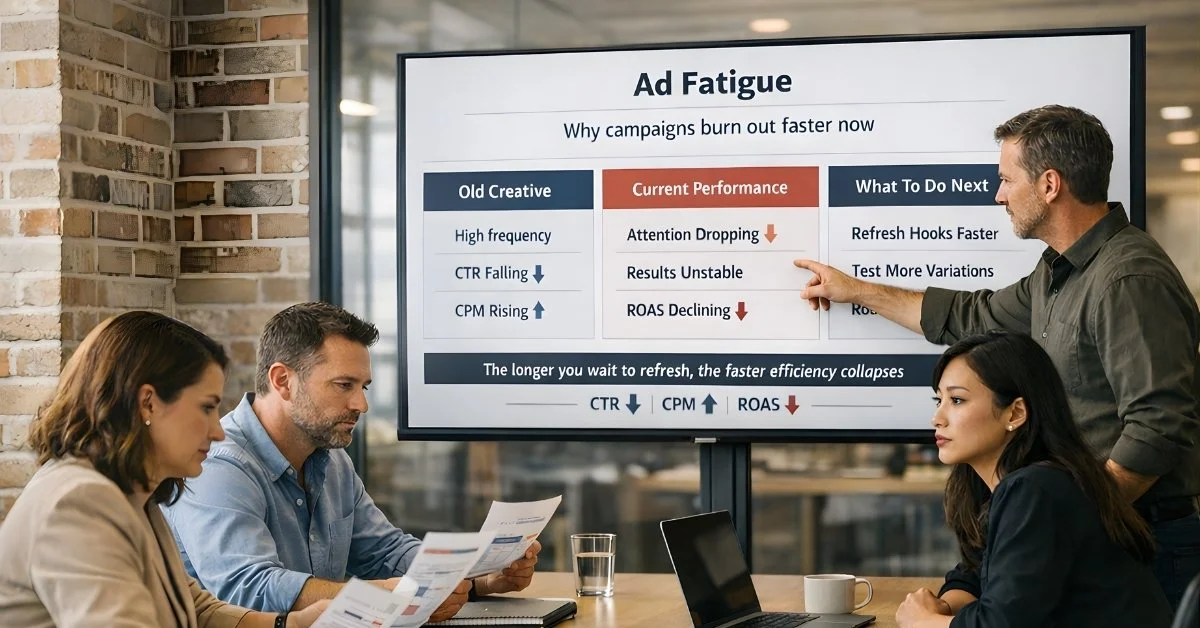
Ad fatigue happens when your audience sees the same creative too many times. Engagement drops. Costs rise. The algorithm starts treating your ad as irrelevant.
But here's what most marketers miss: ad fatigue isn't the same as bad creative.
Even brilliant ads wear out. Think of it like a joke — no matter how good it is, it stops landing once the audience has heard it a dozen times. The creative didn't get worse; the audience just processed it and moved on.
The Three Types of Fatigue
Type
What's Happening
The Fix
Creative Fatigue
Same visuals, hooks, or formats shown repeatedly
Refresh creative elements (hook, visuals, CTA)
Audience Fatigue
Same people oversaturated regardless of creative variety
Expand targeting, rotate audiences, implement frequency caps
Message Fatigue
Same value proposition repeated across all creative
Test new angles, reposition the offer
You can have creative fatigue without audience saturation, and audience fatigue without creative wear-out. Diagnosing which type you're facing determines whether you need new ads, new audiences, or a new message. The most reliable way to confirm the diagnosis is by testing ad performance properly instead of guessing — controlled testing reveals whether the creative, audience, or message is actually causing the drop.
Why Fatigue Hits Faster in 2026
The 2026 advertising environment is fundamentally different from even two years ago:
AI-Driven Delivery Concentrates Spend
AI-Driven Delivery Concentrates Spend
Platforms like Meta now aggressively optimize toward short-term efficiency. When an ad shows early conversion signals, the algorithm floods it with impressions — accelerating fatigue. Your winning creative gets burned out faster precisely because it's winning. This is one of the core reasons smarter ad scaling on Shopify now requires a fatigue-aware system, not just bigger budgets.
Audiences Scroll Faster
Attention windows have compressed. Users process and dismiss ads in fractions of a second. What registered as "fresh" for weeks now feels stale in days.
Creative Volume Has Exploded
Top advertisers now run 50+ active creative variations per ad set, refreshed weekly. If you're still running 3-5 ads and refreshing monthly, you're operating on 2020 timelines in a 2026 environment.
The 2026 Fatigue Timeline
PLATFORM-SPECIFIC FATIGUE RATES════════════════════════════════════════════════════════════════════════════PLATFORM TYPICAL LIFESPAN FATIGUE TRIGGER REFRESH CADENCE─────────────────────────────────────────────────────────────────────────────────────TikTok 3-5days Hook repetition Daily to weeklyMeta(Facebook/IG)1-3weeks Visual + frequency Weekly to bi-weeklyGoogle Display 2-4weeks Banner blindness Bi-weeklyYouTube 2-4weeks Opening 5seconds Bi-weekly to monthlySearch(Google)4-8weeks Headline fatigue Monthly─────────────────────────────────────────────────────────────────────────────────────⚠️ These are MAXIMUM windows. High-frequency campaigns burn out faster.
Smalleraudiences = faster saturation = shorter lifespans.
TikTok:Anything running 7+ days without a hook refresh is likelyin"steep drop."
PLATFORM-SPECIFIC FATIGUE RATES════════════════════════════════════════════════════════════════════════════PLATFORM TYPICAL LIFESPAN FATIGUE TRIGGER REFRESH CADENCE─────────────────────────────────────────────────────────────────────────────────────TikTok 3-5days Hook repetition Daily to weeklyMeta(Facebook/IG)1-3weeks Visual + frequency Weekly to bi-weeklyGoogle Display 2-4weeks Banner blindness Bi-weeklyYouTube 2-4weeks Opening 5seconds Bi-weekly to monthlySearch(Google)4-8weeks Headline fatigue Monthly─────────────────────────────────────────────────────────────────────────────────────⚠️ These are MAXIMUM windows. High-frequency campaigns burn out faster.
Smalleraudiences = faster saturation = shorter lifespans.
TikTok:Anything running 7+ days without a hook refresh is likelyin"steep drop."
PLATFORM-SPECIFIC FATIGUE RATES════════════════════════════════════════════════════════════════════════════PLATFORM TYPICAL LIFESPAN FATIGUE TRIGGER REFRESH CADENCE─────────────────────────────────────────────────────────────────────────────────────TikTok 3-5days Hook repetition Daily to weeklyMeta(Facebook/IG)1-3weeks Visual + frequency Weekly to bi-weeklyGoogle Display 2-4weeks Banner blindness Bi-weeklyYouTube 2-4weeks Opening 5seconds Bi-weekly to monthlySearch(Google)4-8weeks Headline fatigue Monthly─────────────────────────────────────────────────────────────────────────────────────⚠️ These are MAXIMUM windows. High-frequency campaigns burn out faster.
Smalleraudiences = faster saturation = shorter lifespans.
TikTok:Anything running 7+ days without a hook refresh is likelyin"steep drop."
The Early Warning Signs (Before It's Too Late)
Ad fatigue rarely announces itself with a single metric crashing. It shows up as a pattern — a gradual drift that's easy to miss until costs spike.
The Fatigue Decay Curve
THE ANATOMY OF AD FATIGUE════════════════════════════════════════════════════════════════════════════WEEK 1WEEK 2WEEK 3WEEK 4WEEK 5────────────────────────────────────────────────────────────────────────────████████ ██████ ████ ██ █████████ ██████ ████ ██ █████████ ██████ ████ ██████████ ██████ ████████████ ██████PEAK PLATEAU DECLINE STEEP DROP BURNEDPerformance CTR stable CTR drops CPA spikes Algorithmstrong CPA creeping CPA rising Reach stalls suppresses────────────────────────────────────────────────────────────────────────────THE TRAP:Most teams wait until Week 4-5to act.
Bythen,you're reacting under pressure instead of managing proactively.
THE ANATOMY OF AD FATIGUE════════════════════════════════════════════════════════════════════════════WEEK 1WEEK 2WEEK 3WEEK 4WEEK 5────────────────────────────────────────────────────────────────────────────████████ ██████ ████ ██ █████████ ██████ ████ ██ █████████ ██████ ████ ██████████ ██████ ████████████ ██████PEAK PLATEAU DECLINE STEEP DROP BURNEDPerformance CTR stable CTR drops CPA spikes Algorithmstrong CPA creeping CPA rising Reach stalls suppresses────────────────────────────────────────────────────────────────────────────THE TRAP:Most teams wait until Week 4-5to act.
Bythen,you're reacting under pressure instead of managing proactively.
THE ANATOMY OF AD FATIGUE════════════════════════════════════════════════════════════════════════════WEEK 1WEEK 2WEEK 3WEEK 4WEEK 5────────────────────────────────────────────────────────────────────────────████████ ██████ ████ ██ █████████ ██████ ████ ██ █████████ ██████ ████ ██████████ ██████ ████████████ ██████PEAK PLATEAU DECLINE STEEP DROP BURNEDPerformance CTR stable CTR drops CPA spikes Algorithmstrong CPA creeping CPA rising Reach stalls suppresses────────────────────────────────────────────────────────────────────────────THE TRAP:Most teams wait until Week 4-5to act.
Bythen,you're reacting under pressure instead of managing proactively.
Quantitative Warning Signs
Metric
Early Warning
Danger Zone
CTR
10-15% decline week-over-week
25%+ decline from baseline
CPA/CAC
Creeping up 5-10% weekly
20%+ above baseline
Frequency
Approaching 3-4 per user
Above 5 per user
Conversion Rate
Stable CTR but declining CVR
CTR and CVR both falling
Reach vs. Frequency
Frequency rising, reach flat
Frequency climbing, reach declining
CPMr (Cost per 1k Reach)
Rising 10% week-over-week
Spiking 30%+ (algorithm is trapped)
Thumbstop Rate (0-3s)
Below 25%
Below 15% (hook is dead)
The Hidden 2026 Metric: CPMr
While most marketers watch CPM, CPMr (Cost per 1,000 Reach) is the 2026 fatigue metric that reveals what's really happening. If your CPM is stable but your CPMr is spiking, the algorithm is narrowing delivery to a tiny, over-exposed subset of your audience.
This is the clearest sign that your ad has entered the fatigue trap — you're paying the same per impression, but reaching fewer unique people with each dollar spent.
The Hidden Signal: Conversion Efficiency
In 2026, fatigue increasingly shows up through declining conversion efficiency rather than click-through rate alone. Your ads can look healthy (stable CTR) while quietly losing their ability to persuade.
Watch for: CTR holds steady, but conversion rate drops. This means people are still clicking, but the message has lost its power to convince.
Measuring Fatigue: The Creative Health Score
Before you can fix fatigue, you need to measure it. This formula tells you how much performance has degraded:
Current Week CTRCreative Decay % = ───────────────────── × 100Week 1(Peak)CTR
Current Week CTRCreative Decay % = ───────────────────── × 100Week 1(Peak)CTR
Current Week CTRCreative Decay % = ───────────────────── × 100Week 1(Peak)CTR
Example: Your ad launched with 2.4% CTR. Three weeks later, it's at 1.6% CTR. Creative Decay = (1.6 ÷ 2.4) × 100 = 67% → Active decline, refresh immediately.
How to interpret your score:
Creative Decay
Status
Action
90-100%
Healthy
Monitor, no action needed
75-90%
Early fatigue
Prepare refresh, test new hooks
50-75%
Active decline
Implement refresh now
Below 50%
Burned out
Retire and replace
The Fatigue Hierarchy: What Burns Out First
Not all creative elements fatigue at the same rate. Understanding this hierarchy helps you refresh strategically — fixing what's actually tired instead of starting from scratch.
THE CREATIVE FATIGUE HIERARCHY════════════════════════════════════════════════════════════════════════════FATIGUES FASTEST ──────────────────────────────────────────► FATIGUES SLOWEST┌─────────────┐ ┌─────────────┐ ┌─────────────┐ ┌─────────────┐│ │ │ │ │ │ │ ││ HOOK │ │ VISUALS │ │ COPY │ │ CTA ││ │ │ │ │ │ │ ││ First 3│ │ Imagery,│ │ Body text,│ │ "Shop Now"││ seconds │ │ colors,│ │ benefits,│ │ "Learn │
│ Headline │ │ talent │ │ features │ │ More" │
│ │ │ │ │ │ │ │└─────────────┘ └─────────────┘ └─────────────┘ └─────────────┘REFRESH REFRESH REFRESH REFRESHWeekly Bi-weekly Monthly Quarterly════════════════════════════════════════════════════════════════════════════KEY INSIGHT:You don't always need new ads. Sometimes you just need a new hook.
Refreshing the first 3seconds or headline can reset fatigue without losingwhat's working in the rest of the creative.
THE CREATIVE FATIGUE HIERARCHY════════════════════════════════════════════════════════════════════════════FATIGUES FASTEST ──────────────────────────────────────────► FATIGUES SLOWEST┌─────────────┐ ┌─────────────┐ ┌─────────────┐ ┌─────────────┐│ │ │ │ │ │ │ ││ HOOK │ │ VISUALS │ │ COPY │ │ CTA ││ │ │ │ │ │ │ ││ First 3│ │ Imagery,│ │ Body text,│ │ "Shop Now"││ seconds │ │ colors,│ │ benefits,│ │ "Learn │
│ Headline │ │ talent │ │ features │ │ More" │
│ │ │ │ │ │ │ │└─────────────┘ └─────────────┘ └─────────────┘ └─────────────┘REFRESH REFRESH REFRESH REFRESHWeekly Bi-weekly Monthly Quarterly════════════════════════════════════════════════════════════════════════════KEY INSIGHT:You don't always need new ads. Sometimes you just need a new hook.
Refreshing the first 3seconds or headline can reset fatigue without losingwhat's working in the rest of the creative.
THE CREATIVE FATIGUE HIERARCHY════════════════════════════════════════════════════════════════════════════FATIGUES FASTEST ──────────────────────────────────────────► FATIGUES SLOWEST┌─────────────┐ ┌─────────────┐ ┌─────────────┐ ┌─────────────┐│ │ │ │ │ │ │ ││ HOOK │ │ VISUALS │ │ COPY │ │ CTA ││ │ │ │ │ │ │ ││ First 3│ │ Imagery,│ │ Body text,│ │ "Shop Now"││ seconds │ │ colors,│ │ benefits,│ │ "Learn │
│ Headline │ │ talent │ │ features │ │ More" │
│ │ │ │ │ │ │ │└─────────────┘ └─────────────┘ └─────────────┘ └─────────────┘REFRESH REFRESH REFRESH REFRESHWeekly Bi-weekly Monthly Quarterly════════════════════════════════════════════════════════════════════════════KEY INSIGHT:You don't always need new ads. Sometimes you just need a new hook.
Refreshing the first 3seconds or headline can reset fatigue without losingwhat's working in the rest of the creative.
The Similarity Penalty: Why Minor Tweaks Don't Work Anymore
In 2026, ad platforms (especially Meta with its Andromeda retrieval algorithm) now issue explicit "High Similarity" alerts in the dashboard.
What this means: The platform has algorithmically determined your "new" ad is too close to your existing creative. It will suppress the new ad's reach to "protect" the user experience — essentially treating both ads as the same creative for fatigue purposes.
The Andromeda Effect
Meta's Andromeda algorithm now rewards radically different concepts over minor variations. Think of the difference this way:
Old approach: "Casting calls" — same actor, same set, different script
New approach: "Film festivals" — completely different visual archetype, angle, and energy
If you see a "High Similarity" alert:
You must change the Visual Archetype, not just the headline. This means:
Different talent or no talent at all
Different setting, color palette, or visual style
Different opening frame and movement pattern
Different storytelling structure (demo vs. testimonial vs. lifestyle)
Hook tweaks won't cut it anymore. The algorithm sees through cosmetic changes.
The 2026 Anti-Fatigue System
Winning in 2026 isn't about making more ads — it's about building a creative system that assumes every ad will eventually stop working. If you want to understand the broader machinery behind how this system runs day-to-day, here's a related guide on ad operations that explains how ad delivery, attribution, and creative workflows fit together.
The Creative Pipeline Model
THE ANTI-FATIGUE CREATIVE SYSTEM════════════════════════════════════════════════════════════════════════════┌─────────────────────────────────────────────────────────────────────┐│ ││ PIPELINE STAGE 1:TESTING(20% of budget)││ ││ • 5-10newconceptsinrotation ││ • Testing newhooks,angles,formats ││ • Goal:Find tomorrow's winners │
│ │└───────────────────────────────┬─────────────────────────────────────┘│Winners graduate ▼│┌─────────────────────────────────────────────────────────────────────┐│ ││ PIPELINE STAGE 2:SCALING(60% of budget)││ ││ • 3-5proven performers ││ • Active monitoring fordecay signals ││ • Variations being prepared ││ │└───────────────────────────────┬─────────────────────────────────────┘│Fatigue signals ▼│┌─────────────────────────────────────────────────────────────────────┐│ ││ PIPELINE STAGE 3:REFRESH/RETIRE(20% of budget)││ ││ • Fatigued ads getting hook/visual refreshes ││ • Burned-out ads being retired ││ • Learnings documented forfuture concepts ││ │└─────────────────────────────────────────────────────────────────────┘════════════════════════════════════════════════════════════════════════════THE RULE:Never letyourscaling budget depend on a single creative.
Ifone ad is doing all the heavy lifting,you don't have a win — you have a risk.
THE ANTI-FATIGUE CREATIVE SYSTEM════════════════════════════════════════════════════════════════════════════┌─────────────────────────────────────────────────────────────────────┐│ ││ PIPELINE STAGE 1:TESTING(20% of budget)││ ││ • 5-10newconceptsinrotation ││ • Testing newhooks,angles,formats ││ • Goal:Find tomorrow's winners │
│ │└───────────────────────────────┬─────────────────────────────────────┘│Winners graduate ▼│┌─────────────────────────────────────────────────────────────────────┐│ ││ PIPELINE STAGE 2:SCALING(60% of budget)││ ││ • 3-5proven performers ││ • Active monitoring fordecay signals ││ • Variations being prepared ││ │└───────────────────────────────┬─────────────────────────────────────┘│Fatigue signals ▼│┌─────────────────────────────────────────────────────────────────────┐│ ││ PIPELINE STAGE 3:REFRESH/RETIRE(20% of budget)││ ││ • Fatigued ads getting hook/visual refreshes ││ • Burned-out ads being retired ││ • Learnings documented forfuture concepts ││ │└─────────────────────────────────────────────────────────────────────┘════════════════════════════════════════════════════════════════════════════THE RULE:Never letyourscaling budget depend on a single creative.
Ifone ad is doing all the heavy lifting,you don't have a win — you have a risk.
THE ANTI-FATIGUE CREATIVE SYSTEM════════════════════════════════════════════════════════════════════════════┌─────────────────────────────────────────────────────────────────────┐│ ││ PIPELINE STAGE 1:TESTING(20% of budget)││ ││ • 5-10newconceptsinrotation ││ • Testing newhooks,angles,formats ││ • Goal:Find tomorrow's winners │
│ │└───────────────────────────────┬─────────────────────────────────────┘│Winners graduate ▼│┌─────────────────────────────────────────────────────────────────────┐│ ││ PIPELINE STAGE 2:SCALING(60% of budget)││ ││ • 3-5proven performers ││ • Active monitoring fordecay signals ││ • Variations being prepared ││ │└───────────────────────────────┬─────────────────────────────────────┘│Fatigue signals ▼│┌─────────────────────────────────────────────────────────────────────┐│ ││ PIPELINE STAGE 3:REFRESH/RETIRE(20% of budget)││ ││ • Fatigued ads getting hook/visual refreshes ││ • Burned-out ads being retired ││ • Learnings documented forfuture concepts ││ │└─────────────────────────────────────────────────────────────────────┘════════════════════════════════════════════════════════════════════════════THE RULE:Never letyourscaling budget depend on a single creative.
Ifone ad is doing all the heavy lifting,you don't have a win — you have a risk.
The Weekly Refresh Checklist
Review decay metrics for all active creatives
Identify any creative below 75% of peak performance
Queue hook or visual refreshes for declining ads
Launch 2-3 new test concepts from the pipeline
Retire anything below 50% of peak (archive learnings)
Graduate winning tests to scaling budget
The Measurement Blind Spot
Here's what most fatigue guides miss: you can't fix what you can't see.
Ad fatigue creates a measurement problem, not just a creative problem. When the same ad gets shown to the same users repeatedly, you're optimizing based on an increasingly narrow slice of your actual audience.
The Hidden Cost of Fatigue
When your creative fatigues, platforms start showing it to a smaller, more responsive pool — the users most likely to engage. Your metrics might look stable, but you're no longer reaching the broader audience you're paying for.
This creates a feedback loop:
THE FATIGUE FEEDBACK LOOP════════════════════════════════════════════════════════════════════════════┌────────────────┐│ Creative ││ Fatigues │└───────┬────────┘│▼┌────────────────┐│ Algorithm ││ Narrows ││ Delivery │└───────┬────────┘│▼┌────────────────┐│ Same Users ││ See Ads ││ Repeatedly │└───────┬────────┘│▼┌────────────────┐ ┌────────────────────────────────────────────┐│ Conversion │──────►│ You THINK:"Ad is still performing"││ Data Becomes │ │ REALITY:You're optimizing toward a │
│ Skewed │ │ shrinking,over-exposed audience │└───────┬────────┘ └────────────────────────────────────────────┘││(Loop continues)▼┌────────────────┐│ Fatigue ││ Accelerates │└────────────────┘════════════════════════════════════════════════════════════════════════════
THE FATIGUE FEEDBACK LOOP════════════════════════════════════════════════════════════════════════════┌────────────────┐│ Creative ││ Fatigues │└───────┬────────┘│▼┌────────────────┐│ Algorithm ││ Narrows ││ Delivery │└───────┬────────┘│▼┌────────────────┐│ Same Users ││ See Ads ││ Repeatedly │└───────┬────────┘│▼┌────────────────┐ ┌────────────────────────────────────────────┐│ Conversion │──────►│ You THINK:"Ad is still performing"││ Data Becomes │ │ REALITY:You're optimizing toward a │
│ Skewed │ │ shrinking,over-exposed audience │└───────┬────────┘ └────────────────────────────────────────────┘││(Loop continues)▼┌────────────────┐│ Fatigue ││ Accelerates │└────────────────┘════════════════════════════════════════════════════════════════════════════
THE FATIGUE FEEDBACK LOOP════════════════════════════════════════════════════════════════════════════┌────────────────┐│ Creative ││ Fatigues │└───────┬────────┘│▼┌────────────────┐│ Algorithm ││ Narrows ││ Delivery │└───────┬────────┘│▼┌────────────────┐│ Same Users ││ See Ads ││ Repeatedly │└───────┬────────┘│▼┌────────────────┐ ┌────────────────────────────────────────────┐│ Conversion │──────►│ You THINK:"Ad is still performing"││ Data Becomes │ │ REALITY:You're optimizing toward a │
│ Skewed │ │ shrinking,over-exposed audience │└───────┬────────┘ └────────────────────────────────────────────┘││(Loop continues)▼┌────────────────┐│ Fatigue ││ Accelerates │└────────────────┘════════════════════════════════════════════════════════════════════════════
The Signal Quality Connection
This is why accurate conversion tracking matters more during fatigue periods. When your creative is tiring, you need complete data to understand:
Which audience segments are actually converting (vs. just clicking)
Whether new users are still responding (or just retargeted users)
How conversion efficiency is changing independent of CTR
If your tracking is only capturing 60-70% of conversions, you're making refresh decisions based on incomplete data — potentially retiring ads that are still working or scaling ads that have already peaked.
The "Trackable Subset" Trap
Here's what most fatigue guides miss entirely: signal loss creates "ghost fatigue."
When you lose 30% of your conversion signal due to browser blocking, ad blockers, or cookie expiration, the AI doesn't just lose data — it loses breadth. It begins to over-target the "trackable" 70% of your audience because that's where it sees "guaranteed" conversions.
This causes that specific group to fatigue at 2x the normal rate while the other 30% of your market never sees your ad at all.
The result: You think your creative is burned out when actually your trackable audience is burned out. The solution isn't always new creative — sometimes it's better tracking that lets the algorithm find fresh audiences it couldn't see before.
Quick Wins: Implementing Today
You don't need to rebuild your entire creative operation overnight. Start with these high-impact actions:
This Week:
Calculate Creative Decay % for your top 5 ads
Set up frequency caps (3-5 impressions per user per week)
Identify any creative running unchanged for 3+ weeks
This Month:
Build a simple creative pipeline with test → scale → refresh stages
Create 3-5 hook variations for your best-performing ads
Set up automated alerts for CTR drops >15% week-over-week
This Quarter:
Establish platform-specific refresh cadences
Document winning creative elements for faster iteration
Ad fatigue in 2026 isn't optional — it's inevitable. Every ad you run will eventually stop working. The brands that win are the ones that plan for this reality instead of reacting to it.
The solution isn't making more ads. It's building systems that:
Detect fatigue before it damages performance
Refresh strategically (hook-first, not full rebuild)
Rotate both creative and audiences systematically
Measure accurately so you know what's actually working
Your best-performing ad today is tomorrow's burned-out creative. The only question is whether you'll be ready with what comes next.
Get Started
Start Tracking Every Sale Today
Join 1,389+ e-commerce stores. Set up in 5 minutes, see results in days.