Cookieless Tracking in 2026: 5 Methods Ranked by Accuracy
Panto Source
Your Meta Ads dashboard shows 100 purchases. Your Shopify backend shows 140. That 40% gap isn't a bug — it's signal loss.
Ad blockers, Safari's ITP, iOS privacy settings, and cookie restrictions are blocking your tracking pixels before they fire. The result: incomplete data, broken attribution, and ad platforms optimizing on partial information.
Cookieless tracking doesn't mean tracking without any cookies. It means reducing dependence on third-party cookies that browsers block, and building a measurement system that works regardless of what users' browsers allow.
The 2026 Reality: What's Actually Blocked
Before diving into solutions, understand what you're solving for:
BROWSER RESTRICTIONS IN 2026:WHAT GETS BLOCKED═══════════════════════════════════════════════════════════════════════THIRD-PARTY COOKIES(Cross-site tracking):├── Safari ITP ──────────────── BLOCKED by default├── Firefox ETP ─────────────── BLOCKED by default├── Chrome ──────────────────── User choice prompt(most allow)├── Edge ────────────────────── Tracking prevention enabled└── Result: ~35% of browsers block third-party cookies entirelyFIRST-PARTY COOKIES(Your owndomain):├── Safari ITP ──────────────── 7-day cap(JavaScript-set)├── Firefox ETP ─────────────── Generally allowed├── Chrome ──────────────────── Generally allowed└── Result:Still usable,but lifespan variesCLIENT-SIDE TRACKING PIXELS:├── Ad blockers ─────────────── 30%+ of users block├── iOS App Tracking ────────── 75-85% opt out├── Browser privacy modes ───── Blocks most scripts└── Result:20-40% of conversions never reach ad platforms
BROWSER RESTRICTIONS IN 2026:WHAT GETS BLOCKED═══════════════════════════════════════════════════════════════════════THIRD-PARTY COOKIES(Cross-site tracking):├── Safari ITP ──────────────── BLOCKED by default├── Firefox ETP ─────────────── BLOCKED by default├── Chrome ──────────────────── User choice prompt(most allow)├── Edge ────────────────────── Tracking prevention enabled└── Result: ~35% of browsers block third-party cookies entirelyFIRST-PARTY COOKIES(Your owndomain):├── Safari ITP ──────────────── 7-day cap(JavaScript-set)├── Firefox ETP ─────────────── Generally allowed├── Chrome ──────────────────── Generally allowed└── Result:Still usable,but lifespan variesCLIENT-SIDE TRACKING PIXELS:├── Ad blockers ─────────────── 30%+ of users block├── iOS App Tracking ────────── 75-85% opt out├── Browser privacy modes ───── Blocks most scripts└── Result:20-40% of conversions never reach ad platforms
BROWSER RESTRICTIONS IN 2026:WHAT GETS BLOCKED═══════════════════════════════════════════════════════════════════════THIRD-PARTY COOKIES(Cross-site tracking):├── Safari ITP ──────────────── BLOCKED by default├── Firefox ETP ─────────────── BLOCKED by default├── Chrome ──────────────────── User choice prompt(most allow)├── Edge ────────────────────── Tracking prevention enabled└── Result: ~35% of browsers block third-party cookies entirelyFIRST-PARTY COOKIES(Your owndomain):├── Safari ITP ──────────────── 7-day cap(JavaScript-set)├── Firefox ETP ─────────────── Generally allowed├── Chrome ──────────────────── Generally allowed└── Result:Still usable,but lifespan variesCLIENT-SIDE TRACKING PIXELS:├── Ad blockers ─────────────── 30%+ of users block├── iOS App Tracking ────────── 75-85% opt out├── Browser privacy modes ───── Blocks most scripts└── Result:20-40% of conversions never reach ad platforms
The goal isn't to eliminate cookies entirely. First-party cookies (set on your own domain) remain essential and largely functional. The goal is to stop depending on third-party cookies and client-side pixels that browsers increasingly block.
The 5 Cookieless Methods (Ranked)
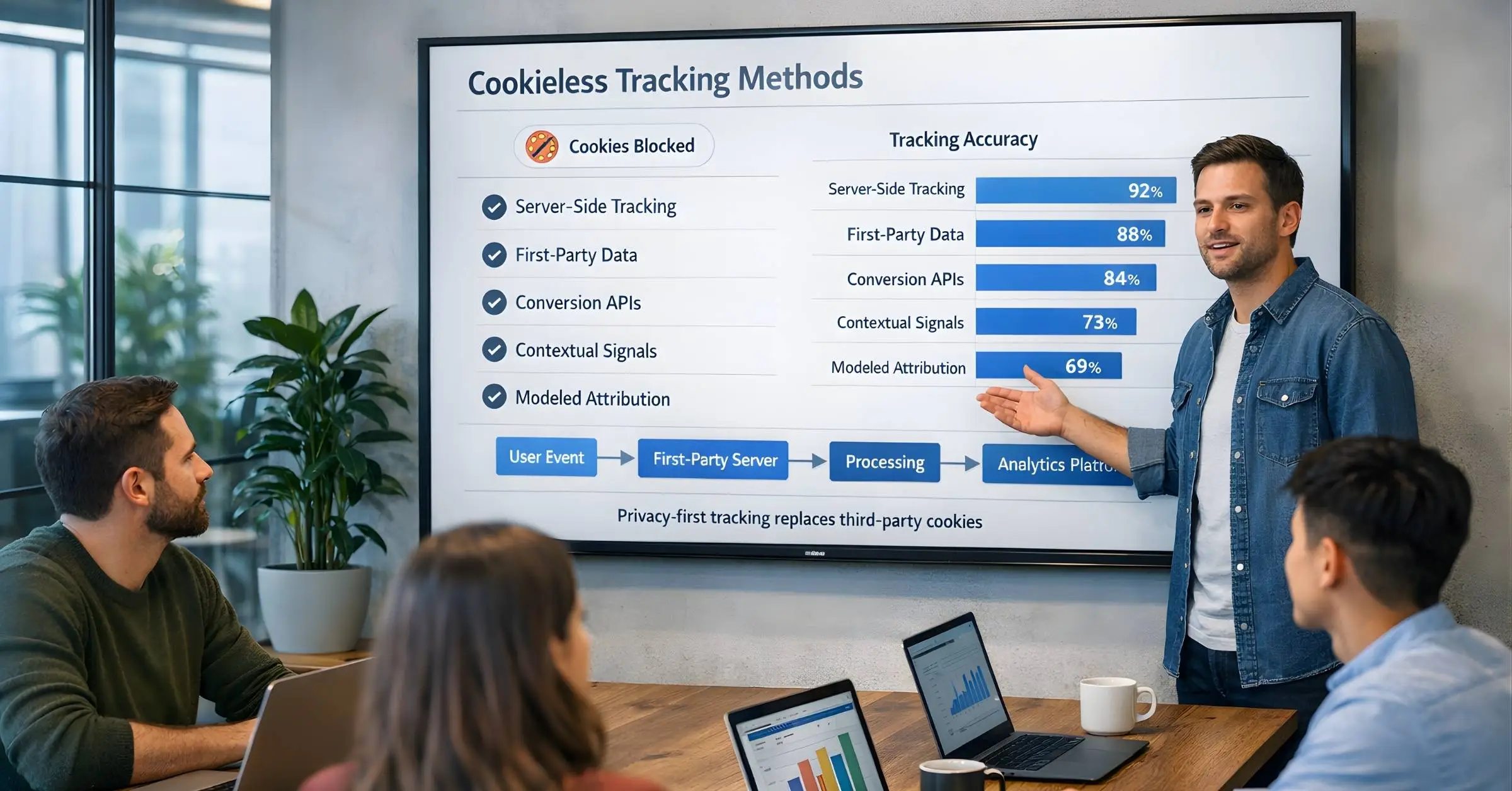
Not all cookieless solutions are equal. Some form your foundation; others fill specific gaps. For the broader strategic framing of tracking without relying on cookies — covering why third-party cookies died and what the post-cookie measurement model looks like — that pillar provides the foundational context. Here's how the solutions rank by impact and reliability
THE COOKIELESS TRACKING STACK:PRIORITIZED═══════════════════════════════════════════════════════════════════════
LAYER 1:FOUNDATION(Build First)┌─────────────────────────────────────────────────────────────────────┐│ SERVER-SIDE TRACKING ││ Accuracy:90-95% │ Effort:Medium │ Impact:Critical ││ Captures events via your server,bypasses browser restrictions │└─────────────────────────────────────────────────────────────────────┘LAYER 2:IDENTITY(Build Second)┌─────────────────────────────────────────────────────────────────────┐│ FIRST-PARTY DATA & IDs ││ Accuracy:High forknown users │ Effort:Medium │ Impact:High ││ Uses your own customer data fortargeting and attribution │└─────────────────────────────────────────────────────────────────────┘
LAYER 3:GAP FILLERS(Addas Needed)┌─────────────────────────────────────────────────────────────────────┐│ MODELED ATTRIBUTION │ CONTEXTUAL TARGETING ││ Fills gaps withstatistical │ Targets content,not users ││ estimation │ Privacy-safe by design ││ Accuracy: ~70-80% │ Accuracy:N/A(targeting method)│└─────────────────────────────────────────────────────────────────────┘
LAYER 4:ECOSYSTEM(Optional)┌─────────────────────────────────────────────────────────────────────┐│ UNIVERSAL IDs & PRIVACY SANDBOX ││ Cross-platform identity without third-party cookies ││ Adoption still limited;useful ifpartners support them │└─────────────────────────────────────────────────────────────────────┘
THE COOKIELESS TRACKING STACK:PRIORITIZED═══════════════════════════════════════════════════════════════════════
LAYER 1:FOUNDATION(Build First)┌─────────────────────────────────────────────────────────────────────┐│ SERVER-SIDE TRACKING ││ Accuracy:90-95% │ Effort:Medium │ Impact:Critical ││ Captures events via your server,bypasses browser restrictions │└─────────────────────────────────────────────────────────────────────┘LAYER 2:IDENTITY(Build Second)┌─────────────────────────────────────────────────────────────────────┐│ FIRST-PARTY DATA & IDs ││ Accuracy:High forknown users │ Effort:Medium │ Impact:High ││ Uses your own customer data fortargeting and attribution │└─────────────────────────────────────────────────────────────────────┘
LAYER 3:GAP FILLERS(Addas Needed)┌─────────────────────────────────────────────────────────────────────┐│ MODELED ATTRIBUTION │ CONTEXTUAL TARGETING ││ Fills gaps withstatistical │ Targets content,not users ││ estimation │ Privacy-safe by design ││ Accuracy: ~70-80% │ Accuracy:N/A(targeting method)│└─────────────────────────────────────────────────────────────────────┘
LAYER 4:ECOSYSTEM(Optional)┌─────────────────────────────────────────────────────────────────────┐│ UNIVERSAL IDs & PRIVACY SANDBOX ││ Cross-platform identity without third-party cookies ││ Adoption still limited;useful ifpartners support them │└─────────────────────────────────────────────────────────────────────┘
THE COOKIELESS TRACKING STACK:PRIORITIZED═══════════════════════════════════════════════════════════════════════
LAYER 1:FOUNDATION(Build First)┌─────────────────────────────────────────────────────────────────────┐│ SERVER-SIDE TRACKING ││ Accuracy:90-95% │ Effort:Medium │ Impact:Critical ││ Captures events via your server,bypasses browser restrictions │└─────────────────────────────────────────────────────────────────────┘LAYER 2:IDENTITY(Build Second)┌─────────────────────────────────────────────────────────────────────┐│ FIRST-PARTY DATA & IDs ││ Accuracy:High forknown users │ Effort:Medium │ Impact:High ││ Uses your own customer data fortargeting and attribution │└─────────────────────────────────────────────────────────────────────┘
LAYER 3:GAP FILLERS(Addas Needed)┌─────────────────────────────────────────────────────────────────────┐│ MODELED ATTRIBUTION │ CONTEXTUAL TARGETING ││ Fills gaps withstatistical │ Targets content,not users ││ estimation │ Privacy-safe by design ││ Accuracy: ~70-80% │ Accuracy:N/A(targeting method)│└─────────────────────────────────────────────────────────────────────┘
LAYER 4:ECOSYSTEM(Optional)┌─────────────────────────────────────────────────────────────────────┐│ UNIVERSAL IDs & PRIVACY SANDBOX ││ Cross-platform identity without third-party cookies ││ Adoption still limited;useful ifpartners support them │└─────────────────────────────────────────────────────────────────────┘
Method 1: Server-Side Tracking (Foundation)
What it does: Routes conversion data through your server before sending to ad platforms, bypassing browser restrictions.
Why it matters: This is the single most impactful change you can make. Server-side tracking recovers 15-30% of conversions lost to ad blockers, ITP, and privacy settings.
How It Works
CLIENT-SIDE(What breaks):User Purchase → Browser Pixel → ❌ BLOCKED → Meta/Google never see itSERVER-SIDE(What works):User Purchase → Your Server → API → ✅ DELIVERED → Meta/Google receive it
CLIENT-SIDE(What breaks):User Purchase → Browser Pixel → ❌ BLOCKED → Meta/Google never see itSERVER-SIDE(What works):User Purchase → Your Server → API → ✅ DELIVERED → Meta/Google receive it
CLIENT-SIDE(What breaks):User Purchase → Browser Pixel → ❌ BLOCKED → Meta/Google never see itSERVER-SIDE(What works):User Purchase → Your Server → API → ✅ DELIVERED → Meta/Google receive it
Instead of relying on a browser pixel to fire, your server sends conversion data directly to platform APIs (Meta CAPI, Google Enhanced Conversions, TikTok Events API). Browsers can't block server-to-server communication. To walk through the mechanism end-to-end — from event capture on your server through hashed identifier matching and platform delivery — that walkthrough shows how the replacement infrastructure operates
What You Still Need
Server-side tracking doesn't mean zero cookies. You'll typically use:
First-party cookies on your domain to maintain session continuity
Click IDs (fbclid, gclid) stored server-side for attribution
Consent management to comply with GDPR/CCPA
Implementation Options
Option
Best For
Setup Time
Managed platforms (Elevar, Littledata)
Shopify/WooCommerce stores
Hours
Self-hosted sGTM (Google Cloud)
Teams with dev resources
Days
Hybrid solutions (Stape)
Balance of control and ease
Hours-Days
The Attribution Window Problem (And How Server-Side Fixes It)
The biggest pain point for marketers: Safari's ITP caps JavaScript-set cookies at 7 days. If a customer clicks your ad on Monday and buys on day 10, the attribution is lost. For the device-specific breakdown of how iOS amplifies this — including ATT opt-out rates and Link Tracking Protection — see a related guide on iOS ad tracking.
THE LIFESPAN GAP:WHY ATTRIBUTION BREAKS═══════════════════════════════════════════════════════════════════════CLIENT-SIDE COOKIES(JavaScript-set):┌────────────────────────────────────────────────────────────────────┐│ DAY 1DAY 7DAY 14DAY 21DAY 28││ │ │ │ │ │ ││ ▼ ▼ ▼ ▼ ▼ ││[==COOKIE ALIVE==]❌ EXPIRED ││ │ ││ Safari ITP:7-day cap │ Customer returns on Day 10││ forJS-set cookies │ → Cookie gone → Attribution LOST │└────────────────────────────────────────────────────────────────────┘SERVER-SIDE COOKIES(HTTP-set via your server):┌────────────────────────────────────────────────────────────────────┐│ DAY 1DAY 7DAY 14DAY 21DAY 28 ...400+ ││ │ │ │ │ │ │ ││ ▼ ▼ ▼ ▼ ▼ ▼ ││[===============COOKIE ALIVE(FIRST-PARTY)================]││ │ ││ Server sets cookie │ Customer returns on Day 10││as first-party │ → Cookie valid → Attribution SAVED │└────────────────────────────────────────────────────────────────────┘REAL-WORLD IMPACT:├── Average consideration cycle(ecommerce):3-14days├── Average consideration cycle(B2B):30-90days├── Without server-side:Attribution lost after 7days(Safari)└── With server-side:Attribution maintained for400+ days
THE LIFESPAN GAP:WHY ATTRIBUTION BREAKS═══════════════════════════════════════════════════════════════════════CLIENT-SIDE COOKIES(JavaScript-set):┌────────────────────────────────────────────────────────────────────┐│ DAY 1DAY 7DAY 14DAY 21DAY 28││ │ │ │ │ │ ││ ▼ ▼ ▼ ▼ ▼ ││[==COOKIE ALIVE==]❌ EXPIRED ││ │ ││ Safari ITP:7-day cap │ Customer returns on Day 10││ forJS-set cookies │ → Cookie gone → Attribution LOST │└────────────────────────────────────────────────────────────────────┘SERVER-SIDE COOKIES(HTTP-set via your server):┌────────────────────────────────────────────────────────────────────┐│ DAY 1DAY 7DAY 14DAY 21DAY 28 ...400+ ││ │ │ │ │ │ │ ││ ▼ ▼ ▼ ▼ ▼ ▼ ││[===============COOKIE ALIVE(FIRST-PARTY)================]││ │ ││ Server sets cookie │ Customer returns on Day 10││as first-party │ → Cookie valid → Attribution SAVED │└────────────────────────────────────────────────────────────────────┘REAL-WORLD IMPACT:├── Average consideration cycle(ecommerce):3-14days├── Average consideration cycle(B2B):30-90days├── Without server-side:Attribution lost after 7days(Safari)└── With server-side:Attribution maintained for400+ days
THE LIFESPAN GAP:WHY ATTRIBUTION BREAKS═══════════════════════════════════════════════════════════════════════CLIENT-SIDE COOKIES(JavaScript-set):┌────────────────────────────────────────────────────────────────────┐│ DAY 1DAY 7DAY 14DAY 21DAY 28││ │ │ │ │ │ ││ ▼ ▼ ▼ ▼ ▼ ││[==COOKIE ALIVE==]❌ EXPIRED ││ │ ││ Safari ITP:7-day cap │ Customer returns on Day 10││ forJS-set cookies │ → Cookie gone → Attribution LOST │└────────────────────────────────────────────────────────────────────┘SERVER-SIDE COOKIES(HTTP-set via your server):┌────────────────────────────────────────────────────────────────────┐│ DAY 1DAY 7DAY 14DAY 21DAY 28 ...400+ ││ │ │ │ │ │ │ ││ ▼ ▼ ▼ ▼ ▼ ▼ ││[===============COOKIE ALIVE(FIRST-PARTY)================]││ │ ││ Server sets cookie │ Customer returns on Day 10││as first-party │ → Cookie valid → Attribution SAVED │└────────────────────────────────────────────────────────────────────┘REAL-WORLD IMPACT:├── Average consideration cycle(ecommerce):3-14days├── Average consideration cycle(B2B):30-90days├── Without server-side:Attribution lost after 7days(Safari)└── With server-side:Attribution maintained for400+ days
Bottom line: If you do nothing else, implement server-side tracking. It's the foundation everything else builds on.
Method 2: First-Party Data & IDs (Identity)
What it does: Uses data you collect directly from customers (email, phone, purchase history) to identify and attribute conversions.
Why it matters: First-party data is immune to browser restrictions. When a customer logs in or provides their email, you have a durable identifier that works across sessions and devices.
The First-Party Data Advantage
THIRD-PARTY COOKIE(Fragile):┌──────────────────────────────────────────────────────────────────┐│ Set by:External domain(facebook.com,google.com)││ Lifespan:Blocked or 24hours ││ Cross-device:No ││ Browser blocks:Yes │└──────────────────────────────────────────────────────────────────┘FIRST-PARTY DATA(Durable):┌──────────────────────────────────────────────────────────────────┐│ Set by:You(via email signup,purchase,login)││ Lifespan:As longas you maintain the relationship ││ Cross-device:Yes(same emailacrossdevices)││ Browser blocks:No │└──────────────────────────────────────────────────────────────────┘
THIRD-PARTY COOKIE(Fragile):┌──────────────────────────────────────────────────────────────────┐│ Set by:External domain(facebook.com,google.com)││ Lifespan:Blocked or 24hours ││ Cross-device:No ││ Browser blocks:Yes │└──────────────────────────────────────────────────────────────────┘FIRST-PARTY DATA(Durable):┌──────────────────────────────────────────────────────────────────┐│ Set by:You(via email signup,purchase,login)││ Lifespan:As longas you maintain the relationship ││ Cross-device:Yes(same emailacrossdevices)││ Browser blocks:No │└──────────────────────────────────────────────────────────────────┘
THIRD-PARTY COOKIE(Fragile):┌──────────────────────────────────────────────────────────────────┐│ Set by:External domain(facebook.com,google.com)││ Lifespan:Blocked or 24hours ││ Cross-device:No ││ Browser blocks:Yes │└──────────────────────────────────────────────────────────────────┘FIRST-PARTY DATA(Durable):┌──────────────────────────────────────────────────────────────────┐│ Set by:You(via email signup,purchase,login)││ Lifespan:As longas you maintain the relationship ││ Cross-device:Yes(same emailacrossdevices)││ Browser blocks:No │└──────────────────────────────────────────────────────────────────┘
Data Ownership: The Real Difference
The fundamental shift isn't just technical — it's about who controls the data:
DATA OWNERSHIP:THIRD-PARTY vs. FIRST-PARTY═══════════════════════════════════════════════════════════════════════THIRD-PARTY DATA(You're Renting):
┌─────────────────────────────────────────────────────────────────────┐│ ││ YOUR AD PLATFORM'S AD │
│ WEBSITE → COOKIE → PLATFORM ││ ││ ┌───────┐ ┌───────────┐ ┌─────────┐ ││ │ User │ │ Platform │ │ Meta/ │ ││ │ visits│ → │ sets │ → │ Google │ ││ │ │ │ cookie │ │ owns │ ││ └───────┘ └───────────┘ │ data │ ││ ▲ └─────────┘ ││ │ ││ BROWSER CAN BLOCK ││ PLATFORM CAN CHANGE RULES ││ YOU HAVE NO CONTROL ││ │└─────────────────────────────────────────────────────────────────────┘FIRST-PARTY DATA(You OwnIt):┌─────────────────────────────────────────────────────────────────────┐│ ││ YOUR YOUR YOUR CHOICE ││ WEBSITE → DATABASE → WHICH PLATFORMS ││ ││ ┌───────┐ ┌───────────┐ ┌─────────┐ ││ │ User │ │ Your CRM/ │ │ Meta │ ││ │ signs │ → │ CDP/Email │ → │ Google │ ││ │ up │ │ System │ │ TikTok │ ││ └───────┘ └───────────┘ │ etc. │││ ▲ └─────────┘ ││ │ ││ YOU CONTROL THE DATA ││ YOU DECIDE WHO GETS IT ││ YOU CAN SWITCH PLATFORMS ││ │└─────────────────────────────────────────────────────────────────────┘
DATA OWNERSHIP:THIRD-PARTY vs. FIRST-PARTY═══════════════════════════════════════════════════════════════════════THIRD-PARTY DATA(You're Renting):
┌─────────────────────────────────────────────────────────────────────┐│ ││ YOUR AD PLATFORM'S AD │
│ WEBSITE → COOKIE → PLATFORM ││ ││ ┌───────┐ ┌───────────┐ ┌─────────┐ ││ │ User │ │ Platform │ │ Meta/ │ ││ │ visits│ → │ sets │ → │ Google │ ││ │ │ │ cookie │ │ owns │ ││ └───────┘ └───────────┘ │ data │ ││ ▲ └─────────┘ ││ │ ││ BROWSER CAN BLOCK ││ PLATFORM CAN CHANGE RULES ││ YOU HAVE NO CONTROL ││ │└─────────────────────────────────────────────────────────────────────┘FIRST-PARTY DATA(You OwnIt):┌─────────────────────────────────────────────────────────────────────┐│ ││ YOUR YOUR YOUR CHOICE ││ WEBSITE → DATABASE → WHICH PLATFORMS ││ ││ ┌───────┐ ┌───────────┐ ┌─────────┐ ││ │ User │ │ Your CRM/ │ │ Meta │ ││ │ signs │ → │ CDP/Email │ → │ Google │ ││ │ up │ │ System │ │ TikTok │ ││ └───────┘ └───────────┘ │ etc. │││ ▲ └─────────┘ ││ │ ││ YOU CONTROL THE DATA ││ YOU DECIDE WHO GETS IT ││ YOU CAN SWITCH PLATFORMS ││ │└─────────────────────────────────────────────────────────────────────┘
DATA OWNERSHIP:THIRD-PARTY vs. FIRST-PARTY═══════════════════════════════════════════════════════════════════════THIRD-PARTY DATA(You're Renting):
┌─────────────────────────────────────────────────────────────────────┐│ ││ YOUR AD PLATFORM'S AD │
│ WEBSITE → COOKIE → PLATFORM ││ ││ ┌───────┐ ┌───────────┐ ┌─────────┐ ││ │ User │ │ Platform │ │ Meta/ │ ││ │ visits│ → │ sets │ → │ Google │ ││ │ │ │ cookie │ │ owns │ ││ └───────┘ └───────────┘ │ data │ ││ ▲ └─────────┘ ││ │ ││ BROWSER CAN BLOCK ││ PLATFORM CAN CHANGE RULES ││ YOU HAVE NO CONTROL ││ │└─────────────────────────────────────────────────────────────────────┘FIRST-PARTY DATA(You OwnIt):┌─────────────────────────────────────────────────────────────────────┐│ ││ YOUR YOUR YOUR CHOICE ││ WEBSITE → DATABASE → WHICH PLATFORMS ││ ││ ┌───────┐ ┌───────────┐ ┌─────────┐ ││ │ User │ │ Your CRM/ │ │ Meta │ ││ │ signs │ → │ CDP/Email │ → │ Google │ ││ │ up │ │ System │ │ TikTok │ ││ └───────┘ └───────────┘ │ etc. │││ ▲ └─────────┘ ││ │ ││ YOU CONTROL THE DATA ││ YOU DECIDE WHO GETS IT ││ YOU CAN SWITCH PLATFORMS ││ │└─────────────────────────────────────────────────────────────────────┘
Loyalty programs — Incentivize data sharing with rewards
Progressive profiling — Collect data over multiple interactions
Purchase history — Transaction data you already have
How to Activate It
First-party data becomes powerful when you connect it to ad platforms:
Enhanced Conversions — Send hashed email/phone to Google Ads for better matching
Meta Advanced Matching — Pass hashed customer data to improve attribution
Customer Match audiences — Upload customer lists for targeting and exclusion
CDP integration — Unify data across tools with platforms like Segment or Klaviyo
Bottom line: Every interaction where a customer shares data is an opportunity to reduce cookie dependence.
Method 3: Modeled Attribution (Gap Filler)
What it does: Uses statistical models to estimate conversions when direct tracking isn't possible.
Why it matters: Even with server-side tracking and first-party data, you won't capture 100% of conversions. Modeled attribution fills the remaining gaps.
How Platforms Model Conversions
When Google or Meta can't directly attribute a conversion, they use:
Historical patterns — How similar users converted in the past
Aggregated signals — Regional, device, and timing data
Machine learning — Probabilistic matching based on behavior
You'll see this in your dashboards as "modeled conversions" or conversion estimates.
The Accuracy Trade-off
Data Type
Accuracy
When It's Used
Observed (direct tracking)
~95%+
User consented, tracking worked
Modeled (estimated)
~70-80%
Consent denied, tracking blocked
Google Consent Mode v3: The Key to Better Modeling
In 2026, Google Consent Mode v3 is the primary mechanism that enables modeled conversions. When a user denies cookie consent, Consent Mode sends anonymous "pings" to Google that allow conversion modeling without personal data.
CONSENT MODE v3:HOW MODELING GETS ITS DATA═══════════════════════════════════════════════════════════════════════USER GRANTS CONSENT:┌─────────────────────────────────────────────────────────────────────┐│ Full tracking enabled → Observed conversion data ││ 100% attribution accuracy │└─────────────────────────────────────────────────────────────────────┘USER DENIES CONSENT(withConsent Modev3):┌─────────────────────────────────────────────────────────────────────┐│ Cookieless "pings"sent to Google:││ • Timestamp ││ • Page URL ││ • User agent ││ • Consent state ││ • NO personal identifiers ││ ││ Google uses pings + historical patterns → Modeled conversions ││ ~70% of conversions recovered via modeling │└─────────────────────────────────────────────────────────────────────┘WITHOUT CONSENT MODE:┌─────────────────────────────────────────────────────────────────────┐│ No pings,no signals → No modeling possible ││ Conversions from non-consenting users = LOST │└─────────────────────────────────────────────────────────────────────┘
CONSENT MODE v3:HOW MODELING GETS ITS DATA═══════════════════════════════════════════════════════════════════════USER GRANTS CONSENT:┌─────────────────────────────────────────────────────────────────────┐│ Full tracking enabled → Observed conversion data ││ 100% attribution accuracy │└─────────────────────────────────────────────────────────────────────┘USER DENIES CONSENT(withConsent Modev3):┌─────────────────────────────────────────────────────────────────────┐│ Cookieless "pings"sent to Google:││ • Timestamp ││ • Page URL ││ • User agent ││ • Consent state ││ • NO personal identifiers ││ ││ Google uses pings + historical patterns → Modeled conversions ││ ~70% of conversions recovered via modeling │└─────────────────────────────────────────────────────────────────────┘WITHOUT CONSENT MODE:┌─────────────────────────────────────────────────────────────────────┐│ No pings,no signals → No modeling possible ││ Conversions from non-consenting users = LOST │└─────────────────────────────────────────────────────────────────────┘
CONSENT MODE v3:HOW MODELING GETS ITS DATA═══════════════════════════════════════════════════════════════════════USER GRANTS CONSENT:┌─────────────────────────────────────────────────────────────────────┐│ Full tracking enabled → Observed conversion data ││ 100% attribution accuracy │└─────────────────────────────────────────────────────────────────────┘USER DENIES CONSENT(withConsent Modev3):┌─────────────────────────────────────────────────────────────────────┐│ Cookieless "pings"sent to Google:││ • Timestamp ││ • Page URL ││ • User agent ││ • Consent state ││ • NO personal identifiers ││ ││ Google uses pings + historical patterns → Modeled conversions ││ ~70% of conversions recovered via modeling │└─────────────────────────────────────────────────────────────────────┘WITHOUT CONSENT MODE:┌─────────────────────────────────────────────────────────────────────┐│ No pings,no signals → No modeling possible ││ Conversions from non-consenting users = LOST │└─────────────────────────────────────────────────────────────────────┘
⚠️ 2026 Requirement
Google Consent Mode v3 is now required for EEA/UK traffic and increasingly applied globally. Without it, your Google Ads conversions may show as "Inactive" and Smart Bidding performance degrades significantly.
How to Improve Model Accuracy
The better your observed data, the better the models work:
Implement server-side tracking — Gives platforms more real data to learn from
Enable Enhanced Conversions — More matching signals = better models
Deploy Consent Mode v3 — Enables modeling even when cookies are declined
Maintain high consent rates — More observed data = more accurate models
Bottom line: Modeled attribution is a complement, not a replacement. Feed platforms real data first; they'll model the rest more accurately.
Method 4: Contextual Targeting (Gap Filler)
What it does: Targets ads based on page content rather than user identity.
Why it matters: Contextual targeting is completely cookie-free. It doesn't track users at all — it matches ads to relevant content.
Contextual vs. Behavioral Targeting
Approach
How It Works
Privacy Impact
Behavioral
Tracks user across sites, builds profile
Requires cookies/identifiers
Contextual
Analyzes page content, shows relevant ads
No user tracking needed
Example: Showing running shoe ads on a fitness article (contextual) vs. showing running shoe ads to someone who visited a shoe site last week (behavioral).
When to Use Contextual
Upper-funnel campaigns where awareness matters more than precise targeting
Markets with low consent rates where behavioral data is limited
Brand safety priorities where content alignment matters
Tools for Contextual Targeting
Google Topics API — Now the standard for contextual-plus-interest targeting in Chrome's Privacy Sandbox (see Method 5)
Seedtag, GumGum — AI-powered contextual ad platforms
Publisher direct deals — Contextual targeting through premium placements
💡 2026 Update: Topics API Has Become the Standard
Google's Topics API has emerged as the primary method for combining contextual relevance with interest signals — without tracking individual users. It assigns users to broad interest categories based on recent browsing, then allows advertisers to target those categories. This bridges the gap between pure contextual (page content only) and behavioral (user tracking) approaches.
Bottom line: Contextual won't replace behavioral targeting entirely, but it's a privacy-safe complement that works without any cookies.
What it does: Provides standardized, privacy-compliant identifiers and targeting methods that work across platforms without third-party cookies.
Why it matters in theory: Universal IDs could restore cross-site measurement and targeting in a privacy-safe way.
Why adoption varies: These solutions require ecosystem-wide participation. If your partners, publishers, and platforms don't support the same ID framework, the value is limited.
How Google Topics API Works (Privacy Sandbox)
Topics API has become the standard approach for interest-based targeting without individual tracking. Here's how it works:
GOOGLE TOPICS API:INTEREST TARGETING WITHOUT TRACKING═══════════════════════════════════════════════════════════════════════STEP 1:BROWSER LEARNS INTERESTS(Locally)┌─────────────────────────────────────────────────────────────────────┐│ User browses sites about:││ • Running gear ││ • Travel destinations ││ • Home cooking ││ ││ Chrome assigns TOPICS(not tracking):││ → "Fitness & Health"││ → "Travel"││ → "Food & Drink"││ ││ ⚠️ Data stays ON DEVICE — not sent to Google or advertisers │└─────────────────────────────────────────────────────────────────────┘STEP 2:ADVERTISER REQUESTS TOPICS┌─────────────────────────────────────────────────────────────────────┐│ Advertiser site calls Topics API ││ │ ││ ▼ ││ Browser returns:"Fitness & Health"(oneof user's recent topics) │
│ ││ ⚠️ Only 3topics shared per week(rotating)││ ⚠️ No unique identifier — just category membership │└─────────────────────────────────────────────────────────────────────┘
STEP 3:AD TARGETING(Without Tracking)┌─────────────────────────────────────────────────────────────────────┐│ Advertiser:"Show my running shoe ad to 'Fitness & Health' users"││ ││ WHAT'S DIFFERENT FROM COOKIES: │
│ ├── No cross-site tracking ││ ├── No unique user ID ││ ├── No persistent profile ││ ├── User can see and deletetheir topics ││ └── Categories are broad(~350 topics total)│└─────────────────────────────────────────────────────────────────────┘
GOOGLE TOPICS API:INTEREST TARGETING WITHOUT TRACKING═══════════════════════════════════════════════════════════════════════STEP 1:BROWSER LEARNS INTERESTS(Locally)┌─────────────────────────────────────────────────────────────────────┐│ User browses sites about:││ • Running gear ││ • Travel destinations ││ • Home cooking ││ ││ Chrome assigns TOPICS(not tracking):││ → "Fitness & Health"││ → "Travel"││ → "Food & Drink"││ ││ ⚠️ Data stays ON DEVICE — not sent to Google or advertisers │└─────────────────────────────────────────────────────────────────────┘STEP 2:ADVERTISER REQUESTS TOPICS┌─────────────────────────────────────────────────────────────────────┐│ Advertiser site calls Topics API ││ │ ││ ▼ ││ Browser returns:"Fitness & Health"(oneof user's recent topics) │
│ ││ ⚠️ Only 3topics shared per week(rotating)││ ⚠️ No unique identifier — just category membership │└─────────────────────────────────────────────────────────────────────┘
STEP 3:AD TARGETING(Without Tracking)┌─────────────────────────────────────────────────────────────────────┐│ Advertiser:"Show my running shoe ad to 'Fitness & Health' users"││ ││ WHAT'S DIFFERENT FROM COOKIES: │
│ ├── No cross-site tracking ││ ├── No unique user ID ││ ├── No persistent profile ││ ├── User can see and deletetheir topics ││ └── Categories are broad(~350 topics total)│└─────────────────────────────────────────────────────────────────────┘
GOOGLE TOPICS API:INTEREST TARGETING WITHOUT TRACKING═══════════════════════════════════════════════════════════════════════STEP 1:BROWSER LEARNS INTERESTS(Locally)┌─────────────────────────────────────────────────────────────────────┐│ User browses sites about:││ • Running gear ││ • Travel destinations ││ • Home cooking ││ ││ Chrome assigns TOPICS(not tracking):││ → "Fitness & Health"││ → "Travel"││ → "Food & Drink"││ ││ ⚠️ Data stays ON DEVICE — not sent to Google or advertisers │└─────────────────────────────────────────────────────────────────────┘STEP 2:ADVERTISER REQUESTS TOPICS┌─────────────────────────────────────────────────────────────────────┐│ Advertiser site calls Topics API ││ │ ││ ▼ ││ Browser returns:"Fitness & Health"(oneof user's recent topics) │
│ ││ ⚠️ Only 3topics shared per week(rotating)││ ⚠️ No unique identifier — just category membership │└─────────────────────────────────────────────────────────────────────┘
STEP 3:AD TARGETING(Without Tracking)┌─────────────────────────────────────────────────────────────────────┐│ Advertiser:"Show my running shoe ad to 'Fitness & Health' users"││ ││ WHAT'S DIFFERENT FROM COOKIES: │
│ ├── No cross-site tracking ││ ├── No unique user ID ││ ├── No persistent profile ││ ├── User can see and deletetheir topics ││ └── Categories are broad(~350 topics total)│└─────────────────────────────────────────────────────────────────────┘
Key Initiatives
Solution
How It Works
2026 Status
Google Topics API
Browser assigns interest categories locally
Standard in Chrome; limited DSP adoption
Unified ID 2.0
Hashed email-based ID for open web
Growing adoption in ad tech
LiveRamp ATS
Identity resolution across platforms
Enterprise adoption
Should You Invest Here?
Yes, if: Your media buying relies heavily on programmatic and your partners support these frameworks
Wait, if: You're focused on direct response and your current stack (server-side + first-party) covers your needs
Monitor: Topics API adoption by your DSPs/SSPs through 2026
Bottom line: Topics API is now the standard for privacy-safe interest targeting, but direct adoption for most brands is through their ad platforms. Universal IDs remain ecosystem-dependent. Prioritize server-side tracking and first-party data first. The next disruption layer beyond browser policy is already here — see a related guide on AI browser tracking for how Arc, Comet, and AI-assistant sessions further fragment attribution.
Building Your Cookieless Stack: Where to Start
The right approach depends on your business:
DECISION FRAMEWORK:WHERE TO START═══════════════════════════════════════════════════════════════════════ECOMMERCE(Shopify,WooCommerce,etc.):1.Server-side tracking(CAPI,Enhanced Conversions)2.First-party data via email capture and accounts3.Enhanced Conversions forcross-device attribution→ Skip:Universal IDs(not critical fordirect response)B2B / LEAD GEN:1.Server-side tracking forform submissions2.CRM integration foroffline conversion import3.First-party data via gated content and demos→ Skip:Contextual targeting(too broadforB2B)PUBLISHERS / MEDIA:1.First-party data via subscriptions and logins2.Contextual targeting forad inventory3.Universal IDs ifyour ad partners support them→ Skip:Server-side tracking(less relevantforcontentsites)ENTERPRISE / MULTI-CHANNEL:1.CDP forunified first-party data2.Server-side tracking across all properties3.Modeled attribution forcross-channel measurement→ Consider:Universal IDs forprogrammatic scale
DECISION FRAMEWORK:WHERE TO START═══════════════════════════════════════════════════════════════════════ECOMMERCE(Shopify,WooCommerce,etc.):1.Server-side tracking(CAPI,Enhanced Conversions)2.First-party data via email capture and accounts3.Enhanced Conversions forcross-device attribution→ Skip:Universal IDs(not critical fordirect response)B2B / LEAD GEN:1.Server-side tracking forform submissions2.CRM integration foroffline conversion import3.First-party data via gated content and demos→ Skip:Contextual targeting(too broadforB2B)PUBLISHERS / MEDIA:1.First-party data via subscriptions and logins2.Contextual targeting forad inventory3.Universal IDs ifyour ad partners support them→ Skip:Server-side tracking(less relevantforcontentsites)ENTERPRISE / MULTI-CHANNEL:1.CDP forunified first-party data2.Server-side tracking across all properties3.Modeled attribution forcross-channel measurement→ Consider:Universal IDs forprogrammatic scale
DECISION FRAMEWORK:WHERE TO START═══════════════════════════════════════════════════════════════════════ECOMMERCE(Shopify,WooCommerce,etc.):1.Server-side tracking(CAPI,Enhanced Conversions)2.First-party data via email capture and accounts3.Enhanced Conversions forcross-device attribution→ Skip:Universal IDs(not critical fordirect response)B2B / LEAD GEN:1.Server-side tracking forform submissions2.CRM integration foroffline conversion import3.First-party data via gated content and demos→ Skip:Contextual targeting(too broadforB2B)PUBLISHERS / MEDIA:1.First-party data via subscriptions and logins2.Contextual targeting forad inventory3.Universal IDs ifyour ad partners support them→ Skip:Server-side tracking(less relevantforcontentsites)ENTERPRISE / MULTI-CHANNEL:1.CDP forunified first-party data2.Server-side tracking across all properties3.Modeled attribution forcross-channel measurement→ Consider:Universal IDs forprogrammatic scale
The Bottom Line
Cookieless tracking isn't about eliminating cookies. It's about building a measurement system that works regardless of what browsers allow or users consent to.
The priority order:
Server-side tracking — Recovers 15-30% of lost conversions immediately
First-party data — Builds durable identity that browsers can't block
Modeled attribution — Fills gaps where direct tracking can't reach
Contextual targeting — Privacy-safe alternative for upper-funnel campaigns
Universal IDs — Ecosystem play; invest when partners support it
The brands winning in 2026 aren't waiting for a perfect solution. They're layering these methods to build measurement systems that improve over time — while their competitors watch conversion data disappear.
Get Started
Start Tracking Every Sale Today
Join 1,389+ e-commerce stores. Set up in 5 minutes, see results in days.