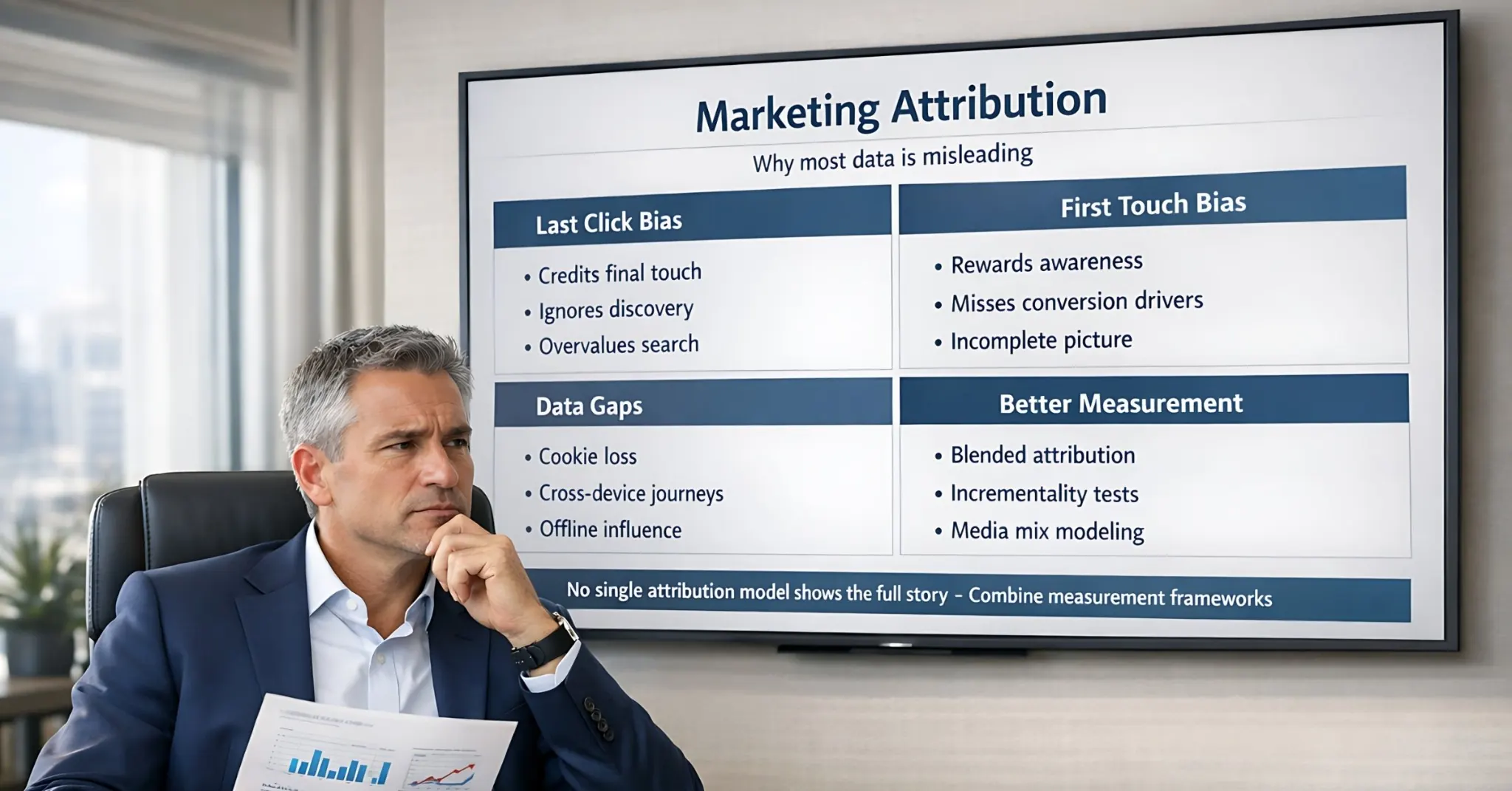
Your attribution dashboard says Meta drove 500 sales last month. Google claims 400. TikTok reports 150.
But your store only made 600 sales total.
Welcome to attribution in 2026 — where every platform takes credit for everything, tracking gaps hide 40-60% of customer journeys, and the numbers you're using to make budget decisions might be completely wrong.
This isn't a technology problem you can fix with better pixels. It's a structural reality of marketing in a privacy-first world. Understanding how attribution actually works — and where it breaks — is now essential for any brand spending money on ads.
What Attribution Actually Does (And Doesn't Do)
Attribution assigns credit for conversions to marketing touchpoints. When someone buys from your store, attribution answers the question: which ad, email, or channel gets credit for that sale?
The problem is that "credit" and "cause" are different things.
THE ATTRIBUTION REALITY
════════════════════════════════════════════════════════════════════════════

    WHAT ATTRIBUTION MEASURES          WHAT YOU ACTUALLY NEED TO KNOW
    ─────────────────────────          ────────────────────────────────

    "Which touchpoint was               "Which touchpoint actually
     recorded before the sale?"          caused the sale?"

    This is CORRELATION                 This is CAUSATION
    (who touched the ball last)         (who scored the goal)

════════════════════════════════════════════════════════════════════════════
THE ATTRIBUTION REALITY
════════════════════════════════════════════════════════════════════════════
WHAT ATTRIBUTION MEASURES WHAT YOU ACTUALLY NEED TO KNOW
───────────────────────── ────────────────────────────────
"Which touchpoint was "Which touchpoint actually
recorded before the sale?" caused the sale?"
This is CORRELATION This is CAUSATION
(who touched the ball last) (who scored the goal)
════════════════════════════════════════════════════════════════════════════THE ATTRIBUTION REALITY
════════════════════════════════════════════════════════════════════════════
WHAT ATTRIBUTION MEASURES WHAT YOU ACTUALLY NEED TO KNOW
───────────────────────── ────────────────────────────────
"Which touchpoint was "Which touchpoint actually
recorded before the sale?" caused the sale?"
This is CORRELATION This is CAUSATION
(who touched the ball last) (who scored the goal)
════════════════════════════════════════════════════════════════════════════Attribution tells you which channels were involved in conversions you can track. It doesn't tell you whether those channels caused the conversions — or whether the customers would have bought anyway.
This distinction matters because in 2026, the gap between what's tracked and what's real has never been wider.
The Signal Gap: Why Your Data Is Incomplete
Privacy changes have fundamentally broken the identity resolution infrastructure that attribution depends on. In 2026, attribution software survives by using first-party hashed data to connect a click on a mobile device to a purchase on a desktop — a process called ID stitching. But even the best identity resolution can't recover what was never captured.
THE SIGNAL LOSS FUNNEL
════════════════════════════════════════════════════════════════════════════

    ALL CUSTOMER JOURNEYS
    ┌─────────────────────────────────────────────────────────────────────┐
    │█████████████████████████████████████████████████████████████████████│
    └─────────────────────────────────────────────────────────────────────┘
                                    100%
                                     │
                                     ▼
    ┌────────────────────────────────────────────────────────────────┐
    │  iOS OPT-OUTS (85%+ of iPhone users)                           │
    │  ─────────────────────────────────────────────────────────────│
    │  App Tracking Transparency blocks cross-app identity          │
    └────────────────────────────────────────────────────────────────┘
                              ▼  -15 to 20%
    ┌──────────────────────────────────────────────────────────┐
    │  SAFARI & FIREFOX (Cookie blocking by default)           │
    │  ────────────────────────────────────────────────────────│
    │  Third-party cookies blocked, 7-day first-party limit    │
    └──────────────────────────────────────────────────────────┘
                           ▼  -8 to 12%
    ┌────────────────────────────────────────────────────┐
    │  AD BLOCKERS (~30% of web traffic)                 │
    │  ─────────────────────────────────────────────────│
    │  Pixels never fire, clicks never recorded          │
    └────────────────────────────────────────────────────┘
                        ▼  -5 to 8%
    ┌──────────────────────────────────────────────┐
    │  CROSS-DEVICE JOURNEYS (Unmatched)           │
    │  ────────────────────────────────────────────│
    │  Phone → Laptop → Purchase (no login)        │
    └──────────────────────────────────────────────┘
                     ▼  -3 to 5%
    ┌────────────────────────────────────────┐
    │  WHAT YOUR TRACKING ACTUALLY SEES      │
    │████████████████████████████████████████│
    └────────────────────────────────────────┘
                    40-60%

════════════════════════════════════════════════════════════════════════════

Each layer strips away visibility.
By the time data reaches your dashboard, you're seeing a sample — not reality.
THE SIGNAL LOSS FUNNEL
════════════════════════════════════════════════════════════════════════════
ALL CUSTOMER JOURNEYS
┌─────────────────────────────────────────────────────────────────────┐
│█████████████████████████████████████████████████████████████████████│
└─────────────────────────────────────────────────────────────────────┘
100%
│
▼
┌────────────────────────────────────────────────────────────────┐
│ iOS OPT-OUTS (85%+ of iPhone users) │
│ ─────────────────────────────────────────────────────────────│
│ App Tracking Transparency blocks cross-app identity │
└────────────────────────────────────────────────────────────────┘
▼ -15 to 20%
┌──────────────────────────────────────────────────────────┐
│ SAFARI & FIREFOX (Cookie blocking by default) │
│ ────────────────────────────────────────────────────────│
│ Third-party cookies blocked, 7-day first-party limit │
└──────────────────────────────────────────────────────────┘
▼ -8 to 12%
┌────────────────────────────────────────────────────┐
│ AD BLOCKERS (~30% of web traffic) │
│ ─────────────────────────────────────────────────│
│ Pixels never fire, clicks never recorded │
└────────────────────────────────────────────────────┘
▼ -5 to 8%
┌──────────────────────────────────────────────┐
│ CROSS-DEVICE JOURNEYS (Unmatched) │
│ ────────────────────────────────────────────│
│ Phone → Laptop → Purchase (no login) │
└──────────────────────────────────────────────┘
▼ -3 to 5%
┌────────────────────────────────────────┐
│ WHAT YOUR TRACKING ACTUALLY SEES │
│████████████████████████████████████████│
└────────────────────────────────────────┘
40-60%
════════════════════════════════════════════════════════════════════════════
Each layer strips away visibility.
By the time data reaches your dashboard, you're seeing a sample — not reality.THE SIGNAL LOSS FUNNEL
════════════════════════════════════════════════════════════════════════════
ALL CUSTOMER JOURNEYS
┌─────────────────────────────────────────────────────────────────────┐
│█████████████████████████████████████████████████████████████████████│
└─────────────────────────────────────────────────────────────────────┘
100%
│
▼
┌────────────────────────────────────────────────────────────────┐
│ iOS OPT-OUTS (85%+ of iPhone users) │
│ ─────────────────────────────────────────────────────────────│
│ App Tracking Transparency blocks cross-app identity │
└────────────────────────────────────────────────────────────────┘
▼ -15 to 20%
┌──────────────────────────────────────────────────────────┐
│ SAFARI & FIREFOX (Cookie blocking by default) │
│ ────────────────────────────────────────────────────────│
│ Third-party cookies blocked, 7-day first-party limit │
└──────────────────────────────────────────────────────────┘
▼ -8 to 12%
┌────────────────────────────────────────────────────┐
│ AD BLOCKERS (~30% of web traffic) │
│ ─────────────────────────────────────────────────│
│ Pixels never fire, clicks never recorded │
└────────────────────────────────────────────────────┘
▼ -5 to 8%
┌──────────────────────────────────────────────┐
│ CROSS-DEVICE JOURNEYS (Unmatched) │
│ ────────────────────────────────────────────│
│ Phone → Laptop → Purchase (no login) │
└──────────────────────────────────────────────┘
▼ -3 to 5%
┌────────────────────────────────────────┐
│ WHAT YOUR TRACKING ACTUALLY SEES │
│████████████████████████████████████████│
└────────────────────────────────────────┘
40-60%
════════════════════════════════════════════════════════════════════════════
Each layer strips away visibility.
By the time data reaches your dashboard, you're seeing a sample — not reality.When 40-60% of customer journeys are invisible to your tracking, attribution becomes directional at best. It can show you relative patterns, but absolute numbers should be treated with skepticism.
The Five Attribution Models (And When Each Makes Sense)
Despite its limitations, attribution still provides useful signals — if you choose the right model for your situation.For the deeper view of attribution methodology — including how each model assigns credit and which fits which business — see that guide before drilling further.
Last-Click Attribution
How it works: 100% of credit goes to the final touchpoint before conversion.
Best for: Short purchase cycles, impulse purchases, bottom-of-funnel optimization.
The problem: Completely ignores everything that happened before the final click. A customer might see your TikTok ad, visit your site three times, receive two emails, and then click a Google ad to purchase. Last-click gives Google all the credit.
First-Click Attribution
How it works: 100% of credit goes to the first touchpoint that introduced the customer to your brand.
Best for: Measuring awareness channels, understanding top-of-funnel performance.
The problem: Ignores everything that converted the customer. Great for knowing where customers come from, useless for knowing what closed the sale.
Linear Attribution
How it works: Credit is split evenly across all touchpoints in the journey.
Best for: Longer purchase cycles with multiple meaningful touchpoints.
The problem: Treats all touchpoints as equally important. The ad that created awareness gets the same credit as the email that closed the sale.
Time-Decay Attribution
How it works: Touchpoints closer to conversion receive more credit than earlier ones.
Best for: Longer sales cycles where recent interactions matter most.
The problem: Systematically undervalues awareness and consideration touchpoints.
Position-Based (U-Shaped) Attribution
How it works: First and last touchpoints each get 40% of credit; remaining 20% is split among middle touchpoints.
Best for: Businesses that value both awareness and conversion equally.
The problem: Arbitrary weighting that may not reflect your actual customer journey.
Data-Driven Attribution (DDA)
How it works: Machine learning compares the paths of users who convert against those who don't, assigning fractional credit based on which touchpoints actually moved the needle.
Best for: Accounts with enough conversion volume for the algorithm to learn patterns.
The reality: DDA is now the default model in Google and Meta. It's the most "sophisticated" approach, but it's a black box — you have to trust the platform's math. And remember: the platform has incentives to make itself look good.For the deeper side-by-side breakdown of how attribution models connects here — and how each behaves under privacy-era data loss — see that guide.
ATTRIBUTION MODEL DECISION FRAMEWORK
════════════════════════════════════════════════════════════════════════════

    YOUR SITUATION                          RECOMMENDED MODEL
    ──────────────                          ─────────────────

    Short purchase cycle (<
ATTRIBUTION MODEL DECISION FRAMEWORK
════════════════════════════════════════════════════════════════════════════

    YOUR SITUATION                          RECOMMENDED MODEL
    ──────────────                          ─────────────────

    Short purchase cycle (<
ATTRIBUTION MODEL DECISION FRAMEWORK
════════════════════════════════════════════════════════════════════════════

    YOUR SITUATION                          RECOMMENDED MODEL
    ──────────────                          ─────────────────

    Short purchase cycle (<
The Platform Over-Reporting Problem
Here's a dirty secret of digital advertising: every platform has incentives to over-report its own effectiveness.
When Meta says it drove 500 conversions and Google says it drove 400, both might be telling their version of the truth — because they're both taking credit for the same customers.
THE ATTRIBUTION WATERFALL: HOW ONE SALE BECOMES THREE
════════════════════════════════════════════════════════════════════════════

    ACTUAL SALE VALUE: $100

    ┌─────────────────────────────────────────────────────────────────────┐
    │                         META CLAIMS                                 │
    │  "View-through conversion — user saw our ad within 1 day"          │
    │                                                                     │
    │                         $100 CREDITED                               │
    └─────────────────────────────────────────────────────────────────────┘
                                    +
    ┌─────────────────────────────────────────────────────────────────────┐
    │                        GOOGLE CLAIMS                                │
    │  "Click conversion — user clicked our ad within 7 days"            │
    │                                                                     │
    │                         $100 CREDITED                               │
    └─────────────────────────────────────────────────────────────────────┘
                                    +
    ┌─────────────────────────────────────────────────────────────────────┐
    │                        KLAVIYO CLAIMS                               │
    │  "Email conversion — user clicked email within 5 days"             │
    │                                                                     │
    │                         $100 CREDITED                               │
    └─────────────────────────────────────────────────────────────────────┘
                                    =
    ════════════════════════════════════════════════════════════════════════
                    TOTAL PLATFORM-REPORTED REVENUE: $300
                    ACTUAL REVENUE: $100
    ════════════════════════════════════════════════════════════════════════
THE ATTRIBUTION WATERFALL: HOW ONE SALE BECOMES THREE
════════════════════════════════════════════════════════════════════════════
ACTUAL SALE VALUE: $100
┌─────────────────────────────────────────────────────────────────────┐
│ META CLAIMS │
│ "View-through conversion — user saw our ad within 1 day" │
│ │
│ $100 CREDITED │
└─────────────────────────────────────────────────────────────────────┘
+
┌─────────────────────────────────────────────────────────────────────┐
│ GOOGLE CLAIMS │
│ "Click conversion — user clicked our ad within 7 days" │
│ │
│ $100 CREDITED │
└─────────────────────────────────────────────────────────────────────┘
+
┌─────────────────────────────────────────────────────────────────────┐
│ KLAVIYO CLAIMS │
│ "Email conversion — user clicked email within 5 days" │
│ │
│ $100 CREDITED │
└─────────────────────────────────────────────────────────────────────┘
=
════════════════════════════════════════════════════════════════════════
TOTAL PLATFORM-REPORTED REVENUE: $300
ACTUAL REVENUE: $100
════════════════════════════════════════════════════════════════════════THE ATTRIBUTION WATERFALL: HOW ONE SALE BECOMES THREE
════════════════════════════════════════════════════════════════════════════
ACTUAL SALE VALUE: $100
┌─────────────────────────────────────────────────────────────────────┐
│ META CLAIMS │
│ "View-through conversion — user saw our ad within 1 day" │
│ │
│ $100 CREDITED │
└─────────────────────────────────────────────────────────────────────┘
+
┌─────────────────────────────────────────────────────────────────────┐
│ GOOGLE CLAIMS │
│ "Click conversion — user clicked our ad within 7 days" │
│ │
│ $100 CREDITED │
└─────────────────────────────────────────────────────────────────────┘
+
┌─────────────────────────────────────────────────────────────────────┐
│ KLAVIYO CLAIMS │
│ "Email conversion — user clicked email within 5 days" │
│ │
│ $100 CREDITED │
└─────────────────────────────────────────────────────────────────────┘
=
════════════════════════════════════════════════════════════════════════
TOTAL PLATFORM-REPORTED REVENUE: $300
ACTUAL REVENUE: $100
════════════════════════════════════════════════════════════════════════Why this happens:
View-through conversions: If someone sees your Meta ad but doesn't click, then later buys after clicking a Google ad, Meta claims the sale (they viewed) and Google claims the sale (they clicked).
Different attribution windows: Meta might use a 7-day click window while Google uses 30-day. The same conversion appears in both reports at different times.
Cross-device matching: Each platform uses its own identity resolution to connect users across devices — often matching the same conversion to different touchpoints.
The result: Add up all your platform-reported conversions and you'll often exceed your actual sales by 30-80%.
THE DOUBLE-COUNTING PROBLEM
════════════════════════════════════════════════════════════════════════════

    ACTUAL CUSTOMER JOURNEY:

    Day 1: Sees Meta ad (doesn't click) ─────────────────────┐
    Day 3: Searches brand on Google, clicks ad ──────────────┤
    Day 5: Opens email, clicks through ──────────────────────┤
    Day 7: Returns directly, makes purchase ─────────────────┘
                                                              │
                                                              ▼
                                                         1 SALE

    WHAT EACH PLATFORM REPORTS:

    Meta:    "1 view-through conversion"     ───► Claims the sale
    Google:  "1 click conversion"            ───► Claims the sale
    Klaviyo: "1 email-attributed conversion" ───► Claims the sale
                                                  ─────────────────
                                                  3 REPORTED SALES

════════════════════════════════════════════════════════════════════════════

This is why your dashboards don't add up to your actual revenue.
THE DOUBLE-COUNTING PROBLEM
════════════════════════════════════════════════════════════════════════════
ACTUAL CUSTOMER JOURNEY:
Day 1: Sees Meta ad (doesn't click) ─────────────────────┐
Day 3: Searches brand on Google, clicks ad ──────────────┤
Day 5: Opens email, clicks through ──────────────────────┤
Day 7: Returns directly, makes purchase ─────────────────┘
│
▼
1 SALE
WHAT EACH PLATFORM REPORTS:
Meta: "1 view-through conversion" ───► Claims the sale
Google: "1 click conversion" ───► Claims the sale
Klaviyo: "1 email-attributed conversion" ───► Claims the sale
─────────────────
3 REPORTED SALES
════════════════════════════════════════════════════════════════════════════
This is why your dashboards don't add up to your actual revenue.THE DOUBLE-COUNTING PROBLEM
════════════════════════════════════════════════════════════════════════════
ACTUAL CUSTOMER JOURNEY:
Day 1: Sees Meta ad (doesn't click) ─────────────────────┐
Day 3: Searches brand on Google, clicks ad ──────────────┤
Day 5: Opens email, clicks through ──────────────────────┤
Day 7: Returns directly, makes purchase ─────────────────┘
│
▼
1 SALE
WHAT EACH PLATFORM REPORTS:
Meta: "1 view-through conversion" ───► Claims the sale
Google: "1 click conversion" ───► Claims the sale
Klaviyo: "1 email-attributed conversion" ───► Claims the sale
─────────────────
3 REPORTED SALES
════════════════════════════════════════════════════════════════════════════
This is why your dashboards don't add up to your actual revenue.How to Actually Use Attribution in 2026
Given these limitations, here's how to extract real value from attribution data:
1. Use Attribution for Relative Comparisons, Not Absolute Numbers
Don't ask "Did Meta drive $50,000 in revenue?" Ask "Is Meta driving more or less revenue than last month?" Trends within the same measurement system are more reliable than absolute values.
The same attribution model, applied consistently over time, reveals patterns even when the absolute numbers are off. If Meta-attributed revenue drops 20% while spend stays flat, something changed — even if the exact dollar amounts aren't perfect.
2. Compare Platform Data to Backend Truth
Match your attributed conversions to actual Shopify/WooCommerce sales. If Meta reports 500 conversions but your store only shows 350 from Meta traffic, you know the gap. Track this ratio over time.
This "truth ratio" becomes a useful calibration tool. If Meta typically reports 40% more conversions than you actually see from Meta traffic, you can mentally discount their numbers accordingly.
3. Fix Your Tracking Foundation
Before worrying about attribution models, make sure you're capturing as much data as possible:
Server-side tracking: Browser-based pixels miss conversions from ad blockers, iOS restrictions, and cookie blocking. Server-to-server tracking captures what pixels can't.
To see how accurate measurement is handled end-to-end — server-side capture, identity stitching, and CAPI delivery as a connected workflow — that walkthrough makes the foundation concrete.
First-party data: Build email lists, encourage account creation, and collect data directly from customers. First-party relationships survive privacy restrictions.
Consistent UTM parameters: Tag every campaign with source, medium, and campaign parameters. This creates a clean data foundation for attribution to work with.
4. Supplement with Post-Purchase Surveys
Ask customers "How did you first hear about us?" This captures touchpoints that tracking misses — podcast ads, word of mouth, TikTok videos where they didn't click. Survey data plus attribution data gives a fuller picture.
The magic happens in the gap between Click Data and Mindshare Data:
CLICK DATA VS. MINDSHARE DATA
════════════════════════════════════════════════════════════════════════════

    ACTUAL CUSTOMER JOURNEY:

    ┌──────────────┐    ┌──────────────┐    ┌──────────────┐
    │   TIKTOK     │───►│   PODCAST    │───►│   GOOGLE     │───► PURCHASE
    │  (Awareness) │    │(Consideration)│    │   SEARCH     │
    │   No click   │    │   No click   │    │   Clicked!   │
    └──────────────┘    └──────────────┘    └──────────────┘

    WHAT ATTRIBUTION SAYS:        "100% Google Search"

    WHAT THE SURVEY SAYS:         "I heard about you on a podcast"

    THE INSIGHT:
    Your Google Search ads aren't creating demand.
    They're capturing demand created by the podcast.

════════════════════════════════════════════════════════════════════════════
CLICK DATA VS. MINDSHARE DATA
════════════════════════════════════════════════════════════════════════════
ACTUAL CUSTOMER JOURNEY:
┌──────────────┐ ┌──────────────┐ ┌──────────────┐
│ TIKTOK │───►│ PODCAST │───►│ GOOGLE │───► PURCHASE
│ (Awareness) │ │(Consideration)│ │ SEARCH │
│ No click │ │ No click │ │ Clicked! │
└──────────────┘ └──────────────┘ └──────────────┘
WHAT ATTRIBUTION SAYS: "100% Google Search"
WHAT THE SURVEY SAYS: "I heard about you on a podcast"
THE INSIGHT:
Your Google Search ads aren't creating demand.
They're capturing demand created by the podcast.
════════════════════════════════════════════════════════════════════════════CLICK DATA VS. MINDSHARE DATA
════════════════════════════════════════════════════════════════════════════
ACTUAL CUSTOMER JOURNEY:
┌──────────────┐ ┌──────────────┐ ┌──────────────┐
│ TIKTOK │───►│ PODCAST │───►│ GOOGLE │───► PURCHASE
│ (Awareness) │ │(Consideration)│ │ SEARCH │
│ No click │ │ No click │ │ Clicked! │
└──────────────┘ └──────────────┘ └──────────────┘
WHAT ATTRIBUTION SAYS: "100% Google Search"
WHAT THE SURVEY SAYS: "I heard about you on a podcast"
THE INSIGHT:
Your Google Search ads aren't creating demand.
They're capturing demand created by the podcast.
════════════════════════════════════════════════════════════════════════════You can even calculate how much platforms are over-claiming with a simple calibration ratio:
ATTRIBUTION CALIBRATION RATIO
════════════════════════════════════════════════════════════════════════════

                          Platform Reported Conversions
    Calibration Ratio  =  ─────────────────────────────────
                          Survey-Attributed Conversions


    Example:
    ────────
    Google reports:     400 conversions
    Survey credits:     250 to Google

                         400
    Calibration Ratio = ───── = 1.6x
                         250

    INTERPRETATION: Google is claiming 60% more credit than customers give it.
                    Use this ratio to mentally discount platform reports.

════════════════════════════════════════════════════════════════════════════
ATTRIBUTION CALIBRATION RATIO
════════════════════════════════════════════════════════════════════════════
Platform Reported Conversions
Calibration Ratio = ─────────────────────────────────
Survey-Attributed Conversions
Example:
────────
Google reports: 400 conversions
Survey credits: 250 to Google
400
Calibration Ratio = ───── = 1.6x
250
INTERPRETATION: Google is claiming 60% more credit than customers give it.
Use this ratio to mentally discount platform reports.
════════════════════════════════════════════════════════════════════════════ATTRIBUTION CALIBRATION RATIO
════════════════════════════════════════════════════════════════════════════
Platform Reported Conversions
Calibration Ratio = ─────────────────────────────────
Survey-Attributed Conversions
Example:
────────
Google reports: 400 conversions
Survey credits: 250 to Google
400
Calibration Ratio = ───── = 1.6x
250
INTERPRETATION: Google is claiming 60% more credit than customers give it.
Use this ratio to mentally discount platform reports.
════════════════════════════════════════════════════════════════════════════5. Validate with Incrementality Testing
Attribution tells you who touched the customer. Incrementality testing tells you whether those touches actually mattered. Use geo-lift tests or conversion lift studies to validate whether your highest-attributed channels are actually driving incremental sales.
If a channel looks great in attribution but shows low incrementality, you're paying for conversions that would have happened anyway.
6. Accept "Directional Accuracy"
Perfect attribution is impossible in 2026. The goal is directional accuracy — understanding which channels and campaigns are driving results, even if the exact numbers are estimates. Make decisions based on patterns, not precision.
This means becoming comfortable with uncertainty. The brand that makes good decisions with imperfect data beats the brand that's paralyzed waiting for perfect data.
The Measurement Stack for 2026
The smartest brands don't rely on attribution alone. They combine multiple measurement approaches, each answering different questions.
The North Star: Marketing Efficiency Ratio (MER)
Before diving into measurement methods, establish your source of truth. MER cuts through platform over-reporting by looking at actual business results:
THE MARKETING EFFICIENCY RATIO (MER)
════════════════════════════════════════════════════════════════════════════

                              Total Revenue
                    MER   =  ───────────────
                              Total Ad Spend


    Example:
    ────────
    Monthly revenue:     $500,000
    Total ad spend:      $100,000

                          $500,000
                    MER = ──────────  =  5.0
                          $100,000

════════════════════════════════════════════════════════════════════════════

    WHY MER MATTERS:

    • Ignores platform attribution entirely
    • Shows actual business efficiency
    • Can't be gamed by view-through claims
    • Reveals true trend direction over time

    Watch MER weekly. If it drops while platform ROAS stays flat,
    something is wrong with your attribution — not your business.

════════════════════════════════════════════════════════════════════════════
THE MARKETING EFFICIENCY RATIO (MER)
════════════════════════════════════════════════════════════════════════════
Total Revenue
MER = ───────────────
Total Ad Spend
Example:
────────
Monthly revenue: $500,000
Total ad spend: $100,000
$500,000
MER = ────────── = 5.0
$100,000
════════════════════════════════════════════════════════════════════════════
WHY MER MATTERS:
• Ignores platform attribution entirely
• Shows actual business efficiency
• Can't be gamed by view-through claims
• Reveals true trend direction over time
Watch MER weekly. If it drops while platform ROAS stays flat,
something is wrong with your attribution — not your business.
════════════════════════════════════════════════════════════════════════════THE MARKETING EFFICIENCY RATIO (MER)
════════════════════════════════════════════════════════════════════════════
Total Revenue
MER = ───────────────
Total Ad Spend
Example:
────────
Monthly revenue: $500,000
Total ad spend: $100,000
$500,000
MER = ────────── = 5.0
$100,000
════════════════════════════════════════════════════════════════════════════
WHY MER MATTERS:
• Ignores platform attribution entirely
• Shows actual business efficiency
• Can't be gamed by view-through claims
• Reveals true trend direction over time
Watch MER weekly. If it drops while platform ROAS stays flat,
something is wrong with your attribution — not your business.
════════════════════════════════════════════════════════════════════════════
MER catches drift, but the underlying data still has to be trustworthy. For the deeper playbook on building more reliable marketing data — covering source-of-truth audits, reconciliation cadence, and reliability scoring — see that guide.
MER doesn't tell you which channel is working — but it tells you whether your marketing is working. Use it as the ultimate sanity check on platform-reported performance.
The Three-Layer Stack
THE 2026 MEASUREMENT STACK
════════════════════════════════════════════════════════════════════════════

    ┌─────────────────────────────────────────────────────────────────┐
    │                     ATTRIBUTION                                  │
    │           Daily optimization, creative decisions                 │
    │           Fast feedback, platform-level insights                 │
    └─────────────────────────────────────────────────────────────────┘
                                  │
                                  ▼
    ┌─────────────────────────────────────────────────────────────────┐
    │                         MMM                                      │
    │        Long-term budget allocation, channel mix planning         │
    │        Quarterly decisions, offline channel measurement          │
    └─────────────────────────────────────────────────────────────────┘
                                  │
                                  ▼
    ┌─────────────────────────────────────────────────────────────────┐
    │                   INCREMENTALITY                                 │
    │         Validates attribution, proves causation                  │
    │         High-stakes budget decisions, channel validation         │
    └─────────────────────────────────────────────────────────────────┘

════════════════════════════════════════════════════════════════════════════

Each layer answers different questions.
Together, they create confidence in measurement
THE 2026 MEASUREMENT STACK
════════════════════════════════════════════════════════════════════════════

    ┌─────────────────────────────────────────────────────────────────┐
    │                     ATTRIBUTION                                  │
    │           Daily optimization, creative decisions                 │
    │           Fast feedback, platform-level insights                 │
    └─────────────────────────────────────────────────────────────────┘
                                  │
                                  ▼
    ┌─────────────────────────────────────────────────────────────────┐
    │                         MMM                                      │
    │        Long-term budget allocation, channel mix planning         │
    │        Quarterly decisions, offline channel measurement          │
    └─────────────────────────────────────────────────────────────────┘
                                  │
                                  ▼
    ┌─────────────────────────────────────────────────────────────────┐
    │                   INCREMENTALITY                                 │
    │         Validates attribution, proves causation                  │
    │         High-stakes budget decisions, channel validation         │
    └─────────────────────────────────────────────────────────────────┘

════════════════════════════════════════════════════════════════════════════

Each layer answers different questions.
Together, they create confidence in measurement
THE 2026 MEASUREMENT STACK
════════════════════════════════════════════════════════════════════════════

    ┌─────────────────────────────────────────────────────────────────┐
    │                     ATTRIBUTION                                  │
    │           Daily optimization, creative decisions                 │
    │           Fast feedback, platform-level insights                 │
    └─────────────────────────────────────────────────────────────────┘
                                  │
                                  ▼
    ┌─────────────────────────────────────────────────────────────────┐
    │                         MMM                                      │
    │        Long-term budget allocation, channel mix planning         │
    │        Quarterly decisions, offline channel measurement          │
    └─────────────────────────────────────────────────────────────────┘
                                  │
                                  ▼
    ┌─────────────────────────────────────────────────────────────────┐
    │                   INCREMENTALITY                                 │
    │         Validates attribution, proves causation                  │
    │         High-stakes budget decisions, channel validation         │
    └─────────────────────────────────────────────────────────────────┘

════════════════════════════════════════════════════════════════════════════

Each layer answers different questions.
Together, they create confidence in measurement
How they work together:
Attribution handles day-to-day optimization. Which ad creative is performing best? Which campaign should get more budget tomorrow? These decisions need fast feedback, and attribution provides it — even with its limitations.
Marketing Mix Modeling (MMM) handles strategic budget allocation. Should you shift 20% of budget from paid social to influencers next quarter? MMM uses statistical analysis of historical data to estimate channel contributions without requiring user-level tracking.
Incrementality testing validates whether your assumptions are correct. Before making a major budget change, run a geo-lift test to confirm the channel is actually driving incremental sales.
No single method is complete on its own. Attribution without incrementality validation might be measuring correlation, not causation. MMM without attribution misses the tactical details. The stack works because each layer compensates for the others' blind spots.
The Bottom Line
Attribution in 2026 is fundamentally limited — but it's not useless.
The brands that win aren't the ones with perfect attribution. They're the ones who understand what attribution can and can't tell them, supplement it with other measurement methods, and make decisions based on patterns rather than false precision.
Fix your tracking to capture as much data as possible. Use attribution for relative comparisons, not absolute truth. Validate your assumptions with incrementality testing. And accept that directional accuracy is the new standard.
The goal isn't perfect measurement. The goal is better decisions.