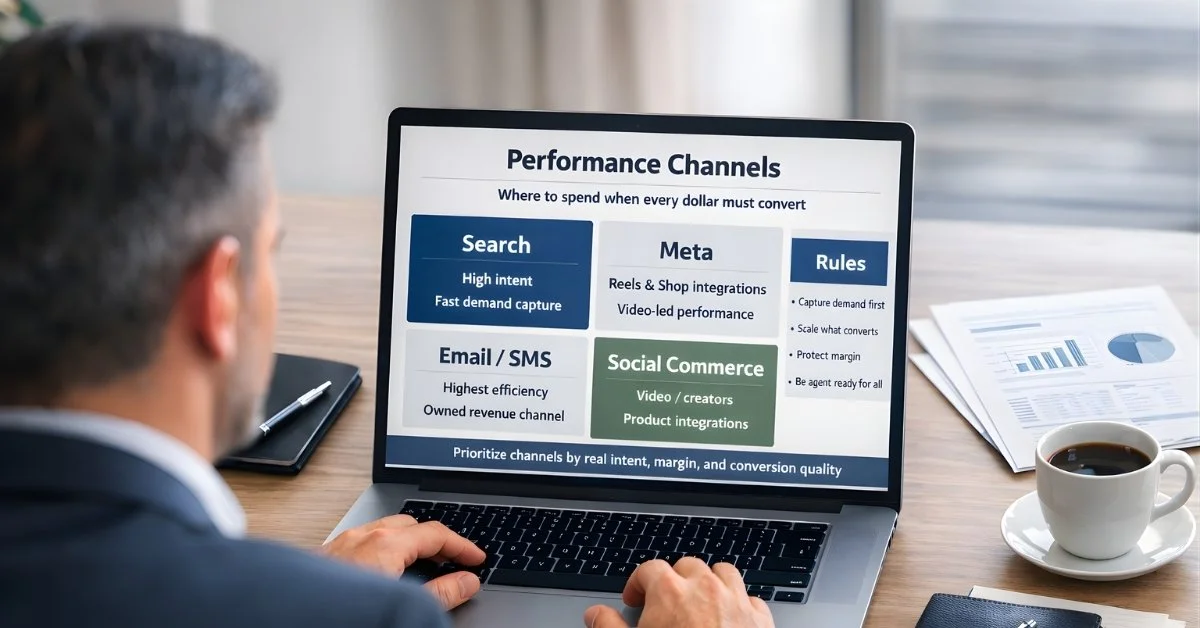
You've got budget. You've got goals. Now you need to know where to put your money so it actually comes back — with friends.
That's performance marketing in a nutshell: paying for results, not promises. Unlike brand campaigns where you hope awareness eventually translates to revenue, performance marketing ties every dollar to a measurable action — a click, a lead, a sale.
But here's the problem: in 2026, the channel landscape is more crowded than ever. Google, Meta, TikTok, affiliates, email, connected TV, retail media networks — each platform promises results. Each has different economics, different measurement challenges, and different roles in your funnel.
Choosing wrong doesn't just waste budget. It creates false confidence, skewed attribution, and strategic blind spots that compound over time.
This guide breaks down which performance marketing channels actually work, how to choose between them, and how to build a mix that scales without sacrificing efficiency.
What Makes a Channel "Performance"?
Performance marketing is defined by one thing: you pay when something measurable happens.
Not for impressions. Not for reach. For actions — clicks, leads, sales, installs — that you can track back to specific campaigns and optimize against.
This creates a fundamentally different relationship with your marketing spend:
Accountability: Every dollar has a job and a measurable outcome
Feedback loops: You know what's working within days, not months
Optimization potential: Poor performers get cut; winners get scaled
The trade-off? Performance channels require clean tracking, clear attribution, and ongoing optimization. They reward operators who understand their numbers — and punish those who don't.
The Major Performance Channels in 2026
Here's how the core channels stack up, including where each fits in your funnel and what to watch out for.
Channel Comparison: Role, Strength, and Risk
PERFORMANCE CHANNEL MATRIX
════════════════════════════════════════════════════════════════════════════

CHANNEL             FUNNEL FIT        PRIMARY STRENGTH           WATCH OUT FOR
─────────────────────────────────────────────────────────────────────────────

PPC / Search        Bottom            High-intent capture        Rising CPCs, keyword
(Google, Bing)                        Users actively searching   competition, over-
                                                                 reliance on last-click

Paid Social         Top → Mid         Audience scale, creative   Attribution gaps,
(Meta, TikTok)                        testing, prospecting       creative fatigue,
                                                                 iOS signal loss

Affiliates          Mid → Bottom      Pay-for-outcome model,     Limited control,
                                      incremental reach          attribution disputes

Email               Mid → Bottom      High ROI, retention,       List quality decay,
                                      owned audience             over-attribution

Native / Display    Top → Mid         Brand + performance        View-through debates,
                                      hybrid, retargeting        harder to measure

Connected TV        Top               Mass reach with targeting  Measurement complexity,
                                      precision                  longer attribution lag

Retail Media        Bottom            Purchase intent, closed-   Platform-specific,
(Amazon, Walmart)                     loop attribution           margin pressure
─────────────────────────────────────────────────────────────────────────────
PERFORMANCE CHANNEL MATRIX
════════════════════════════════════════════════════════════════════════════
CHANNEL FUNNEL FIT PRIMARY STRENGTH WATCH OUT FOR
─────────────────────────────────────────────────────────────────────────────
PPC / Search Bottom High-intent capture Rising CPCs, keyword
(Google, Bing) Users actively searching competition, over-
reliance on last-click
Paid Social Top → Mid Audience scale, creative Attribution gaps,
(Meta, TikTok) testing, prospecting creative fatigue,
iOS signal loss
Affiliates Mid → Bottom Pay-for-outcome model, Limited control,
incremental reach attribution disputes
Email Mid → Bottom High ROI, retention, List quality decay,
owned audience over-attribution
Native / Display Top → Mid Brand + performance View-through debates,
hybrid, retargeting harder to measure
Connected TV Top Mass reach with targeting Measurement complexity,
precision longer attribution lag
Retail Media Bottom Purchase intent, closed- Platform-specific,
(Amazon, Walmart) loop attribution margin pressure
─────────────────────────────────────────────────────────────────────────────PERFORMANCE CHANNEL MATRIX
════════════════════════════════════════════════════════════════════════════
CHANNEL FUNNEL FIT PRIMARY STRENGTH WATCH OUT FOR
─────────────────────────────────────────────────────────────────────────────
PPC / Search Bottom High-intent capture Rising CPCs, keyword
(Google, Bing) Users actively searching competition, over-
reliance on last-click
Paid Social Top → Mid Audience scale, creative Attribution gaps,
(Meta, TikTok) testing, prospecting creative fatigue,
iOS signal loss
Affiliates Mid → Bottom Pay-for-outcome model, Limited control,
incremental reach attribution disputes
Email Mid → Bottom High ROI, retention, List quality decay,
owned audience over-attribution
Native / Display Top → Mid Brand + performance View-through debates,
hybrid, retargeting harder to measure
Connected TV Top Mass reach with targeting Measurement complexity,
precision longer attribution lag
Retail Media Bottom Purchase intent, closed- Platform-specific,
(Amazon, Walmart) loop attribution margin pressure
─────────────────────────────────────────────────────────────────────────────The Full-Funnel Channel Map
WHERE EACH CHANNEL FITS IN YOUR MARKETING FUNNEL
════════════════════════════════════════════════════════════════════════════

                    ┌─────────────────────────────────────────┐
   AWARENESS        │     CONNECTED TV  •  PAID SOCIAL       │  ← Create demand
   (Top)            │     (TikTok, Meta prospecting)         │    among new audiences
                    │     NATIVE / DISPLAY                    │
                    └─────────────────────────────────────────┘
                                        │
                                        ▼
                    ┌─────────────────────────────────────────┐
   CONSIDERATION    │     PAID SOCIAL (retargeting)          │  ← Nurture interest
   (Mid)            │     EMAIL • AFFILIATES                  │    build familiarity
                    │     NATIVE / DISPLAY (retargeting)      │
                    └─────────────────────────────────────────┘
                                        │
                                        ▼
                    ┌─────────────────────────────────────────┐
   CONVERSION       │     PPC / SEARCH • RETAIL MEDIA        │  ← Capture demand
   (Bottom)         │     EMAIL • AFFILIATES                  │    when ready to buy
                    │     PAID SOCIAL (retargeting)           │
                    └─────────────────────────────────────────┘

─────────────────────────────────────────────────────────────────────────────
KEY INSIGHT: Build budget allocation from bottom up.
Capture existing demand first (search), then create new demand (social/CTV)
WHERE EACH CHANNEL FITS IN YOUR MARKETING FUNNEL
════════════════════════════════════════════════════════════════════════════

                    ┌─────────────────────────────────────────┐
   AWARENESS        │     CONNECTED TV  •  PAID SOCIAL       │  ← Create demand
   (Top)            │     (TikTok, Meta prospecting)         │    among new audiences
                    │     NATIVE / DISPLAY                    │
                    └─────────────────────────────────────────┘
                                        │
                                        ▼
                    ┌─────────────────────────────────────────┐
   CONSIDERATION    │     PAID SOCIAL (retargeting)          │  ← Nurture interest
   (Mid)            │     EMAIL • AFFILIATES                  │    build familiarity
                    │     NATIVE / DISPLAY (retargeting)      │
                    └─────────────────────────────────────────┘
                                        │
                                        ▼
                    ┌─────────────────────────────────────────┐
   CONVERSION       │     PPC / SEARCH • RETAIL MEDIA        │  ← Capture demand
   (Bottom)         │     EMAIL • AFFILIATES                  │    when ready to buy
                    │     PAID SOCIAL (retargeting)           │
                    └─────────────────────────────────────────┘

─────────────────────────────────────────────────────────────────────────────
KEY INSIGHT: Build budget allocation from bottom up.
Capture existing demand first (search), then create new demand (social/CTV)
WHERE EACH CHANNEL FITS IN YOUR MARKETING FUNNEL
════════════════════════════════════════════════════════════════════════════

                    ┌─────────────────────────────────────────┐
   AWARENESS        │     CONNECTED TV  •  PAID SOCIAL       │  ← Create demand
   (Top)            │     (TikTok, Meta prospecting)         │    among new audiences
                    │     NATIVE / DISPLAY                    │
                    └─────────────────────────────────────────┘
                                        │
                                        ▼
                    ┌─────────────────────────────────────────┐
   CONSIDERATION    │     PAID SOCIAL (retargeting)          │  ← Nurture interest
   (Mid)            │     EMAIL • AFFILIATES                  │    build familiarity
                    │     NATIVE / DISPLAY (retargeting)      │
                    └─────────────────────────────────────────┘
                                        │
                                        ▼
                    ┌─────────────────────────────────────────┐
   CONVERSION       │     PPC / SEARCH • RETAIL MEDIA        │  ← Capture demand
   (Bottom)         │     EMAIL • AFFILIATES                  │    when ready to buy
                    │     PAID SOCIAL (retargeting)           │
                    └─────────────────────────────────────────┘

─────────────────────────────────────────────────────────────────────────────
KEY INSIGHT: Build budget allocation from bottom up.
Capture existing demand first (search), then create new demand (social/CTV)
PPC / Search Engine Marketing
Search captures demand when it's highest — someone actively looking for what you sell. Google Ads and Microsoft Advertising remain the backbone of most performance stacks.
Strengths:
Intent-rich traffic that's ready to convert
Fast feedback loops for testing and optimization
Clear, measurable outcomes
2026 Reality:
AI-driven campaigns (Performance Max) are now the default
Keywords matter less; audience signals and creative matter more
CPCs continue rising in competitive categories
Best for: Capturing existing demand, bottom-funnel conversions, branded defense.
Paid Social (Meta, TikTok, LinkedIn)
Social platforms excel at finding new audiences and testing creative at scale. They're prospecting engines — introducing your brand to people who weren't searching for you.
Strengths:
Massive reach and sophisticated targeting
Creative testing capabilities
Strong for building awareness that converts later
2026 Reality:
Privacy changes continue limiting targeting precision
Creative quality is now the primary performance lever
Platform algorithms require high-quality conversion signals to optimize
Best for: Prospecting, creative testing, building top-of-funnel demand.
Affiliate Marketing
Affiliates promote your product and earn commission only when they drive a sale. It's pure pay-for-performance — you don't pay unless revenue happens.
Strengths:
Low-risk, outcome-based payment
Access to audiences you can't reach directly
Incremental revenue from trusted publishers
2026 Reality:
Quality varies wildly across affiliate networks
Attribution disputes are common when affiliates overlap with other channels
Requires active management to prevent brand dilution
Best for: Scaling with controlled risk, reaching niche audiences, review/comparison content.
Email Marketing
Email is performance marketing's quiet workhorse — high ROI, low marginal cost, and direct access to people who've already raised their hand.
Strengths:
Owned audience, no platform dependency
Excellent for retention, repeat purchases, and lifecycle
Highly measurable with clear revenue attribution
2026 Reality:
Deliverability requires ongoing attention
Over-crediting email in attribution models is common
Works best when integrated with acquisition channels, not siloed
Best for: Retention, lifecycle marketing, converting warm leads.
Connected TV (CTV)
CTV brings TV-scale reach with digital-style targeting. It's no longer just a brand play — with better measurement, it's entering the performance mix.
Strengths:
Premium inventory with household-level targeting
Growing measurement capabilities
Complements digital channels by driving branded search
2026 Reality:
Measurement still lags behind digital channels
Works best as part of a full-funnel strategy, not standalone
Requires longer attribution windows to see impact
Best for: Upper-funnel reach, brand building that supports performance.
How to Choose Your Channel Mix
The right mix isn't the same for everyone. It depends on your audience, your funnel, your margins, and your ability to measure.
The Channel Selection Framework:
BUILDING YOUR PERFORMANCE MIX
════════════════════════════════════════════════════════════════════════════

QUESTION                              IMPLICATIONS
─────────────────────────────────────────────────────────────────────────────

Where does your audience spend time?   → Prioritize channels where attention
                                         already exists

What's your average order value?       → Higher AOV = more room for paid
                                         channels; lower AOV = efficiency focus

How long is your sales cycle?          → Longer cycles need multi-touch;
                                         shorter cycles can rely on last-click

Can you track conversions accurately?  → Weak tracking = wrong optimization
                                         signals; fix before scaling

What's your creative capacity?         → Paid social requires constant fresh
                                         creative; search is less demanding

Do you have existing demand?           → Yes = prioritize search capture
                                         No = invest in demand creation first
─────────────────────────────────────────────────────────────────────────────
BUILDING YOUR PERFORMANCE MIX
════════════════════════════════════════════════════════════════════════════
QUESTION IMPLICATIONS
─────────────────────────────────────────────────────────────────────────────
Where does your audience spend time? → Prioritize channels where attention
already exists
What's your average order value? → Higher AOV = more room for paid
channels; lower AOV = efficiency focus
How long is your sales cycle? → Longer cycles need multi-touch;
shorter cycles can rely on last-click
Can you track conversions accurately? → Weak tracking = wrong optimization
signals; fix before scaling
What's your creative capacity? → Paid social requires constant fresh
creative; search is less demanding
Do you have existing demand? → Yes = prioritize search capture
No = invest in demand creation first
─────────────────────────────────────────────────────────────────────────────BUILDING YOUR PERFORMANCE MIX
════════════════════════════════════════════════════════════════════════════
QUESTION IMPLICATIONS
─────────────────────────────────────────────────────────────────────────────
Where does your audience spend time? → Prioritize channels where attention
already exists
What's your average order value? → Higher AOV = more room for paid
channels; lower AOV = efficiency focus
How long is your sales cycle? → Longer cycles need multi-touch;
shorter cycles can rely on last-click
Can you track conversions accurately? → Weak tracking = wrong optimization
signals; fix before scaling
What's your creative capacity? → Paid social requires constant fresh
creative; search is less demanding
Do you have existing demand? → Yes = prioritize search capture
No = invest in demand creation first
─────────────────────────────────────────────────────────────────────────────For a deeper look at how average order value connects here, see that breakdown — AOV directly determines which channels are economically viable.
If your cycle runs into weeks or months, see the B2B attribution breakdown — long-cycle attribution has its own measurement playbook.
Start With the Demand You Already Have.
If people are actively searching for your product or category, capture that demand first. Search and branded campaigns convert at the lowest cost because intent already exists.
Then Create Demand You Don't Have
Once you're capturing existing demand efficiently, invest in creating new demand through paid social, content, and awareness channels. This feeds the bottom of your funnel over time.
Don't Over-Diversify Early
Running too many channels at once spreads budget thin and makes measurement nearly impossible. Start with two or three channels, prove them out, then expand.
Start with two or three channels, prove them out, then expand. For broader growth tactics for online stores that frame channel selection within a full growth strategy, see that guide.
Match Channel to Funnel Stage
Expecting TikTok to drive direct conversions like search will disappoint you. Expecting search to build brand awareness will waste money. Use each channel for what it does best.
The Signal Quality Problem
Here's what most performance marketing guides skip: your channels are only as good as the data you feed them.
In 2026, every major ad platform runs on machine learning. Meta's Advantage+, Google's Performance Max, TikTok's Smart Performance — these systems optimize based on conversion signals you send them.
If your signals are incomplete, the algorithms optimize toward the wrong people. And here's the uncomfortable truth: these "smart" campaigns are only as intelligent as the data you provide.
The Signal Feedback Loop
HOW PLATFORM ALGORITHMS LEARN FROM YOUR DATA
════════════════════════════════════════════════════════════════════════════

YOUR STORE                    TRACKING LAYER                 AD PLATFORM
─────────────────────────────────────────────────────────────────────────────

Customer visits    ───►    Pixel fires (maybe)    ───►    Platform receives
Customer browses   ───►    Events tracked         ───►    partial signal
Customer buys      ───►    Conversion sent        ───►    Algorithm learns

                                    │
                                    ▼

                    ALGORITHM OPTIMIZES TARGETING
                    Based on conversions it CAN see
                    (not conversions that actually happened)

                                    │
                                    ▼

                    PLATFORM FINDS "SIMILAR" USERS
                    But similar to incomplete data
                    = Wrong optimization direction

─────────────────────────────────────────────────────────────────────────────

THE PROBLEM: Algorithms learn from what they see.
If they see 60% of your conversions, they optimize toward 60% of your buyers.
The other 40%? Invisible. Unreachable. Lost
HOW PLATFORM ALGORITHMS LEARN FROM YOUR DATA
════════════════════════════════════════════════════════════════════════════

YOUR STORE                    TRACKING LAYER                 AD PLATFORM
─────────────────────────────────────────────────────────────────────────────

Customer visits    ───►    Pixel fires (maybe)    ───►    Platform receives
Customer browses   ───►    Events tracked         ───►    partial signal
Customer buys      ───►    Conversion sent        ───►    Algorithm learns

                                    │
                                    ▼

                    ALGORITHM OPTIMIZES TARGETING
                    Based on conversions it CAN see
                    (not conversions that actually happened)

                                    │
                                    ▼

                    PLATFORM FINDS "SIMILAR" USERS
                    But similar to incomplete data
                    = Wrong optimization direction

─────────────────────────────────────────────────────────────────────────────

THE PROBLEM: Algorithms learn from what they see.
If they see 60% of your conversions, they optimize toward 60% of your buyers.
The other 40%? Invisible. Unreachable. Lost
HOW PLATFORM ALGORITHMS LEARN FROM YOUR DATA
════════════════════════════════════════════════════════════════════════════

YOUR STORE                    TRACKING LAYER                 AD PLATFORM
─────────────────────────────────────────────────────────────────────────────

Customer visits    ───►    Pixel fires (maybe)    ───►    Platform receives
Customer browses   ───►    Events tracked         ───►    partial signal
Customer buys      ───►    Conversion sent        ───►    Algorithm learns

                                    │
                                    ▼

                    ALGORITHM OPTIMIZES TARGETING
                    Based on conversions it CAN see
                    (not conversions that actually happened)

                                    │
                                    ▼

                    PLATFORM FINDS "SIMILAR" USERS
                    But similar to incomplete data
                    = Wrong optimization direction

─────────────────────────────────────────────────────────────────────────────

THE PROBLEM: Algorithms learn from what they see.
If they see 60% of your conversions, they optimize toward 60% of your buyers.
The other 40%? Invisible. Unreachable. Lost
What breaks signal quality:
Privacy restrictions: iOS limits tracking; browsers block cookies
Ad blockers: 15-30% of traffic never fires pixels
Pixel-only tracking: Browser-based pixels miss conversions that server-side tracking captures
The Signal Gap: What Platforms Actually See
PIXEL-ONLY TRACKING VS. SERVER-SIDE TRACKING
════════════════════════════════════════════════════════════════════════════

                        BROWSER PIXEL              SERVER-SIDE
                        (Standard Setup)           (Complete Signal)
─────────────────────────────────────────────────────────────────────────────

Safari/iOS users        ❌ Blocked by ITP          ✓ Captured
Ad blocker users        ❌ Never fires             ✓ Captured
Cross-device journeys   ❌ Lost between devices    ✓ Stitched together
Delayed conversions     ❌ Cookie expires          ✓ Server remembers
VPN/privacy browsers    ❌ Blocked                 ✓ Captured

─────────────────────────────────────────────────────────────────────────────

RESULT FOR ALGORITHMS:

Browser Pixel:          Server-Side:
├── Sees ~60% of        ├── Sees ~95% of
│   conversions         │   conversions
├── Optimizes toward    ├── Optimizes toward
│   trackable users     │   actual buyers
└── Misses your best    └── Finds more customers
customers like your best onesPIXEL-ONLY TRACKING VS. SERVER-SIDE TRACKING
════════════════════════════════════════════════════════════════════════════
BROWSER PIXEL SERVER-SIDE
(Standard Setup) (Complete Signal)
─────────────────────────────────────────────────────────────────────────────
Safari/iOS users ❌ Blocked by ITP ✓ Captured
Ad blocker users ❌ Never fires ✓ Captured
Cross-device journeys ❌ Lost between devices ✓ Stitched together
Delayed conversions ❌ Cookie expires ✓ Server remembers
VPN/privacy browsers ❌ Blocked ✓ Captured
─────────────────────────────────────────────────────────────────────────────
RESULT FOR ALGORITHMS:
Browser Pixel: Server-Side:
├── Sees ~60% of ├── Sees ~95% of
│ conversions │ conversions
├── Optimizes toward ├── Optimizes toward
│ trackable users │ actual buyers
└── Misses your best └── Finds more customers
customers like your best onesPIXEL-ONLY TRACKING VS. SERVER-SIDE TRACKING
════════════════════════════════════════════════════════════════════════════
BROWSER PIXEL SERVER-SIDE
(Standard Setup) (Complete Signal)
─────────────────────────────────────────────────────────────────────────────
Safari/iOS users ❌ Blocked by ITP ✓ Captured
Ad blocker users ❌ Never fires ✓ Captured
Cross-device journeys ❌ Lost between devices ✓ Stitched together
Delayed conversions ❌ Cookie expires ✓ Server remembers
VPN/privacy browsers ❌ Blocked ✓ Captured
─────────────────────────────────────────────────────────────────────────────
RESULT FOR ALGORITHMS:
Browser Pixel: Server-Side:
├── Sees ~60% of ├── Sees ~95% of
│ conversions │ conversions
├── Optimizes toward ├── Optimizes toward
│ trackable users │ actual buyers
└── Misses your best └── Finds more customers
customers like your best onesThe Feedback Decay Warning
There's another silent killer in 2026: signal delay.
When conversion data reaches platforms 24-48 hours late (common with browser-based pixels), the AI makes bidding decisions based on stale information. It's like trying to drive by looking in the rearview mirror.
Real-time server-side delivery solves this. Conversion signals reach platforms within minutes, not days — so algorithms optimize against what's happening now, not what happened yesterday.
The result: Platforms see only part of your conversions, optimize toward a skewed sample, and spend your money less efficiently than they could.
Server-side tracking sends conversion data directly to platforms — bypassing browser restrictions — and gives algorithms a more complete picture of what's actually working.
Better signals → Better optimization → Lower acquisition costs.
Common Channel Mistakes (And How to Avoid Them)
Mistake #1: Over-Relying on One Channel
If most of your revenue comes from a single platform, you're one algorithm change away from a crisis. Diversify before you're forced to.
Fix: No single channel should exceed 50-60% of your performance budget.
Mistake #2: Chasing Last-Click Attribution
Last-click credits the final touchpoint and ignores everything before it. This over-values search and email while under-valuing the channels that created demand in the first place.
Fix: Use multi-touch attribution or run incrementality tests to understand true channel contribution.
Mistake #3: Scaling Before You Can Measure
Pouring budget into a channel you can't accurately track is gambling, not marketing. You won't know what's working until it's too late.
Fix: Validate tracking accuracy before scaling spend. Ensure conversions are firing correctly across all channels.
Mistake #4: Ignoring Creative Refresh
Paid social algorithms need fresh creative to keep performing. Running the same ads for months leads to fatigue, rising costs, and declining results.
Fix: Plan creative production as part of your media budget, not an afterthought.
Mistake #5: Treating All Traffic Equally
A click from a high-intent search is not the same as a click from a cold prospecting ad. Blending all traffic into single metrics hides what's actually working.
Fix: Segment performance by funnel stage, new vs. returning customers, and channel to see the real picture.
Channel Performance and Your Tracking Stack
Performance marketing lives and dies by measurement. If you can't attribute results accurately, you can't optimize — and you can't prove ROI.
The True Goal: Profitability, Not Just ROAS
ROAS tells you how much revenue you generated per dollar spent. But revenue isn't profit. The metric that actually matters is contribution margin:
Contribution Margin=Revenue−(Ad Spend+COGS+Shipping)\text{Contribution Margin} = \text{Revenue} - (\text{Ad Spend} + \text{COGS} + \text{Shipping})Contribution Margin=Revenue−(Ad Spend+COGS+Shipping)
A campaign with 3x ROAS looks great until you realize COGS is 50% and shipping eats another 15%. Suddenly that "profitable" campaign is breaking even — or losing money.
What to track by channel:
CPC/CPM: What you're paying for attention
CPA/CAC: What you're paying for conversions
ROAS: Revenue generated per dollar spent
Contribution Margin: Profit after ad spend, COGS, and fulfillment
Incrementality: True lift vs. conversions you would have gotten anyway
The attribution challenge:
When multiple channels touch the same customer, who gets credit? A user might see a TikTok ad, click a Google search result, and convert through a retargeting display ad. Last-click gives all credit to display; the reality is all three contributed.
Multi-touch attribution helps, but it's only as accurate as your data. Incomplete tracking creates incomplete attribution — and wrong conclusions about what's working.
This is where clean, server-side conversion data becomes critical. When platforms receive complete conversion signals, both their optimization and your attribution improve. To see pricing options for this setup, that page covers the server-side tracking tiers and per-event volume.
Quick Wins: Strengthen Your Channel Mix This Week
Audit your channel concentration. If one platform drives more than 60% of revenue, start testing alternatives.
Check your conversion tracking. Are all events firing correctly? Compare platform-reported conversions to actual orders.
Segment your reporting. Stop looking at blended ROAS. Break it down by channel, by funnel stage, by new vs. returning.
Review your creative pipeline. Do you have fresh assets ready for paid social? Plan production before you need it.
Test one new channel. Pick a channel you've been curious about, set a clear budget and timeline, and run a structured test.
The Bottom Line
Performance marketing channels give you accountability that brand marketing can't — but only if you use them correctly.
The winning formula isn't complicated:
Match channels to funnel stages — don't expect awareness channels to convert like search
Feed platforms clean data — better signals mean better optimization
Measure what matters — segment by channel, stage, and customer type
Test before scaling — prove channels work before pouring in budget
The teams that win in 2026 aren't the ones spending the most. They're the ones who know exactly what each dollar is doing — and can prove it.